
Trump signs executive orders to restrict birthright citizenship despite Supreme Court’s adverse decision
The US president is restricting nationality rights for babies born in the United States to foreign parents, although the move is likely to be challenged
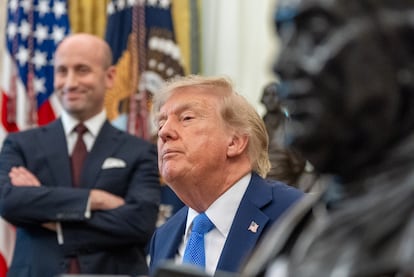

U.S. President Donald Trump is back with one of his most controversial ideas: he wants to restrict birthright citizenship, a right that has been enshrined in the Constitution for nearly 150 years. The Republican president has signed two executive orders to deny citizenship in certain circumstances to children born in the United States to foreign parents, Axios first reported. The White House wants to end so‑called “birth tourism” despite the lack of official statistics and the consensus among most civil organizations that it is a marginal practice.
The initiative only applies to very specific cases, is limited in scope, and raises serious questions about its lawfulness, given the legal precedent.
Revoking birthright citizenship in the United States, one of the rights that define the nation’s identity, was among the first measures Trump approved upon returning to the White House for his second term. However, just over a month ago the Supreme Court issued a ruling that declared Trump’s order illegal. The court’s decision reaffirmed that right, which grants automatic nationality to babies born in the United States to undocumented parents, and which is set out in the 14th Amendment.
Despite the Supreme Court setback, the president is pressing on with the issue. On Thursday he signed two executive orders to challenge the court. “The privilege of United States citizenship is a priceless and profound gift,” he said.
The White House says it has found a legal opening it believes allows it to advance the new policy restricting immigrants’ rights. It considers that the high court’s ruling permits limiting birthright citizenship under certain conditions.
“After the Supreme Court’s decision [...], the Administration continues to guard against efforts to obtain citizenship by malign foreign actors and other categories of aliens whom the Supreme Court recognized are ineligible for birthright citizenship under historically recognized exceptions,” the White House said in a statement.
For that reason, the new orders apply only to four specific circumstances. The first applies to babies born in the United States to foreign parents working at a diplomatic mission for another government. The Constitution already limits nationality rights for ambassadors, and Trump is extending that limitation to other diplomatic staff.
The second limitation would affect children of people classified as foreign enemies, including those belonging to groups designated as terrorist organizations by the federal government.
Another exception targets children born in U.S. territories abroad, such as Puerto Rico. This restriction would apply only if Congress amends the law to remove automatic citizenship in those territories.
Finally, Trump’s executive order affects babies of mothers who enter the United States “expressly and deceptively enter the U.S. for the sole purpose of having a child here.”
The orders will face Supreme Court scrutiny and raise many questions about their legality. Civil organizations will sue. Still, it will be necessary to wait for the nine justices on the Court to decide.
Sign up for our weekly newsletter to get more English-language news coverage from EL PAÍS USA Edition









































