
The world is plunging into a dangerous spiral of military spending
Geopolitical tensions, technological revolutions, economic interests and the absence of international treaties point to a sustained acceleration of the global arms race
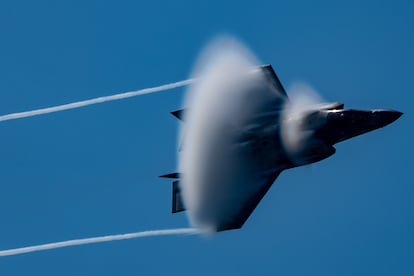

The Atlantic allies met this week in Turkey for NATO’s annual summit against a backdrop of sustained growth in global military spending. Spurred both by the threat from Russia and political pressure from the White House, the Alliance’s European partners have taken significant steps forward in military investment. This trend is taking place within the broader context of a global rearmament effort that has been underway for the past decade. Geopolitical tensions, technological revolutions, economic and industrial considerations, and other factors suggest that this trend still has a long way to run.
According to data compiled by the Stockholm International Peace Research Institute (SIPRI), a highly respected authority in this field, the world has now experienced 11 consecutive years of rising military expenditure, a period that coincides with the beginning of Russia’s aggression against Ukraine in 2014. Military spending has increased by 41% over the past decade. In 2025, nearly $3 trillion was devoted to defense, equivalent to 2.5% of global GDP. The increase in 2025 was 2.9%, lower than the jump recorded the previous year (9.7%). However, multiple indicators suggest that 2026 and 2027 could bring further substantial increases.

Within NATO, U.S. military spending this year will be higher than last year’s, and the Trump administration has asked Congress to approve a Pentagon budget increase for the next fiscal year from the current $1 trillion to $1.5 trillion — a remarkable jump. There is resistance among lawmakers to such a dramatic increase, and it is highly unlikely that it will be approved in those exact terms. However, it is quite possible that the final agreement will still represent another significant step forward compared with the previous budget.
At the same time, the European allies are heading toward further increases in military spending. For example, BNP Paribas forecasts for 2026 “a further acceleration in military spending within the European Union. After an increase from 1.9% to 2.15% of GDP between 2024 and 2025, spending is expected to rise by around €80 billion [$91.6 billion] and reach 2.5% of EU GDP” this year.
Overall, NATO accounts for 55% of global military spending.
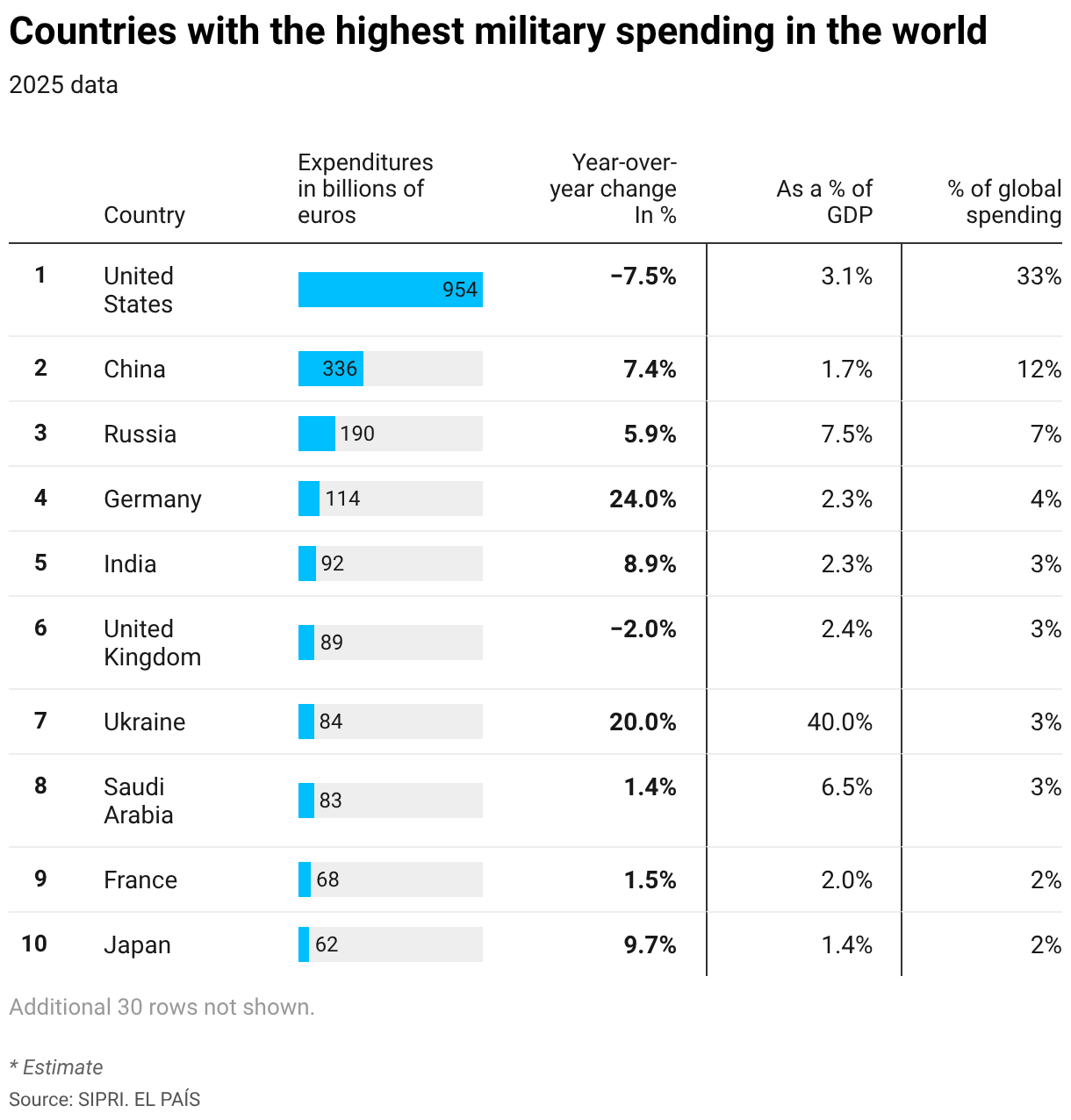
Many other actors, of course, are also contributing to this escalation. Russia is naturally at the center of the story. Its aggression against Ukraine has driven a runaway increase in its own military spending while also spurring higher spending by others. Its economic difficulties, however, make it harder for Moscow to continue advancing along that path.
China, meanwhile, has for some time maintained a steady pace of nominal military spending increases of around 7% per year. This consistent growth reflects Beijing’s effort to narrow the gap with the United States. It is worth noting that this stability persists despite a slowdown in its economic growth, which is forecast at around 4.5%.
Other parts of the world, by contrast, are galloping ahead. Countries in Southeast Asia are experiencing a situation that is similar — though not identical — to that of Europe. Concern about a powerful neighboring country and pressure from the United States are pushing them in the same direction.
U.S. Secretary of Defense Pete Hegseth delivered a speech in late May at the important Shangri‑La Dialogue in Singapore that will sound very familiar to Europeans: “President Trump is setting the gold standard. We demand 3.5% from our allies and partners [...] For those nations that rise to this challenge that embrace responsibility as true partners, the benefits will be clear [...] But for those who believe they can continue to free ride on the generosity of the American taxpayer, hear us now. Those days are over. Allies who refuse to step up and carry their own weight for our collective defense will face a clear shift in how we do business.”
The message is resonating strongly in the Middle East as well, where there is little doubt that the war against Iran and its consequences will fuel a significant wave of rearmament.
What’s driving the rise
The motivations behind this dynamic are primarily geopolitical. “The world is moving toward a multipolar configuration. Asymmetric, but multipolar. And in that transition monsters are born,” says Michele Testoni, associate professor at the IE School of International Relations and coordinator of the book NATO and Transatlantic Relations in the 21st Century. It is a landscape that fosters a sense of insecurity.
Testoni also points to another factor: “We are living in a time of great technological revolution. History shows that these revolutions are often quickly adopted by the military.” The rise of artificial intelligence and its combination with robotic and automated technologies opens new possibilities, and that leads to imbalances and sparks races to adapt to the changes.
Vicente Palacio, director of foreign policy at the Fundación Alternativas, highlights another important factor: military spending as an economic stimulus. “At a time of not only geopolitical tensions but also economic difficulties, the military dimension is seen as a new source of growth and reindustrialization. That ranges from Germany to Russia, and includes the United States, France and many other countries.”
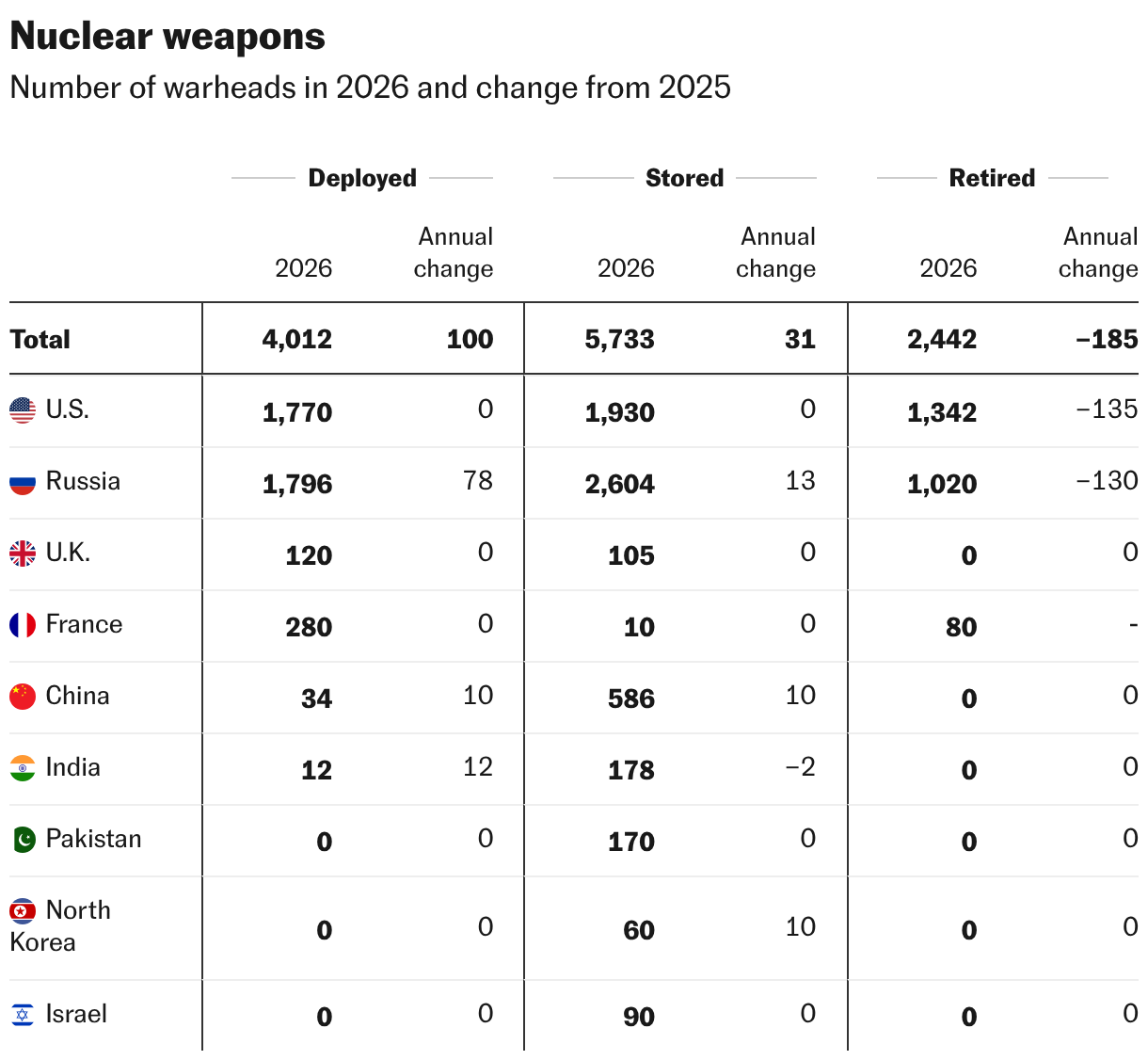
Another notable feature of the current arms race is the near absence of international agreements capable of constraining it. New START, which set limits on nuclear arsenals between the United States and Russia, expired last February and there is no clear prospect of a replacement being negotiated. More broadly, it is worrying that, a few weeks ago, the review conference of the Treaty on the Non‑Proliferation of Nuclear Weapons once again ended without any agreement. The nuclear realm is another area of heavy investment, according to SIPRI. While there is no significant increase in the number of nuclear warheads, the nuclear powers are making huge investments to renew their arsenals.
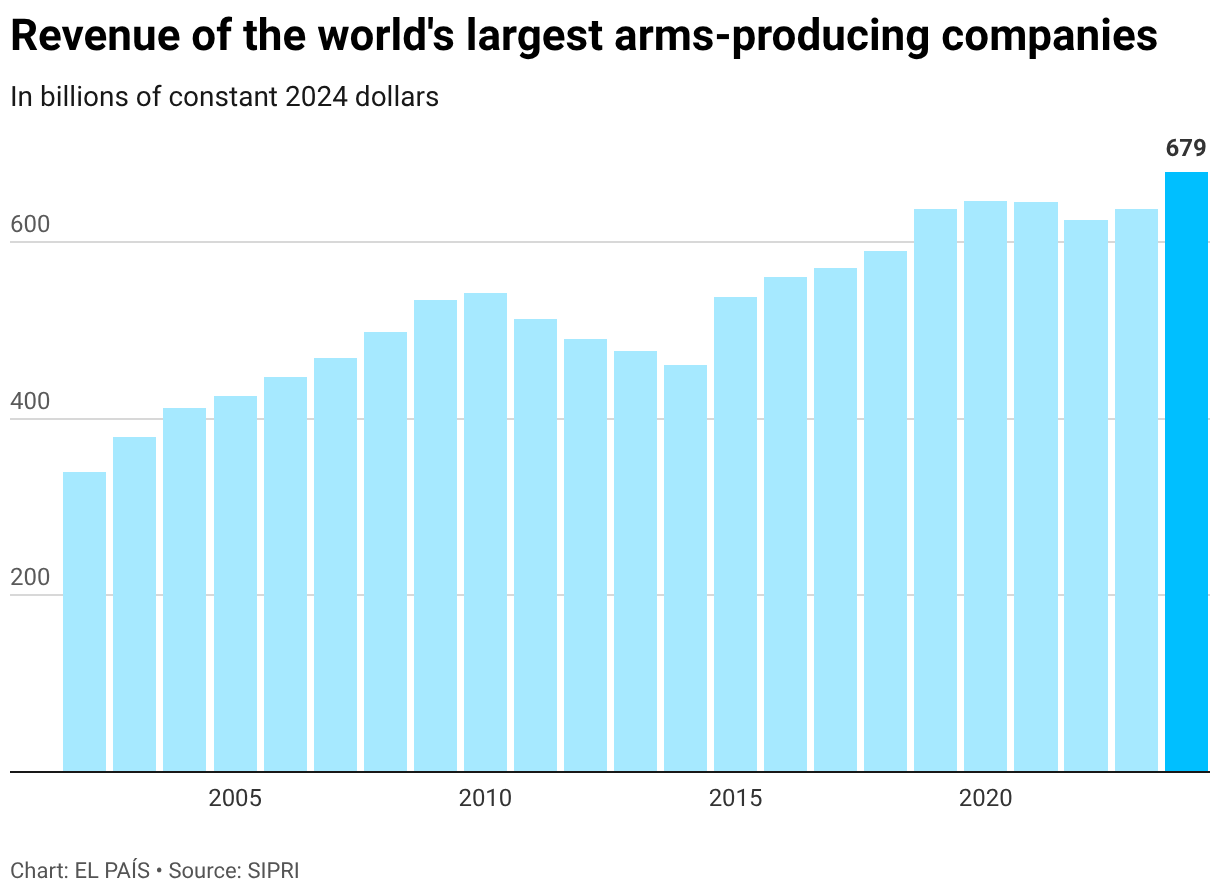
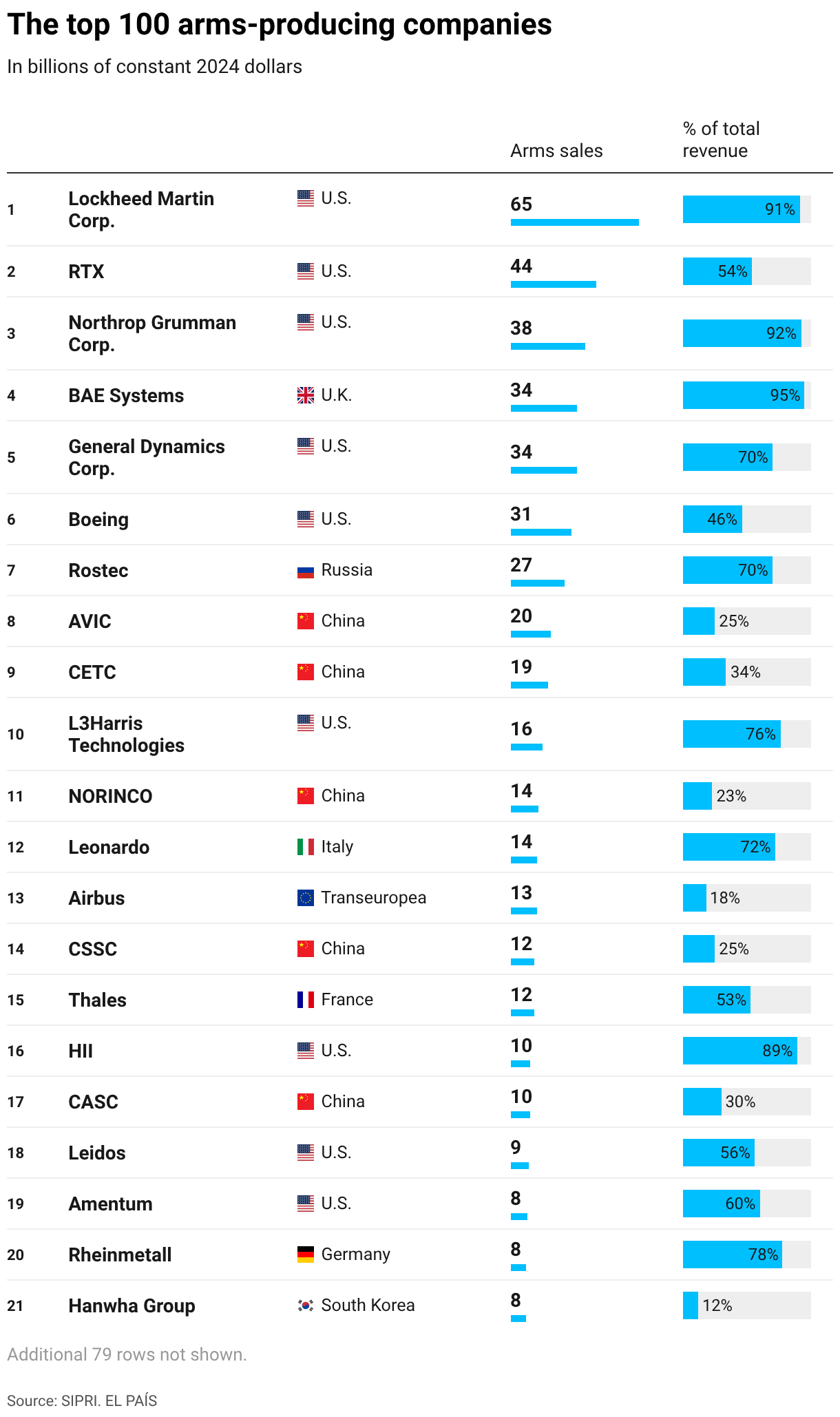
The defense industry naturally benefits from all this. The 100 largest companies in the sector have grown sharply. Between 2002 and 2025, revenues in constant dollars doubled, reaching $680 billion.
And during this decade of rapidly expanding military spending, new types of companies have entered the sector in a major way, with Palantir serving as a prominent example. Palantir does not sell weapons. Instead, it provides AI-based operating systems and other digital capabilities. Its importance has become extraordinary. Its technical capabilities are evident, but so too are its political and cultural implications.
Alex C. Karp, the company’s co-founder, has long advocated for greater involvement by Silicon Valley as a whole in national security matters, and has criticized the tech sector’s tendency to focus on maximizing profits through consumer gadgets.
Peter Thiel, the company’s leading figure, recently argued that the Pope, by calling for regulation of AI, is inadvertently acting like a ”Chinese communist agent.”
The forces driving the rearmament spiral are numerous and powerful. Arms races do not automatically lead to conflict. NATO’s history demonstrates this. During the Cold War, the alliance maintained very high levels of military spending, and the result was deterrence rather than direct conflict. Proxy wars did occur between the two blocs in other regions, but in Europe — the alliance’s primary theater — not a single shot was fired between NATO and the Soviet bloc.
Nevertheless, that does not eliminate concern. The rapid growth in military spending, occurring amid geopolitical tensions and the erosion of international institutions and norms, creates a scenario that many observers find deeply unsettling.
But that does not mean that the rise in military spending, amid conflict and the erosion of international institutions and norms, is not a worrying development.
Sign up for our weekly newsletter to get more English-language news coverage from EL PAÍS USA Edition









































