
Ukraine suffocates Crimea: Besieged access routes by land, sea, and air leave the peninsula without fuel
Kyiv is intensifying its offensive in the occupied east to cut off the Moscow-annexed tongue of land north of the Sea of Azov
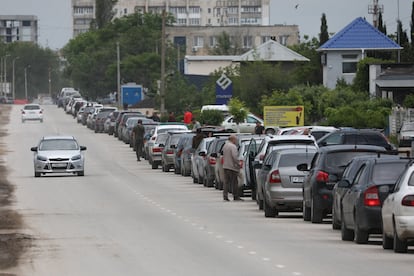

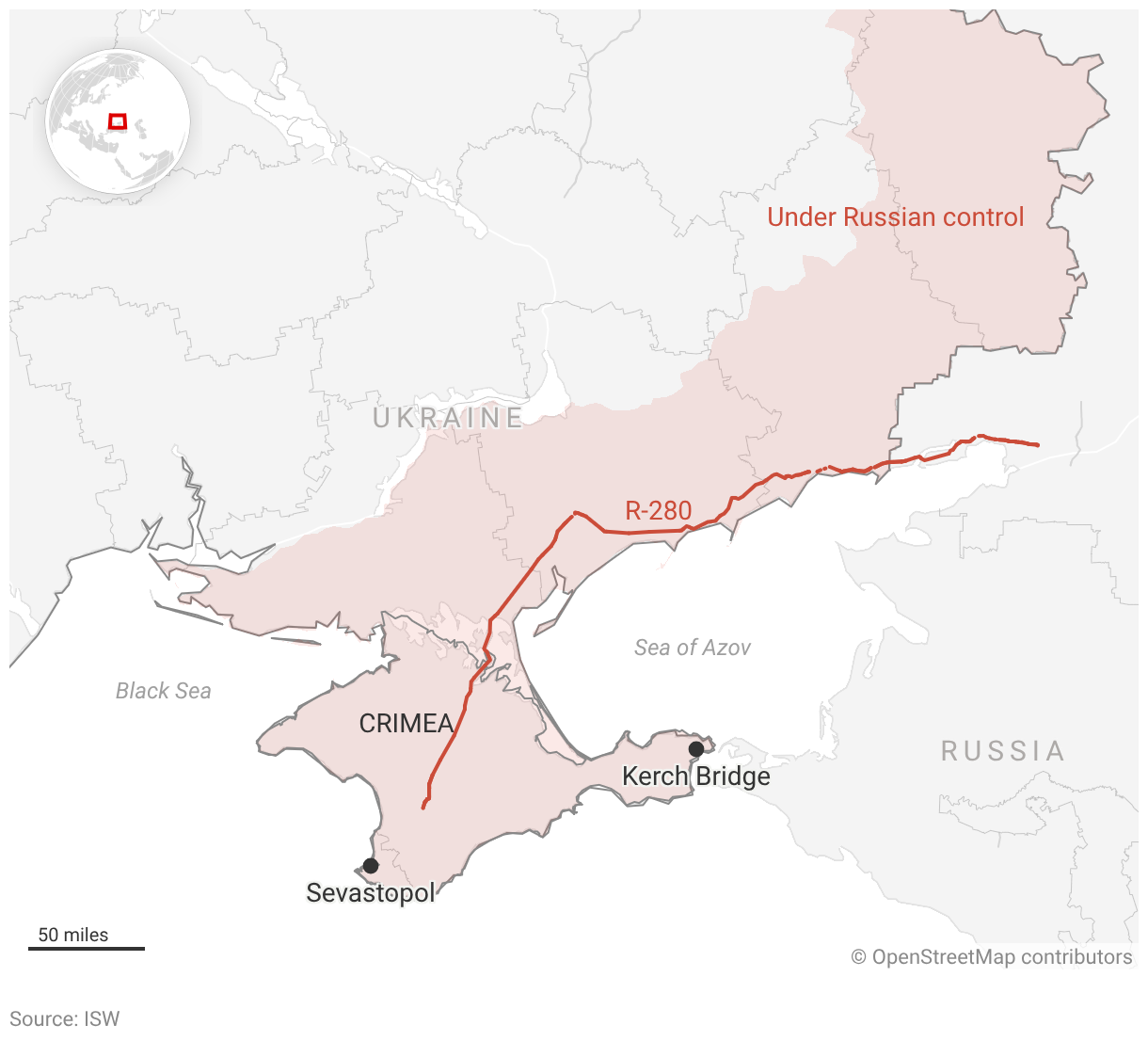
Located hundreds of miles from the front, the R-280 Novorrosiya highway was, until a few months ago, not only a quiet route between southern Russia and Crimea. It was arguably the Kremlin’s biggest strategic achievement in four years of war in Ukraine. This land corridor along the Sea of Azov freed Russian logistics from relying on its massive Kerch Strait bridge to supply the peninsula, annexed by Moscow in 2014, and the forces deployed in the Kherson and Zaporizhzhia regions. However, new Ukrainian weapons have made all routes to Crimea extremely perilous, a situation comparable to the blockage of the Strait of Hormuz in the Persian Gulf, giving Kyiv new leverage to pressure Moscow. Crimea, the jewel of Putinism and a pilgrimage destination for Russian tourists, is no longer safe and is running out of fuel.
Kyiv is trying to strangle Russian forces deployed in southern Ukraine and to saturate Crimea’s air defenses, which could ease its attacks in other regions. Even Russians acknowledge they are going through a difficult moment in the war. A columnist for the Russian government newspaper Rossískaya Gazeta, Yuri Knutov, has even suggested assassinating Ukrainian President Volodymyr Zelenskiy with tactical nuclear weapons to “resolve” the crisis.
The Ukrainian army now has Flamingo missiles, capable of carrying more than a ton of explosives up to 1,800 miles, and, above all, a new generation of Hornet drones equipped with artificial intelligence and connected to the internet via the Starlink satellite network, which Elon Musk has barred to the Russians since the spring. Costing just over $5,000 each, these semi‑autonomous systems have struck hundreds of Russian trucks on the R-280 highway since April, even reaching a point previously considered safe: the occupied city of Mariupol.
With all access by land, sea, and air being controlled by Ukrainian drones and missiles, Crimea has been left without supplies.
“Unfortunately, the fuel tankers could not get to Sevastopol tonight. I call on everyone: lining up at gas stations is pointless. And regarding the expiration date of the QR codes to obtain fuel, all those issued earlier will be deactivated today,” warned Mikhail Razvozhayev, the Moscow-appointed head of this key Crimean city, on Thursday.
Until now, these official coupons guaranteed up to 20 liters of petrol or diesel per vehicle. As rationing measures, the governor of the Black Sea peninsula, Sergey Aksyonov, suspended free sales of petrol and diesel from June 4, and authorities published both a map of service stations that still have reserves and a citizen helpline for those stranded on the road.
“Ambulances, public transport and security forces will receive sufficient fuel,” Aksyonov stressed. He was appointed head of Crimea by Putin in 2014 despite having won only three of the 100 seats in the local assembly in the last free elections held under Ukrainian sovereignty.
Holiday destination
This crisis hits the peninsula at the height of the tourist season. Despite the front being only 125 miles away, Crimea had been a preferred vacation destination for millions of Russians over the past four years. Sporadic attacks on its military facilities had not deterred people from visiting its splendid beaches. But the intensification of Kyiv’s air offensive over the Black Sea peninsula, new access difficulties, and the risk of becoming trapped have made many tourists think twice in recent weeks.
Hotel bookings between the last week of May and the first week of June have plunged 31% compared with the same period last year, according to a Travelline hospitality system report published by the newspaper Kommersant. Industry figures indicate that for every two new bookings, there are 1 cancellations.
There is no safe access to the jewel of Putinism. Ukraine’s punishment of trucks on the R-280 has reached such an extent that Vladimir Saldo, head of the administration imposed in occupied Kherson, has banned “non-essential” freight traffic across his territory.
According to Robert Brovdi, commander of Ukraine’s drone forces, freight traffic across the R-280 land bridge has collapsed from about 3,800 to 1,100 vehicles a day.
In addition, entry points to Crimea have been partially blocked by Ukrainian attacks. Since Wednesday, Russian authorities have suspended long‑distance rail services at night. That includes the Kerch crossing to the east of the region, where passengers must leave the train and continue by bus.
The reason for this decision in the fifth year of the war was an attack by Ukraine on a Russian train. A drone struck the No. 68 Moscow-Simferopol convoy on June 8. The explosion killed the co‑driver and injured the driver, while passengers were unhurt and evacuated by bus.
In fact, the stalemate in the war threatens to make trains a regular target. Both Russian and Ukrainian soldiers travel in the same carriages as civilians when they go to or return from the front, and goods and weapons travel on the same lines. The Ukrainian rail operator reports that Russian forces attack its infrastructure an average of six times a day, and there have been several bombings of trains this year. A Russian attack killed at least five passengers in January, and in June another drone strike hit a stopped convoy at a station; in that case there were no injuries because all passengers had taken shelter.
Draining Russia’s air defenses
If the eastern passage to Crimea is partially obstructed, the situation in the north is no better. At the Chongar isthmus, the natural crossing point between occupied Kherson and the peninsula, traffic has repeatedly been suspended due to the drone threat. “The enemy is concentrating its attacks on this facility to disrupt traffic and create problems for the population,” admitted the head of the administration in occupied Kherson after one of the latest drone strikes that interrupted passage through the strategic checkpoint at Dzhankoi.
Moreover, Ukraine has long carried out a sustained bombing campaign against Crimea’s air defenses, forcing the Russian armed forces into a short‑blanket dilemma: moving systems to cover one area leaves others exposed.
“There is a feeling that, if measures are not taken to counter the massive presence of Ukrainian drones connected to Starlink, Crimea’s air‑defense system will collapse in less than a year or force the transfer of defenses and radars from other regions, leaving them exposed,” acknowledged the well‑known Russian military Telegram channel Voyénni Osvedomítel, which has more than 600,000 followers.
Nevertheless, bombing campaigns — especially in a long war — are never entirely clean. Another Ukrainian strike damaged a Russian cultural site on Wednesday. The museum about the defense of Sevastopol during the Crimean War (1854–1855) was hit at night without causing casualties. However, the painting by Franz Roubaud depicting that battle “has been virtually destroyed,” the city’s governor, Razvozhayev, said on his social media. The original painting, 115 meters long and 14 meters high, had already been partly destroyed during another bombing in World War II.
Sign up for our weekly newsletter to get more English-language news coverage from EL PAÍS USA Edition









































