
Fear grips the border between Romania and Ukraine: ‘We feel something much worse will happen’
The impact of a drone strike in Galați, which left two people wounded, has raised alarm among neighbors who fear a Russian escalation
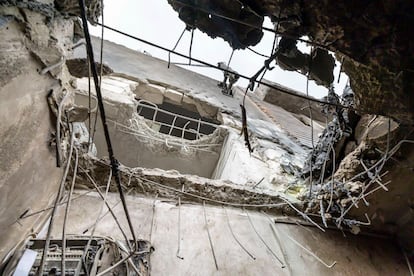

Romania has been deeply shaken by the unprecedented incident that occurred in the early hours of last Friday, when a Russian drone carrying 30 kilograms of explosives crashed into a 10-story apartment block in Galați. The city lies just 15 miles from the Ukrainian port of Reni, one of the neighboring country’s key grain-export facilities and a reason why Russia attacks almost nightly. But on this occasion the drone’s impact crossed boundaries not previously seen in this European Union country. The unmanned aircraft exploded, injuring a woman and her 14-year-old son, who lived on the building’s top floor; the block stands in the nerve center of this town of about 250,000 people on the banks of the Danube.
So far, two drones have already fallen in this city and 47 fragments from others have been found over the past four years, since Russia’s invasion of Ukraine began.
Awakened by the shrill alert tones sent by Romanian authorities to cell phones warning of potential danger, much of the population followed their instincts and tried to find out what was happening, though with terror in their bodies.
Magdalena Gheorghiu’s mother, an 83-year-old who lives 100 meters from the affected building, remains horrified. “She went out onto the balcony, saw the flames caused by the drone’s impact, and went into a panic thinking it might have happened in her own block, but she stayed at home the whole time,” her daughter, who lives about 500 meters from the scene, tells EL PAÍS by phone. “After the collision, chaos broke out: firefighters, rescue teams, police, and ambulances arrived and cordoned off the area,” the 58-year-old says by phone, as do the other interviewees. Authorities evacuated the building immediately and closed the avenue for two days.
When she heard the piercing alert tone, Gheorghiu sensed something was wrong. “That night I was really scared; this isn’t the first time we’ve received an alert of this kind, but that night, after waking and reading the message, I had a premonition — I couldn’t fall back asleep as I usually do,” Gheorghiu confesses, before stressing that everyone she has spoken to since the incident is shocked and afraid. She also laments the lack of bunkers. “The ones that exist are basements that are not fitted to protect citizens,” she says. Authorities have also not informed the public how to act in these situations.
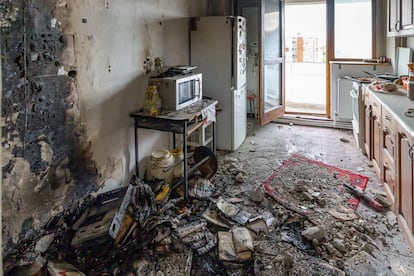
Close to the point of impact was Constantin Tacea, who got up as soon as he heard his phone buzz with the alert, went out onto his terrace, and turned his gaze toward Reni to find out what was happening. “Suddenly there was an explosion like nothing I had heard before and immediately a powerful light appeared,” the 47-year-old businessman tells this newspaper. “In seven minutes the emergency services, the army, and the intelligence service were there,” he adds. “I often go near the border crossing; from there you can often see drones attacking the Ukrainian side. You can hear them from a kilometer away. But this time it happened less than 100 meters from where I live,” Tacea stresses.
He says any alert from now on will make people much more vigilant to ensure an unmanned aircraft is not coming at them. During the night he tried to calm neighbors, assuring them that Russia had stopped launching drones over Ukrainian territory, but it was not easy: “We were all startled.”
A little over a mile from where the drone crashed, Viruca Bogdan jumped out of bed after the blast, despite the alert having interrupted her sleep. “I was confused, I went to my window that faces the Danube and I saw nothing from left to right, but a terrified friend got in her car and drove to the hospital,” the 61-year-old tells this paper. “The drone seems to have been guided like a missile; it can’t be that it fell in the city center,” she says.
All residents hope Romania, together with the European Union and NATO, will take action on the matter. “They must put more pressure on Russia and strengthen our air defenses,” Bogdan says. “We have the feeling we are not safe and that something much worse will happen if nothing is done now,” she adds, before insisting that all countries in the bloc must unite much more: “If we don’t present a common front, the war will continue on our borders.”
Sign up for our weekly newsletter to get more English-language news coverage from EL PAÍS USA Edition









































