
Russian drones stoke fear in Romania’s border villages: ‘We live with war hanging over our heads’
The intensification of attacks on Ukraine’s Danube ports has led to explosions and evacuations in towns near the frontier
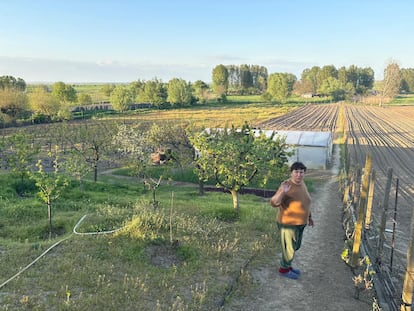

In the small, remote Romanian village of Vacareni, nestled on the banks of the Danube and a mere 50 meters south of the border with occupied Ukraine, the calm you see in the day is merely an illusion. Houses with roofs painted in different colors — some of them rusted metal sheets — and neatly kept vegetable gardens dotting the valley project a sense of quiet. But at night, the buzz of drones and the echo of their explosions remind the village’s 1,400 residents that they are direct witnesses to Russia’s offensive in neighboring Ukraine — an invasion they describe as a “disgrace” and one that has intensified in recent weeks.
The intensification of attacks on Ukraine’s Danube ports — crucial for grain exports — has turned this once‑quiet corner into a place defined by uncertainty. And with reason. As the strikes have continued, a Russian‑made drone crashed before dawn last Saturday onto a village farm, and another fell the following day in an uninhabited area.
“I heard a buzzing sound around 2:00 a.m., and then an explosion that caused a bright flash,” says Esterica Dudu, who chose to stay still under her blanket at that moment.
“We live with the war hanging over our heads, afraid that a drone will destroy our homes and, even worse, cause casualties,” says the 66‑year‑old woman, resigned, as she shows the roughly 1,000‑square‑meter plot where she grows organic onions, dill, parsley, tomatoes, and much more.
Dudu lives with her husband; her son left to work in Germany, and her daughter moved to Brasov, in the heart of Transylvania. “You can sense their unease when they visit, so they don’t stay long, unfortunately,” she says.
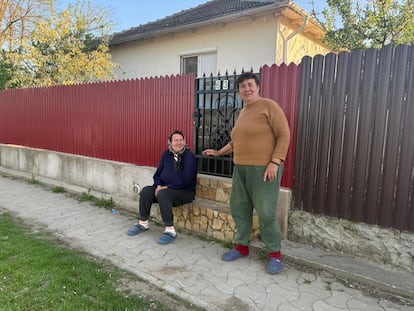
From the hilltop in Vacareni, you can see the infrastructure anchored along Europe’s second‑longest river and the Orthodox churches distinguished by their golden domes. “Our homes sit on the very last line of the border with Ukraine,” stresses Florica Chiriac. The 68‑year‑old resident admits she has grown used to waking up in the middle of the night — and sometimes staying awake — in case drones pass over her roof. “We know the Russians are launching massive attacks with hundreds of drones; some have already fallen in our village, and everything suggests it will continue,” the retiree laments. “Those of us who live here have no guarantees; anything could happen,” she adds, noting that the only sense of security she feels comes from Romania being under NATO’s umbrella.
In the same province, Tulcea, 16 miles to the east — still following the Danube toward the delta — lies the town of Isaccea, with around 4,000 inhabitants. It is home to the border crossing with Ukraine. Each day, two ferries shuttle passengers from the Romanian bank to the Ukrainian municipality of Orlovka, whose port is also among Russia’s targets. At times, however, river traffic between the two towns — just one mile apart — is suspended because of the kamikaze drones that frequently strike this corner of southwestern Ukraine. Romanian workers at the border post acknowledge that a certain constant tension hangs over them because of the war.
“We hear at least three explosions a week, and whenever they attack the Ukrainian side, we feel like it’s happening here too; we’re all afraid because we hear the drones coming, but we don’t know where they’ll end up,” says Marian Mihalache. The 42-year-old Romanian literature professor has a particular way of calming himself: “I feel safer if I go out onto the balcony because I look for them to track their trajectory and make sure they’re not going to crash where I am; if I don’t see them, I have the feeling that one is going to crash into my house,” adds the professor, sitting on a bench in front of the Isaccea Cultural Center.
He admits he has grown used not only to the sound of drones but also to the alarms that go off frequently. “The roar of NATO aircraft frightens me even more; it feels like they are about to go into action,” says Mihalache, recalling the panic sparked last year when a gas pipeline on the Ukrainian side exploded after a Russian strike, sending up a huge column of smoke.
Walking through the same area is Ionut Chelu, carrying his four‑year‑old son on his back. He says he’s no longer easily shaken, even though he feels his house tremble when a drone crashes on the other side. “We have to accept the reality we live in,” says the 35-year-old civil servant. “As long as we’re part of the European Union and NATO, we’re safe, except we have a colossus like Russia right in front of us,” adds Chelu, who insists that he feels safe and has no intention of moving: “I have two brothers in the army who keep me informed about what’s happening, so I’m calm.”
Residents in these Romanian border areas, who receive alerts instructing them to seek shelter whenever drones are detected in national airspace, have long projected calm in the face of repeated incursions. But last Saturday, one of those drones crashed before dawn with explosives into the yard of a home in a peripheral neighborhood of Galați, a city of 250,000 people also near the border.
The homeowner, who was asleep at the time, had to be hospitalized after suffering a panic attack. For the first time, Romanian authorities evacuated more than 500 people so the device could be moved to an open area and destroyed. “This moment was bound to happen; the war continues with no end in sight,” says 55-year-old Cristi Ion. His front door is a mere five meters from the house where the drone crashed. “I just hope for a popular uprising in Russia to overthrow the regime,” he remarks before heading out for a bike ride.
After repeated incidents along the more than 372‑mile border with Ukraine, Romania changed its legislation in 2025 to allow the military to shoot down unauthorized drones entering its airspace. Until now, the army has refrained from doing so to avoid escalating tensions with the Kremlin and being pulled directly into the war.
Romanian President Nicușor Dan said late last year that the reluctance to shoot down drones was not driven by fear but by operational constraints. “If a drone is 500 meters from the Ukrainian border, depending on its trajectory, you can risk engaging on Ukrainian territory, but if it’s flying over a city, you can’t shoot it down without endangering civilians,” he said. “If we can neutralize a drone without endangering residents or causing further damage, you’ll see drones being shot down in Romania,” he added.
So far, none have been shot down. Meanwhile, in the village of Vacareni — as in others across the region — Russia’s war in Ukraine is not an abstract geopolitical issue but a conflict that breaks into residents’ lives in the middle of the night. “We are practically part of the war too,” says Dudu.
Sign up for our weekly newsletter to get more English-language news coverage from EL PAÍS USA Edition









































