
Raúl Castro indicted in the United States over 1996 plane shootdown
Donald Trump has again opened the door to a diplomatic deal with Havana to force political and economic concessions in exchange for aid
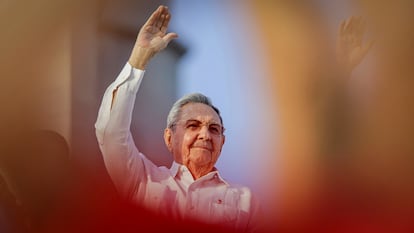

The move is now official. The U.S. Department of Justice has indicted Raúl Castro — the strongman of the Cuban regime — in Miami over events that took place three decades ago: the downing of two planes belonging to the anti‑Castro organization Brothers to the Rescue. With this step, U.S. prosecutors are repeating the playbook once used in Venezuela, when in March 2020 the U.S. government indicted Nicolás Maduro with drug‑trafficking offenses. That indictment later became the Trump administration’s justification for intervening in Venezuela on January 3 and seizing the Chavista leader.
From this point on, Washington considers it has the legal basis to intervene on the island as it did in Caracas, although experts question the legitimacy of the operation in Venezuela. Meanwhile, the U.S. president is not ruling out a diplomatic agreement with the Cuban government.
Just moments before the Justice Department announced the indictment at a press conference in Miami, U.S. President Donald Trump once again lashed out at the Cuban government. Although a day earlier he had floated the possibility of a deal with the authorities in Havana that could pave the way for changes in the regime, on Wednesday, he insisted that the United States will not tolerate “a rogue state harboring hostile foreign military, intelligence and terror operations just 90 miles from the American homeland.”
Shortly before the indictment was made public, Secretary of State Marco Rubio also issued a statement sharply criticizing the Cuban government and offering the island’s population a “new relationship” between Washington and Havana — one conditioned on radical economic reforms and the holding of free, multiparty elections.
The charges against Castro relate to the downing of the planes on February 24, 1996, when Castro was serving as defense minister. The attack killed all four crew members — Armando Alejandre, 45; Carlos Costa, 29; Mario de la Peña, 24; and Pablo Morales, 29 — and, according to independent investigations by the United Nations, the Inter‑American Commission on Human Rights (IACHR) and other bodies, took place unquestionably in international waters. That finding made the incident an attack on defenseless civilians, not — as Cuba claimed at the time — an act of legitimate self‑defense carried out over its own territory.
The charges were presented by Justice Department prosecutor Jason Reding Quiñones of the Southern District of Florida, who is ideologically aligned with Trump. His move caps a broad campaign of pressure from Washington against the island, ranging from sanctions on its leaders to what amounts to an energy embargo after ending Venezuelan oil shipments that had kept Cuba afloat, as well as a January 29 executive order opening the door to tariffs and secondary sanctions on countries that supply fuel to the island.
Quiñones had already created a task force in March to open criminal investigations into representatives of the Havana regime, a move that at the time was seen as potentially paving the way to take measures against Castro-era leaders similar to those that ended with Maduro sitting in a New York courtroom. “Prosecutors across the country work every day to secure justice, which includes efforts to fight international crime,” the Department of Justice said at the time in a statement.
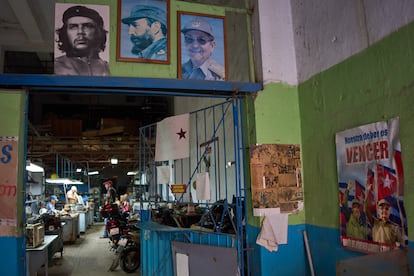
In remarks from the White House on Tuesday, Trump did not mention the imminent indictment. But he did refer to his demand for political and economic changes on the island, and he left the door open to an agreement with the regime similar to the formula applied in Venezuela after Maduro’s detention. That proposal was already conveyed last week by CIA director John Ratcliffe during his surprise visit to Havana to meet with Raúl Castro’s grandson, Raúl Rodríguez Castro, alias “El Cangrejo,” who is widely tipped to become the leader Washington would be willing to work with if there is a transition.
“Look, Cuba is calling us. They need help: Cuba is a failed nation. Cuba needs help and we’ll do that,” the president said while overseeing construction work on the large ballroom he envisions for the White House. “That’s not going to be hard for us to solve,” the president added. Asked whether that could be achieved even if the current regime stays in power — as happened in Venezuela, where Delcy Rodríguez, Maduro’s former number two, is in charge — he said, “I can do that, whether you change the regime or not.”
Cuba’s economic situation, which was already very fragile, has become desperate as a result of the energy blockade imposed by the White House, and the island now faces one of its worst humanitarian crises. So severe was the situation that last week, authorities warned that the last reserves of oil had been completely exhausted.
In its most recent pressure measure before the indictment of Raúl Castro, the Trump administration on Monday imposed sanctions on 11 individuals and three entities from the political and military structures of the regime. According to the State Department, which said further similar measures would arrive in the coming days and weeks, these punishments are part of the “Trump Administration’s comprehensive campaign to address the pressing national security threats posed by Cuba’s communist regime and to hold accountable both the regime and those who provide it material support.”
Sign up for our weekly newsletter to get more English-language news coverage from EL PAÍS USA Edition









































