
Jason Reding Quiñones, the Trumpist Miami attorney behind the planned indictment of Raúl Castro
The first US attorney appointed by the president in his second term, the son of Cuban exiles whose record has been questioned, has aggressively implemented the Republican’s agenda
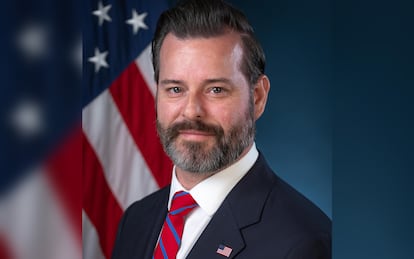

The federal indictment against Raúl Castro over the 1996 shooting down of two planes belonging to the Cuban exile organization Brothers to the Rescue, scheduled for Wednesday, has put the U.S. attorney for the Southern District of Florida, Jason Reding Quiñones, in the spotlight. The son of Cuban refugees now oversees one of the most symbolic investigations for Miami’s exile community and, perhaps, the most consequential in the turbulent history of relations between Washington and Havana.
Born and raised in Miami, 44-year-old Quiñones embodies a generation of officials shaped by anti-Castro politics and the rise of Trumpism in Florida, and his rise reflects the growing alignment between Donald Trump’s political priorities and the justice apparatus. Former prosecutors and ex–Department of Justice officials quoted by The Washington Post say his appointment is part of Trump’s effort to place ideological allies willing to pursue investigations viewed as White House priorities in key U.S. attorney offices around the country.
A law graduate of Florida International University (FIU), Quiñones built his career in the Army and the Air Force — where he reached the rank of reservist colonel — before entering the justice system. He began publicly using his maternal surname Quiñones when he ran for state judge in 2023 to honor his mother, a Cuban political refugee, CNN reported at the time. Last year he became the first U.S. attorney appointed by Trump for the Southern District of Florida, the political epicenter of the Cuban exile community and one of the country’s most influential jurisdictions on Latin America and immigration issues.
Before his appointment by the Republican, Quiñones had served as a state judge in Miami and as a mid-level federal prosecutor in the same office he now leads. National press reports say his career within the Department of Justice had not been particularly prominent and that he was not initially considered a frontrunner to lead the Miami office.
Still, after his nomination he became, in the summer of 2025, the first U.S. attorney confirmed by the Senate in Trump’s second term when he was sworn in in Washington alongside then–Attorney General Pam Bondi, in a ceremony some saw as a sign of his political closeness to the new administration. Trump presented him as a prosecutor who would “restore law and order” and “make America safe again.” Quiñones, for his part, pledged to advance the administration’s priorities, including tightening immigration policy.
His rise was part of a broader reshuffle driven by Trump that has placed ideological allies in key positions within the FBI and the Department of Justice, including figures close to the president such as Kash Patel, Dan Bongino, Bondi, and Emil Bove. In the same vein, since Quiñones took office in August, the Miami U.S. attorney’s office has played an increasingly visible role in investigations that reflect the Trump administration’s political priorities, including probes targeting former officials perceived as adversaries of the president.
One of the most sensitive, high-profile cases has involved former CIA director John Brennan, one of Trump’s most prominent critics and a central figure in the investigations into Russian interference in the 2016 election. The case against Brennan has sparked controversy within the Department of Justice itself, where career prosecutors have resigned or left amid pressure to advance investigations aligned with White House priorities. In the Eastern District of Virginia, for example, several prosecutors were removed in January after pressure to prosecute former FBI director James Comey. Since then, a case against Comey has been reopened; he is one of the president’s most prominent public adversaries.
The Justice Department’s actions have coincided with a hardening of rhetoric toward Cuba by the Trump government. In line with that stance, Quiñones’s office in Miami has been exploring potential charges and other legal mechanisms against Cuban leaders and figures linked to the regime. The highest-profile matter involves Raúl Castro, leaks about which reached the press last Thursday after an unprecedented meeting in Havana between CIA director John Ratcliffe and a Cuban delegation that included Raúl Rodríguez Castro, “El Cangrejo,” the grandson and trusted aide of Raúl Castro, as well as Cuba’s interior minister, Lázaro Álvarez Casas, and the head of Cuban intelligence services.
The possible case against 94-year-old Castro, expected to be announced in Washington this Wednesday, traces back three decades. On February 24, 1996, Cuban fighter jets shot down two Brothers to the Rescue planes searching for rafters in the Straits of Florida. The attack, which killed four men — Armando Alejandre, Carlos Costa, Mario de la Peña and Pablo Morales — is considered one of the most traumatic episodes for South Florida’s Cuban community and escalated tensions between Washington and Havana, serving as the definitive catalyst for the Helms-Burton Act, passed weeks later, that tightened the embargo on the island.
This past February, precisely on the 30th anniversary of the shooting down of the aircraft, Miami Republican lawmakers, activists, and exile figures pressed the Justice Department to bring charges against Raúl Castro. Lawmakers cited new evidence, including recordings first published by the Miami newspaper Nuevo Herald, that suggest the then-minister of the Cuban Armed Forces directly participated in the decision to shoot down the aircraft.
James Uthmeier, Florida’s attorney general and a close ally of Governor Ron DeSantis, said in March that the federal investigation was moving forward. “When harms are done to Florida citizens, under both state and federal laws, those responsible must be held accountable,” he said at the time.
Although Uthmeier and Quiñones hold different offices — one state and one federal — their career paths and agendas appear increasingly aligned within Florida’s conservative ecosystem under Trump and DeSantis. In February, both prosecutors took part in Miami in the launch of a new Public Integrity Unit, a special division to investigate corruption, abuse of power, and ethical misconduct by public officials — an uncommon display of coordination between the state justice apparatus and the federal Department of Justice on shared priorities. It was all the more unusual given the target is a historical figure from a foreign government.
Sign up for our weekly newsletter to get more English-language news coverage from EL PAÍS USA Edition









































