
CIA activity against Venezuelan leaders revives specter of US interventionism in Latin America
The agency’s covert operations, which Trump confirmed last week, hark back to the coups, assassination attempts and insurgencies supported or carried out by Washington in the region during the 20th century
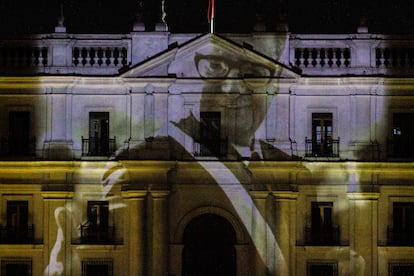
The long and often sinister history of U.S. intervention in Latin America appears to be about to enter a new chapter. After a 20th century full of active interference, sometimes overt, such as the 1989 invasion of Panama — and other times, supposedly covert, such as the sponsorship of the 1973 coup in Chile against Salvador Allende — the Trump administration has authorized covert CIA operations in Venezuela. Add to this the five attacks on alleged drug boats and a small submarine in the Caribbean, and the strange withdrawal of the head of the Southern Command, in charge of military operations in the region, two years ahead of schedule, and the pressure on Venezuela President Nicolás Maduro becomes even more direct.
Many Latin American dictatorships were built thanks to U.S. support for both the autocrats themselves and the power apparatus that underpinned them: the memory of the sinister School of the Americas, which trained more than 45,000 Latin American officers and instructed them in dirty war tactics, has not yet been erased, even though it closed its doors in 1984.
The CIA was the direct executor of coup plots, assassination plots, and the rise of the Contra insurgency in Sandinista Nicaragua in the 1980s. Its explicit mention by Trump, who recently admitted having authorized CIA operations against Chavismo, is not only unprecedented, but also, and above all, a warning.
During the 20th century, Washington’s interventionism in the region served to preserve strategic interests (the Panama Canal), economic interests (the United Fruit Company’s monopoly in Guatemala), and political ones, which can be summed up in the fight against communism, especially during the Cold War. In recent decades, these objectives have been overlapping with the powerful DEA’s war on drugs.
That is precisely the argument Trump uses to pressure Venezuela and try to force Maduro out, subjecting the Chavista leadership to a regime of psychological terror. The six extrajudicial operations carried out in Caribbean waters since September 2 have left at least 27 people dead and two survivors, a Colombian citizen and an Ecuadorian national, who were detained and will be repatriated. The Republican president announced a second phase of the offensive, suggesting the beginning of ground incursions. The fundamental difference with the past is that, in a world determined by an uninterrupted flow of communication and public interactions on social media, the White House and the State Department are now toying with the idea of announcing the next step.
This strategy has contributed to sowing unrest throughout much of the region. The military campaign in the Caribbean is being followed closely and with concern by the Washington-based embassies of Latin American countries that are home to organizations involved in drug trafficking, such as Mexico and Colombia. They are also watching with the hope that Trump’s interventionist ambitions will not continue beyond Venezuela. Mexico alone has six criminal gangs included last February by the U.S. State Department on the list of “foreign terrorist organizations”: the Sinaloa, Jalisco New Generation, Northeast, and New Michoacan Family cartels, as well as the Gulf Cartel and the “United Cartels.”
“There’s a fear of who might be next,” explains a Latin American diplomatic source in the U.S. capital. “And also a certain confidence that countries that maintain a good relationship [with Washington] will be spared. Although with this administration, you never know.” In both Colombia and Mexico, Trump has already used the war on drugs and his zero-tolerance policy toward immigration to justify a tariff onslaught. However, aside from the clashes with Colombia President Gustavo Petro, the most recent over the latter’s support for Gaza during the United Nations General Assembly, the perception in Bogotá and Mexico City is that, for the moment, Venezuela is Washington’s chosen target. At least for its escalating warlike rhetoric.
“It would be very naive to think that the CIA began operating after Trump said so. All of this has a performative dimension. What is going on is that before, we knew the United States had that capability, and now we know it also has the intention,” says Sergio Guzmán, director of Colombia Risk Analysis, a consulting firm dedicated to measuring political risks in the region and their economic impact. A clear trigger for an acceleration of events could, in his opinion, be a military response from Maduro. In any case, applying the same Washington recipe to other countries would have deeper consequences. “The case of Mexico is even more sensitive because interdependence is even greater. Any gesture would have an economic impact on the United States, and Trump wants to avoid that,” he reasons.
The Monroe Doctrine
The fears, in any case, have a historical basis. The Monroe Doctrine’s idea of “America for the Americans” fueled a kind of unity of destiny on the continent: Latin American countries became, despite themselves, the United States’ backyard. As the sole superpower in the Western Hemisphere, the White House felt entitled to intervene politically and militarily, although the deployment of the Army and the CIA, in some cases, has been overshadowed in recent decades by Drug Enforcement Administration (DEA) agents.
Thanks to the Monroe Doctrine and the Roosevelt Corollary, named after U.S. president Theodore Roosevelt and which explicitly authorized the use of military force, Washington assumed the power to adopt all necessary measures to “stabilize” a country or, under the action of the IMF and the World Bank, to straighten it out when it failed to meet its financial obligations.
During the Cold War, the United States successfully engaged in around 50 coups d’état under the so-called doctrine of containing communism. On other occasions, it unsuccessfully promoted actions such as the failed Bay of Pigs invasion or the numerous assassination attempts on Fidel Castro.
One of the first countries it intervened in was Haiti, which Washington coveted as a potential regional naval base. After a turbulent first decade of the 20th century, with seven presidents in just five years and the assassination of the last one, the U.S. sent the Navy in 1915 and occupied the country until 1934. The supposed stabilization effort allowed it to assume economic control and amend the Haitian Constitution to authorize foreign ownership of its fertile lands. A century later, U.S. contractors — some close to President Donald Trump — provide private security in this failed state.
Since the beginning of the 20th century, the U.S. has also intervened in one way or another in Honduras, Cuba, Nicaragua, Panama, and Guatemala, as well as Colombia and Mexico. Its sinister interference extended to the countries of the Southern Cone in the 1960s and 1970s.
But the Cold War was the perfect setting, straight out of a Graham Greene or Le Carré novel, for the prominence of an undisguisedly imperialist United States. The domino doctrine — the potential contagion effect in the region of a country falling into the USSR’s orbit— sparked Washington’s paranoia about any government that spoke of nationalizing land or expropriating businesses, or of social justice.
The clearest case was Guatemala in 1954, against the sweeping agrarian reform of president Jacobo Árbenz, which threatened the interests of the U.S.-based United Fruit Company, owner of 40% of the country’s land. The U.S. intervention was known as Operation PBSuccess and it was a full-blown coup, chronicled by Mario Vargas Llosa in one of his last novels, Harsh Times.
Between 1964 and 1965, the U.S. also encouraged the coup that overthrew the government of Social Democrat Juan Bosch in the Dominican Republic and occupied the country for 17 months. On the island of Grenada, it ended the first and only Marxist government in the English-speaking Caribbean in 1983.
The most sinister example of U.S. interventionism in Latin America was Operation Condor: a coordinated campaign of repression between South American dictatorships and Washington in the 1970s and 1980s to disappear the left through a systematic plan of torture, murder and death flights in Argentina, Bolivia, Chile, Paraguay, Uruguay, Brazil, Ecuador and Peru.
In 1973, Chilean General Augusto Pinochet staged a coup against the legitimate government of socialist president Salvador Allende, a project heavily influenced by then-U.S. secretary of state Henry Kissinger, who was awarded the Nobel Peace Prize that same year. The United States also contributed to the establishment of Brazil’s military dictatorship with its support for the 1964 coup against leftist Joao Goulart. The military remained in power until the 1980s, while today Donald Trump openly supports coup leader Jair Bolsonaro.
The case of Panama, one of the last U.S. invasions and perhaps the first one to be broadcast almost live, ousted Manuel Antonio Noriega, a former CIA informant turned tyrant. Washington used the leader’s ties to drug trafficking as the excuse to overthrow him. In December 1989, 24,000 soldiers were sent to Panama to capture him, and after several weeks of fighting, the general finally surrendered on January 3, 1990.
Along with Haiti, U.S. intervention in Panama is one of the oldest on the continent: as early as 1903, it sent warships to support separatist groups seeking independence from Colombia, which led to the country’s independence and, subsequently, to Washington’s control of the Canal. The Trump administration now promises to “recover” the canal from Chinese influence.
Special mention should be made of the feverish activity of Washington’s military personnel, intelligence agents, and plainclothes envoys in Central America during the bloody period of the civil wars in Guatemala (between 1960 and 1996, the longest one on the continent, which began after the coup against Árbenz) and El Salvador. From the School of the Americas, which taught entire generations of Latin American military personnel how to torture and murder people, Washington supported the death squads — paramilitary groups responsible for, among other atrocities, the massacres of indigenous people, peasants and political opponents, as well as the murders of Jesuit priests of the Central American University and Monsignor Óscar Arnulfo Romero.
Curiously, Venezuela is not included on the map of U.S. interventions in the continent during the 20th century. Venezuela’s economic interests, aligned with those of the superpower, guaranteed a smooth relationship until Hugo Chávez came to power. The closest thing to direct U.S. intervention in that country is inferred from the confession of John Bolton, former National Security Advisor in Trump’s first term and indicted this Thursday for his handling of classified information. In 2022, Bolton acknowledged that he helped organize coup attempts in other countries, but without success due to the “incompetence” of the administration he served. Bolton referred in passing, without providing details, to the crisis with Venezuela in 2019 over Washington’s recognition of Juan Guaidó as interim president. And although Maduro has always denounced U.S. interference in Venezuela’s domestic affairs, the consequences of the hostilities had never reached so far.
Sign up for our weekly newsletter to get more English-language news coverage from EL PAÍS USA Edition









































