
Cuts in training for new ICE agents ‘should scare everyone,’ says whistleblower
A former official at the immigration agency and several recent analyses reveal deficiencies in instruction programs for recruits, and warn of the risk that it will lead to more deaths and illegal detentions
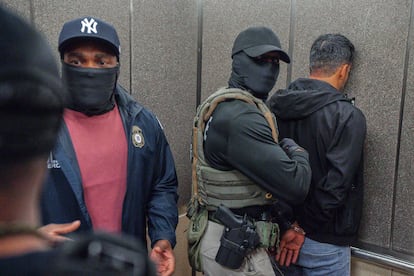

The training of Immigration and Customs Enforcement (ICE) agents has been called into question in recent months. Excessive use of force by immigration agents during arrests, violations of citizens’ rights, trespassing, and inhumane treatment of detainees have been common criticisms of their methods. Public outrage reached a fever pitch with the killing of Renee Good and Alex Pretti in Minneapolis in January by federal agents.
Several recent studies, the testimony before Congress of a former ICE employee, and a Senate report show that the training time for agents has been reduced by between 40% and 50%, although the Department of Homeland Security (DHS), which is in charge of immigration enforcement, denies this.
Former ICE instructor and attorney Ryan Schwank, who resigned from his post in February, told Congress last week that the training given to new agents is inadequate and will have serious consequences, including deaths. “I am duty bound to tell you the ICE Basic Immigration Enforcement Training Program is now deficient, defective, and broken,” he said in his testimony. “Deficient training can and will cause deaths. It can and will cause unlawful arrests, violations of constitutional rights, and fundamental loss of public trust in law enforcement.” ICE, he added, is lying to Congress and the American people about the steps it is taking to ensure that its 10,000 new agents faithfully respect the Constitution and can perform their jobs.
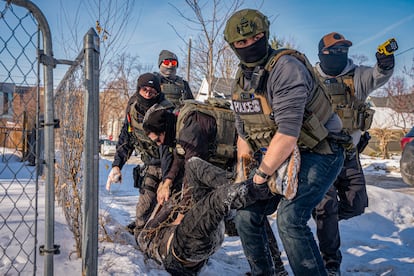
The crusade against immigration that President Donald Trump launched in his second term could not be implemented with the existing number of agents, so he proposed more than doubling their numbers to reach 20,000. The way to achieve this was by recruiting more agents and accelerating their deployment to detain migrants on the streets. An investigation by The Washington Post revealed that the 100-day training program was initially reduced to 47 days in August and to 42 days in September. In total, 240 hours of the basic program were reportedly cut.
The initial cuts eliminated more than 100 hours of practical instruction, including half of the 56 hours previously dedicated to firearms training, according to records obtained by The Post. Physical training time was almost entirely eliminated, and dozens of hours of classroom instruction on topics such as case processing and the legal authority of deportation officers were also eliminated. According to the investigation, further cuts implemented in the fall eliminated three-quarters of the time dedicated to practical skills, including weapons handling. Spanish language instruction and the proficiency test were also eliminated.
The Department of Homeland Security (DHS) has denied that any cuts have been made. “We have ensured that our law enforcement officers receive the best training to arrest and remove murderers, rapists, pedophiles, terrorists, and gang members from our communities,” Deputy Assistant Secretary Lauren Bis stated last month. “Despite false claims by the media and sanctuary politicians, no training hours have been cut. Our officers receive extensive firearm training, are taught de-escalation tactics, and receive Fourth and Fifth Amendment comprehensive instruction. The training does not stop after graduation from the academy — recruits are put on a rigorous on-the-job training program that is tracked and monitored,” she added.
FACT CHECK: No trainings OR standards have been cut from ICE training.
— Homeland Security (@DHSgov) March 3, 2026
New ICE recruits receieve 56 days of training and an average of 28 days of on-the-job training. Training increased from five days a week, eight hours a day to six days a week, twelve hours per day including… pic.twitter.com/aXDG62jiGR
In its X account, the DHS posted this week that “new ICE recruits receive 56 days of training and an average of 28 days of on-the-job training.” However, records obtained by The Washington Post and Schwank’s testimony contradict this.
A CNN investigation showed that ICE agents receive the least training of the 20 largest federal agencies, with the exception of probation officers and federal prison guards.
With the goal of achieving the largest deportation in history, the Trump Administration has exerted enormous pressure on ICE agents to intensify the arrests of undocumented immigrants. To this end, it has invested millions of dollars in new weapons and ammunition, launched police operations across the country, and granted agents greater leeway in making arrests, such as eliminating the need for a warrant to enter a residence and detain the people inside, among other measures. To fund this push for the immigration agenda, Congress approved a $76.5 billion allocation for ICE in its “Big and Beautiful” bill, as Trump dubbed it, for the next four years. Of that total, $30 billion is earmarked for hiring new agents.
Back in July, DHS launched a recruitment campaign to increase the staff of ERO, the branch of ICE responsible for arrests and deportations. The rush to attract personnel led to lowering the hiring age from 21 to 18 and offering bonuses of $50,000, a considerable sum for young people.
According to the Senate report released on February 23, as of January 29 ICE had enrolled 803 new agents to graduate in 2026 and projected 3,204 more graduates by the end of fiscal year 2026, which ends in September. “If you take an 18-year-old with 47 days of training and then take away their five weeks of Spanish language training, this could create a language barrier when interacting with people. More importantly, this reduction in training standards not only endangers the public but also the agents themselves, by putting them in situations where they are not fully prepared to perform the tasks they are supposed to,” said Rashawn Ray, an analyst at Brookings’s Governance Studies, Race, Prosperity, and Inclusion Initiative.
According to the Senate document, while in July 2021 an ICE ERO cadet needed to complete 25 practical exercise exams to graduate, that same cadet now needs to complete only nine. “Without reform, ICE will graduate thousands of new officers who do not know their constitutional duty, do not know the limits of their authority and who do not have the training to recognize an unlawful order. That should scare everyone,” Schwank warned on Capitol Hill.
Sign up for our weekly newsletter to get more English-language news coverage from EL PAÍS USA Edition









































