
Exchange of bodies between Israel and Hamas overshadows ceasefire in Gaza
Eight Palestinians have been killed by Israeli fire in two days, while the reopening of the Rafah crossing has been delayed
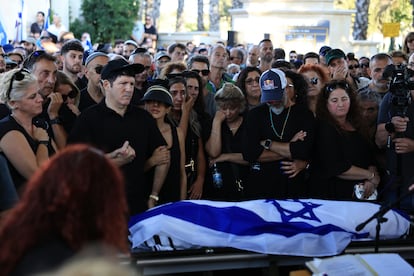

For U.S. President Donald Trump, Gaza and the region in general are experiencing “peace” and “the historic dawn of a new Middle East.” The first five days of the ceasefire in the Strip, however, have been marked by a sense of déjà vu, especially due to the unbalanced back-and-forth between Israel and Hamas over the return of the remains of the deceased hostages and the retaliation over the pace at which it is being carried out, which Benjamin Netanyahu’s government considers insufficient and malicious. Problems (such as Hamas returning the wrong bodies), threats, and Israeli strikes that have killed eight Palestinians in the past two days have dampened the atmosphere of enthusiasm created Monday by the exchange of the remaining 20 living Israeli hostages for the release of nearly 2,000 Palestinian prisoners.
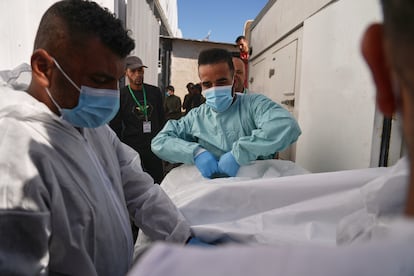
The handover of the remains of Israeli hostages again strained the ceasefire agreement in Gaza on Wednesday. The Israel Defense Forces (IDF) confirmed that one of the four bodies it received the previous night from Hamas, through the International Committee of the Red Cross, does not correspond to any of the 24 unidentified Israeli hostages, but rather to a Gazan. Furthermore, Rafah — the border crossing between Egypt and the Strip that Israeli forces seized in May 2024 and whose reopening had been postponed until Wednesday in retaliation for the pace of the returns — remains unopened. Added to this is the fact that Israel, which is holding the remains of hundreds of Palestinians, is also failing to meet the return ratio. It should have already handed over 105 bodies, compared to the correct nine returned by Hamas, according to the terms of Trump’s peace plan, the second phase of which is currently being negotiated. Only 45 have been delivered, however, and according to Ahmad Masoud, director of the Palestinian Center for the Absent and Enforced Disappeared, their names and personal details have not been included, except in three cases. Two people were also killed by Israeli drone fire east of Gaza City.
The Netanyahu government and the U.S. president are pressuring the Islamist group through mediators to hand over as many hostage remains as possible, as soon as possible. The Republican’s plan provides 72 hours for those whose whereabouts are known to be returned, and then creates a mechanism to share information (through the International Red Cross and mediators) on the location of the rest. It does, however, require Hamas to make “the greatest possible effort” to find them during this phase.
On Wednesday night, after handing over two more bodies, Hamas asserted that it had fulfilled its “commitment to the agreement” and said it had already handed over all the “live Israeli prisoners” in its custody, as well as the bodies it had “accessed.” “The remaining bodies require significant efforts and specialized equipment to search for and retrieve, and we are making a great effort to close this file,” Hamas added in a statement released on its official channels, as reported by the EFE news agency.
On Tuesday, Trump had insisted (his capitalization) on his social media platform, Truth: “ALL TWENTY HOSTAGES ARE BACK AND FEELING AS GOOD AS CAN BE EXPECTED. A big burden has been lifted, but the job IS NOT DONE. THE DEAD HAVE NOT BEEN RETURNED, AS PROMISED! Phase Two begins right NOW!!!”
According to media leaks, Israeli military commanders have been aware for months that some remains risk being scattered forever under the rubble of a devastated Gaza. A spokesperson for Netanyahu’s office, Shosh Bedrosian, insisted, however, that they expect the return of all the deceased hostages without exception. “Let’s make that very clear. All of them will come back. And like I said, we are expect Hamas to fulfill that obligation,” she stressed at a press conference in Jerusalem.
The Hostages and Missing Families Forum demanded a meeting with IDF Chief of Staff Eyal Zamir regarding the bodies. “It is inconceivable that the Israel Defense Forces have allowed the agreement to continue to be implemented while Hamas has flagrantly violated it and our loved ones remain in Gaza. The families will demand that the Chief of Staff explain why the army continues to implement the agreement as usual, amid deep concerns that the hostages may remain in captivity,” stated one of its spokespersons.
Since Monday, when it released the 20 hostages who are still alive, Hamas has handed over nine of the 28 deceased captives to Israel, plus the erroneous body. On Wednesday, amid pressure, it handed over two at the last minute.
Preceding
Analysis by the Abu Kabir Forensic Institute on Wednesday revealed the mistaken delivery. It is apparently a similar error to a previous exchange last February, which Hamas corrected that same day as Netanyahu threatened to make the party-militia pay “in full” for its “unspeakably cynical act.”
The episode, in addition to causing grief among families hoping to bury their loved ones with dignity, has further strained the atmosphere surrounding the ceasefire. Israel is taking advantage of its position of strength to tighten its grip. A day earlier, it announced collective punishments against the Gazan population in retaliation for the pace of body deliveries. After only receiving four bodies, it informed the UN that it would not allow the entry of more than 300 trucks carrying humanitarian aid per day until further notice. This is half of the minimum of 600 cleared for “immediate” entry as stipulated in Trump’s plan since it went into effect last week.
The Netanyahu government also limited gas and fuel to specific humanitarian infrastructure projects. They will not reach the population, who are yearning for them after so many months of being forced to cook with wood and even with plastic recovered from destroyed homes, with the consequent impacts on health.
Israel has not issued any official statement regarding the reopening of Rafah, which was postponed until Wednesday. Journalists stationed early Thursday morning on Salaheddin (the highway that runs north to south through Gaza) reported not seeing a single truck pass by, while Israeli public radio reported at midday that “preparations continue” for its reopening.
A Reuters video showed trucks moving on the Egyptian side of the crossing (some carrying fuel, others pallets of humanitarian aid), but it is unclear when they will pass through. On Wednesday, vehicles carrying fuel and gas entered the Israeli crossings of Kerem Shalom and Al Auja, from where entry into Gaza is permitted.
Sign up for our weekly newsletter to get more English-language news coverage from EL PAÍS USA Edition









































