
Berberine: Benefits and myths of the so-called ‘natural Ozempic’
Supplements based on this alkaloid have shown some benefits, but they are not comparable to GLP-1-based drugs
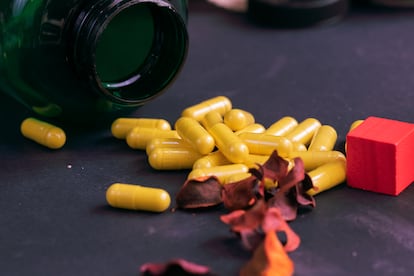

What if there were a “natural Ozempic”? A substance with all the proven benefits of GLP-1-based drugs, but without their contraindications. It would be a panacea — one that some brands and social media influencers are trying to attribute to a supplement called berberine. They’re capitalizing on the fact that this supplement has shown some metabolic benefits, but it’s not Ozempic, it doesn’t work like Ozempic, and it doesn’t serve the same purpose.
It is an alkaloid found in plants of the Berberidaceae family, with a long-standing use in China, where numerous studies support some of its benefits. Clinical trials and meta-analyses suggest that it can modestly reduce fasting glucose, triglycerides, and LDL cholesterol, with results most thoroughly studied in people with type 2 diabetes, dyslipidemia, and metabolic syndrome. There are also signs of improvement in some markers of insulin resistance and, to a lesser extent, in body weight, although this latter effect is more inconsistent and less robust.
Pablo Zumaquero, a registered dietitian nutritionist, explains that while some studies could be more robust or rigorous, there is so much moderate‑quality evidence that it is reasonable to believe that it has these effects. “It acts more or less like metformin [a diabetes medication],” explains Zumaquero. “It activates a switch in the cell and tells the body to use fuel and stop producing it.”
In other words, berberine pushes the body toward a more catabolic state: “It increases the oxidation of fat and glucose, and their uptake,” says the expert. Put another way, it helps glucose enter the cell in people with insulin sensitivity problems and allows the body to use energy more efficiently instead of storing it.
But the specialist urges us to separate science from marketing. He argues that its use could be beneficial in specific conditions: “Type 2 diabetes, polycystic ovary syndrome, obesity, non-alcoholic fatty liver disease, and high cholesterol.” However, he believes that indiscriminate use without medical advice can be dangerous: “It makes sense for some people, but taking it ‘because it’s good’ is like taking an antibiotic or diabetes medication because I’ve been told it’s good.”
His argument is simple: when a supplement is used to modify a specific metabolic imbalance, it is no longer a harmless act of self-care, but rather a form of self-medication. “When supplements are for medical conditions, they must be supervised by a healthcare professional; when something has real benefits, it also usually carries potential side effects,” he warns.
Zumaquero warns of diarrhea as the most frequent adverse reaction, in addition to “a host of drug interactions,” especially with hypoglycemic agents, and adds that if combined with GLP-1 agonists, “it can cause hypoglycemia.” He also mentions interactions with “aspirin, ibuprofen, metformin, and antibiotics.” For this reason, he flatly rejects the idea that it can be taken as a general supplement for anyone. “It’s pointless: if I have good insulin sensitivity and no fatty liver, why would I take it? It’s like taking metformin.”
On the topic of weight, he is even more emphatic. The evidence, he says, is “very modest.” And, above all, he insists that the comparison with Ozempic is a deliberate distortion. “The first thing Ozempic does is suppress your appetite; berberine has no effect on this. It doesn’t provide satiety, it provides insulin sensitivity.”
But this comparison sells. Several supplements use this claim in some way. Recently, Kobho Labs launched KobhoGLP (a direct reference to the Ozempic family of drugs), which, according to its representatives, sold out of 60,000 units in 15 days.
Dr. Isabel Viña, who has her own brand of supplements, agrees that equating berberine with GLP-1-based medications is “far from” reality. “They don’t share common metabolic pathways,” she says. Viña also highlights the enormous difference in results: while these drugs achieve weight loss of “18% or 20%,” with berberine, at most, the figure is around “5%.” “A drug is one thing, and an over-the-counter supplement is another,” she summarizes.
Unlike Zumaquero, Viña does believe it can be beneficial for most of the population, “ideally” under the supervision of a healthcare professional, but also if they are “well-informed”: “A third of people have fatty liver disease, and it can benefit all of them. And anyone can benefit from its effects on liver fat, fatty acid oxidation, triglyceride and cholesterol synthesis, and even mitochondrial function.”
But Viña emphasizes that not all berberine is the same. “[Berberine] HCL has less than 5% bioavailability,” she explains. She proposes several strategies to improve it: encapsulating it in molecules like phytosomes and liposomes, which prevent intestinal degradation, and combining it with black pepper extract and milk thistle, which can significantly increase bioavailability.
Not a medicine
Cristóbal Morales, an endocrinologist specializing in obesity and GLP-1-based drugs, also acknowledges the potential benefits of berberine, but clearly outlines its limitations. “It’s not a drug,” he insists, but rather “a supplement, a dietary aid, with a beneficial profile, but it never reaches the potency of a medication.”
Morales is the only doctor among half a dozen consulted in the field of obesity and diabetes who has offered an opinion on berberine. He acknowledges that physicians typically lack training in these types of supplements. “We feel quite comfortable and confident with the clinical trials, publications, and indications approved by the drug regulatory agency,” he explains.
That, he says, is “a fairly controlled area,” with strict procedures and evidence of efficacy and safety. With supplements, on the other hand, “there are more uncertainties”: less evidence, less support in clinical guidelines, and a much more slippery slope for clinical practice. “It’s not that we’re against them, quite the opposite,” he clarifies, but he admits that more training and more evidence are needed to be able to make recommendations with confidence.
That vacuum is precisely the space in which advertising thrives. Morales points out that these products operate under a different, much more lax regulatory framework, which paves the way for far more ambitious commercial messages.
Spain’s consumer watchdog OCU warns that, in addition to diarrhea, it can cause abdominal pain, constipation, flatulence or nausea, hypotension, decreased heart rate and hypoglycemia.
“It increases the risk of uterine contractions and, when consumed during pregnancy, can cross the placenta and is suspected of potentially affecting fetal development, as well as potentially passing to the baby through breast milk,” states the consumer organization.
Sign up for our weekly newsletter to get more English-language news coverage from EL PAÍS USA Edition









































