
Kim Rivers, the ‘queen of marijuana’ who rewrote the industry’s rules
Part of the entrepreneur’s success lies in building a brand identity far removed from the traditional imagery surrounding cannabis
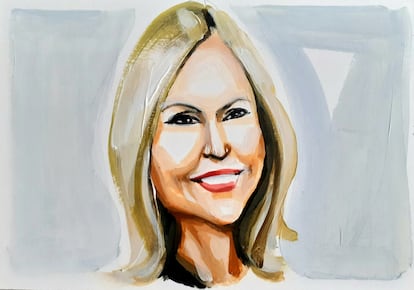

Kim Rivers, 48, founder and CEO of the cannabis company Trulieve, will never forget December 18, 2025. The Florida entrepreneur was among the guests in the Oval Office when U.S. President Donald Trump signed the historic order to reclassify marijuana in the United States as a lower‑risk drug, moving it from Schedule I to Schedule III of the Controlled Substances Act. The president’s order, which recently took effect, does not legalize recreational marijuana nationwide, but it allows companies like Trulieve to operate with far better tax treatment and opens the door to scientific and medical research in an industry valued at more than $30 billion.
To understand Kim Rivers’s leadership at Trulieve, it’s essential to see her as a strategist who has turned the legal framework into her greatest competitive advantage. “I take very seriously the sense of responsibility to represent the industry,” she told Forbes in an interview on April 17. For years, she has led efforts to eliminate the burden of Section 280E of the U.S. tax code, which prevents cannabis companies from deducting ordinary business expenses.
Created in the 1980s as part of the war on drugs to financially cripple traffickers, the rule effectively forces cannabis companies to pay taxes on gross income rather than net profit, exposing them to tax rates above 60%. After years of fighting it, in 2023, she demanded that the IRS return $114 million on the grounds that a state‑licensed company like hers could not legally be treated as a trafficker — and she won. The IRS returned the $114 million through several checks.
Dressed in expensive suits and sky‑high heels, the entrepreneur has never been seen as a marijuana activist — and yet she has become one of the most influential figures at the federal level in recent years. Those who know her highlight her ability to stay three steps ahead of both competitors and regulators. After Trump’s order, the Treasury Department and the IRS announced they would issue new tax guidance for the industry.
Rivers studied political science and multinational business at Florida State University and earned a law degree from the University of Florida in 2003, a foundation that shaped her career. Before founding Trulieve in 2014, she worked as an attorney specializing in mergers, acquisitions, and securities for major corporations in Atlanta and held roles in the real estate and financial sectors. Since 2011, she has also served as a director at Inkbridge LLC, an investment firm that further broadened her business experience.
She is the mother of a 16‑year‑old and comes from a working‑class family. Her mother was a high‑school assistant principal until retirement, and her father is a retired officer from the Jacksonville Sheriff’s Office, in Florida’s most populous city, with more than one million residents.
In several interviews, Rivers has said that her ultimate goal is to strip cannabis of its “alternative” stigma and turn buying marijuana into an experience closer to ordering coffee at Starbucks or being a frequent guest at Marriott hotels. Trulieve’s stock has shown a notable positive swing, up 25.5% since the reclassification took effect on April 22. Her extensive network and strong track record as a CEO have made her a reference point in the sector.
Recently, Forbes described her as “the cannabis industry’s Trump whisperer.” She has cultivated a close relationship with the president since 2024, when Trulieve launched a campaign to persuade Florida voters to support an amendment to legalize recreational marijuana in the state. That year, Rivers’s company invested $150 million in the initiative. Shortly afterward, she met with Trump, according to U.S. media reports, and following the meeting, the president publicly voiced support for legalization in Florida. The measure ultimately failed, but the direct line to the White House remained. According to Federal Election Commission data, Rivers and Trulieve donated large sums to political groups linked to Trump: $750,000 to his inaugural committee and another $250,000 to his super PAC MAGA Inc., a political action committee that can raise unlimited funds for campaign messaging.
In barely a decade, Trulieve has gone from a small company with a single dispensary in a Tallahassee strip mall to a giant that generated roughly $1.2 billion in sales last year. Today, the company has established itself as the most profitable cannabis operator in the United States, with more than 230 stores in states such as Pennsylvania, Arizona, and Maryland, and control of 35% of Florida’s medical‑marijuana market. Between February 2020 and January 2022, during the worst of the COVID‑19 pandemic, Trulieve’s stock surged 141% after the company was deemed essential. Purchases of medical marijuana and cannabis‑derived products jumped by around 50%, according to company data.
Part of Rivers’s success as CEO lies in having built a brand identity far removed from the images that have historically surrounded cannabis: her products are presented as high‑end wellness items, with careful design and a health‑centered message. That gamble on functional luxury has allowed the brand to stand out in the sector.
Another of the company’s strengths is what she calls “extreme vertical integration,” meaning control over the entire process from seed to packaging; everything remains within Trulieve’s domain. With a 32‑hectare megacomplex in Monticello, Florida, the company oversees cultivation, processing, transport, storage, and retail, enabling it to lower prices and squeeze competitors.
In this new landscape, the rise of Kim Rivers and Trulieve symbolizes more than the success of a single company. It points to the consolidation of a sector that has learned to navigate politics, regulation, and capital with increasing ease. Her influence in Washington and her ability to anticipate shifts in legislation show how far the cannabis industry has moved from the margins to become a player with real weight in the U.S. economy — despite the tensions this may generate within the Republican Party. The challenge now will be to see whether this new phase, driven from the White House, reshapes not only the business but also the social perception of a product long marked by stigma.
Political favors and a legal scandal
Kim Rivers’s husband, John “J.T.” Burnette, was sentenced in 2021 to three years in prison and a $1.25‑million fine on corruption charges involving bribes to Tallahassee officials and efforts to influence public decisions affecting real‑estate projects and state regulations. He was also accused of attempting to shape state legislation — including rules related to the cannabis sector — by pushing for regulatory requirements that would benefit certain actors and make it harder for competitors to enter the market. Rivers was neither investigated nor implicated. She received immediate backing from Trulieve’s board of directors, which helped her remain insulated from the scandal and preserve her position without damage to her professional reputation.
Sign up for our weekly newsletter to get more English-language news coverage from EL PAÍS USA Edition









































