
World Cup expected to boost global beer sales by a billion pints
The data comes from a study by the US investment bank Jefferies, which noted that the tournament will feature more matches than previous editions - and more possibilities to drink
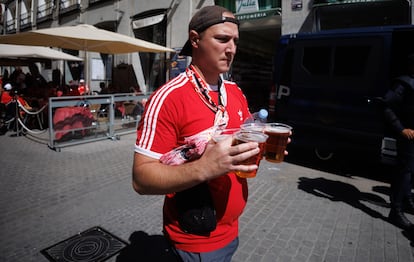

The World Cup could be a boon for major beer companies. The tournament—hosted by the United States, Mexico, and Canada—will result in an additional 1 billion pints of beer consumed worldwide. That’s 568 million liters more than projected in this year’s forecasts, which would equate to a 0.3% increase in total beer sales for the year.
The data comes from a study by the U.S. investment bank Jefferies published this week. Analysts examined the last six World Cups and used data from the consulting firm Euromonitor. They concluded that the tournament has served as a key catalyst for beer consumption in every year it has been held—albeit irregularly, and depending on external factors such as the crisis caused by the war in Ukraine or the Covid pandemic. The market was already expecting a rise in global beer consumption of around 1.7% for this year. Jefferies analysts attribute three-tenths of that percentage point to the direct effect of the World Cup.
Experts have reason to be optimistic. First, the 2026 tournament—which begins on June 11 and ends on July 19—will feature more matches than previous editions. A total of 104 matches will be played, compared to 64 in 2022—a 62% increase. It will also last 39 days, ten more than four years ago, and feature 48 teams—50% more than in the Qatar World Cup. That means more days of soccer and more potential beer drinkers. According to Jefferies, drinking occasions will increase significantly, especially in bars. The World Cup’s impact on beer sales will, above all, be felt in the hospitality sector.
In contrast, the tournament has virtually no impact on what is referred to as off-trade consumption—that is, beer cans and bottles purchased at supermarkets and consumed at home—which remains flat.
The countries expected to consume the most beer are those in Western Europe. This is because, explains the report, they have a deeply rooted soccer culture, soccer is heavily featured in bars and pubs, and, most importantly, they have favorable game times.
The schedule is precisely one of the factors that most significantly impacts brewers’ profits, and the report describes it as an “invisible variable.” Matches played during prime time—roughly from 5:00 p.m. to 11:00 p.m., as is the case in many European countries during the final rounds—see bar attendance and retail sales that are “significantly higher than for matches played early in the morning or at midday.”
According to data from the last five World Cups analyzed by Jefferies, the greatest impact is always felt in the host countries. During the 2006 World Cup in Germany, beer sales rose by 3.6%, the same percentage as in South Africa four years later. Brazilians drank 4.8% more beer in 2014, and Russians drank 5.3% more in 2018. The most notable exception was the most recent tournament in Qatar, which led to a 26% surge in beer sales in the country; an atypical figure explained by the massive influx of tourists and the fact that the alcohol market is typically highly restricted in Middle Eastern countries.
Sign up for our weekly newsletter to get more English-language news coverage from EL PAÍS USA Edition









































