Federal Reserve cuts interest rates by 0.25 percentage points amid fears of an economic slowdown
The central bank is more concerned about the weakening labor market than the rise in inflation
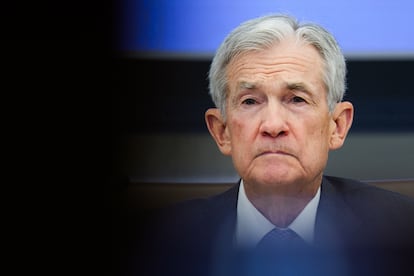

Faced with fears of an economic slowdown and the risk of runaway prices, the Federal Reserve (Fed) has opted for the first course of action. The U.S. central bank decided on Wednesday to cut interest rates by 0.25 percentage points, bringing the target range to 3.75%–4%. This marks the second consecutive reduction in the cost of money, following a similar cut in September aimed at stimulating economic activity.
Signs pointing to a slowdown in the growth of the world’s largest economy are beginning to grow, despite the statistical blackout from the U.S. government. Dozens of federal agencies have closed or are operating at reduced capacity due to government shutdown. Even so, the most recent data indicate a slowdown in the labor market. Consumer confidence fell for the third consecutive month in September and is now below last year’s levels, according to the indicator released on Tuesday. Contributing factors include concerns about the labor market, the cost of living, and a significant increase in uncertainty over tariffs approved by U.S. President Donald Trump.
Fed officials warned at the previous meeting about the delicate balance between inflation and labor market health. The stability of these two variables is precisely the mandate of U.S. monetary policymakers.
Downward revisions to U.S. employment figures show a sharper-than-expected decline in job creation. Despite this, the unemployment rate remains historically low at 4.3%, a level economists describe as full employment. Analysts explain that this apparent divergence is due to a reduced labor supply caused by Trump’s strict immigration policies. Few jobs are being created, but few have been lost. In short, companies are signing fewer contracts, but there are also fewer people willing to work. How long this paradox can continue remains to be seen.
Concerns are also spreading to the housing market. U.S. home prices in August rose at the slowest pace in two years, according to S&P CoreLogic Case-Shiller data released Tuesday. The real estate market risks slowing further due to the layoffs of thousands of federal workers caused by Trump’s austerity policies and the consequences of the government shutdown, which has meant hundreds of thousands of public employees are no longer receiving their paychecks.
This Thursday, the U.S. third-quarter economic growth data will be released, providing numbers to quantify the widespread sense of economic unease. The United States faces the risk of stagflation, a period of low growth and high inflation, which is devastating for both citizens and businesses.
Meanwhile, inflation shows no sign of slowing. Last September, it rose by one-tenth of a percentage point to 3%, the highest level since January. Core inflation, which excludes the most volatile items in the consumer basket, such as fresh food and energy, also climbed to 3%, above the Federal Reserve’s target.
Uncertainty over the real economic impact of tariffs is affecting companies. Many managed to cushion the blow by front-loading purchases and reducing margins in the previous quarter. However, inflation may rise further, and the economy could cool as this strategy’s effects start to wane and companies begin passing higher import costs onto prices.
All eyes will be on the next meeting of the Federal Open Market Committee (FOMC) — the Fed body that decides interest rates — to see how concerns have shifted between these opposing forces: a rebound in inflation and a slowing economy.
Wednesday’s meeting took place in a tense atmosphere amid growing pressure from President Trump to control the Federal Reserve. For months, the Republican president has waged a campaign of harassment against Fed Chair Jerome Powell, repeatedly insulting and disrespecting him in an attempt to force his resignation. Trump wants a more aggressive monetary policy, pushing deeper rate cuts to accelerate economic activity. There is just over a year remaining until the midterm elections, which could reduce the Republican Party’s control in Congress.
So far, Trump has already placed one of his allies, Stephen Miran, a former member of the president’s advisory council, on the Fed’s board of governors. At the previous Fed meeting, Miran voted against a 0.25-point rate cut, seeking a more aggressive reduction, according to minutes released a couple of weeks ago. In this meeting, he voted for a 0.5-point rate cut. Another governor, Jeffrey R. Schmid, president of the Federal Reserve Bank of Kansas, voted to keep interest rates unchanged.
Sign up for our weekly newsletter to get more English-language news coverage from EL PAÍS USA Edition