
Over 100 business leaders go to Congress to warn about the labor shortage caused by deportations
Executives are advocating for passage of the bipartisan Dignity Act, introduced by Republican Maria Elvira Salazar, which rules out a path to citizenship
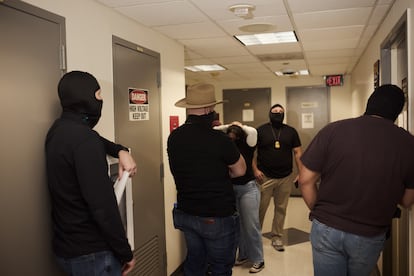

More than 100 business leaders from across the country have gathered in Washington, D.C. to ask members of Congress for help in the face of the Donald Trump administration’s mass deportations, which are leaving them without a workforce. On Wednesday, the executives will meet with several lawmakers to ask them, for the umpteenth time, to push through a reform that would facilitate work permits for undocumented immigrants, essential to the survival of their businesses but who are now failing to show up for work, either out of fear of being detained or because they have already been deported.
Under the slogan “Secure America’s Workforce,” the three-day mission was organized by the American Business Immigration Coalition (ABIC), a bipartisan coalition of more than 1,700 CEOs, business owners, and trade associations in 17 states. The organization has been warning for months about the catastrophic consequences that the deportations are having on their businesses. “Thanks to their efforts, lawmakers in Washington are hearing our message loud and clear: The U.S. economy cannot grow without legal avenues for the workers who power industries like construction, agriculture, hospitality, healthcare, and so on,” says Rebecca Shi, CEO of ABIC.
Eight million jobs
According to the coalition, there are eight million unfilled jobs across the country, which is increasing prices across the economy, from food to construction materials, and limiting access to everyday products and services for Americans.
ABIC is advocating for Congress to pass the Dignity Act, introduced by Florida Republican Congresswoman Maria Elvira Salazar and Texas Democratic Representative Veronica Escobar.
The bill has been unsuccessfully introduced three times in Congress. The latest version, introduced in July, differs from the 2023 version in one important respect: it eliminates the path to citizenship. Instead, it offers “dignity” status, a permit to legally reside and work in the United States.
According to the proposal, to qualify for the permit, migrants must have been in the country for more than five years, have not committed any crimes, and pay a $7,000 fine for being undocumented. Additionally, as a penalty, the government will seize 1% of their wages for a period of seven years.
“This is a situation we need to change now,” Salazar declared Tuesday at a meeting with business leaders at a Washington, D.C., hotel, where she warned of the consequences the deportation campaign will have on the Republican Party in next year’s midterms. “We’re sending the wrong message that we don’t want those people here,” she stated. Salazar was applauded when she said that the current situation “is a mess” because employers are breaking the law by hiring undocumented immigrants, who, in turn, are in the country illegally. Salazar argued that they can’t do anything else because no one wants those jobs.
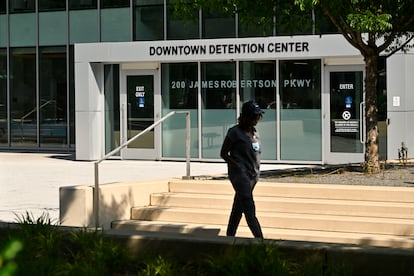
The fear of going to work and being detained by Immigration and Customs Enforcement (ICE) agents, along with the deportations already carried out, have emptied out farms, factories, and service sectors. The detention centers have not been filled with dangerous criminals, as Trump promised, but largely with workers who have spent many years building a life in the country.
The U.S. workforce shrank for three consecutive months in July, for the first time since 2010. The hardest hit sectors are those where workers are predominantly migrant. Fifty-one percent of dairy industry workers are immigrants, as are 45% of meatpacking workers, and 29% of construction workers.
Trump won the 2024 election thanks in part to the support he got from the Latino vote, which has historically been Democratic. For the first time in history, a majority of the Latino male electorate voted for the Republican candidate. The deportation campaign and the racial profiling used by immigration agents to carry out arrests, however, have eroded Hispanic support, and polls already show their discontent.

In next year’s midterm elections, the Republican Party is expected to suffer from Trump’s immigration policies. Salazar was born in the United States, but her parents are Cuban refugees, and her vision of immigration differs from the more extreme positions of the Republican Party, which supports the expulsion of all undocumented immigrants.
Rubén Gallego and the Democrats’ mistake
Similarly, Arizona’s Democratic Senator, Rubén Gallego, is distancing himself from his own party’s position. Gallego, born in the United States to immigrant parents (a Colombian mother and a Mexican father), also introduced his own immigration reform bill in May. The senator addressed business leaders who arrived in Washington yesterday to explain that the Democratic Party has a misconception that Latinos are liberal when it comes to open borders and immigration. Gallego asserted that those who live near the border with Mexico advocate for stricter control, and that Democrats have lost votes for believing otherwise. “My party was wrong because it was uncomfortable about hearing what those who live on the border were saying.” “Although Donald Trump had the most extreme position on the border, it was closer to that of the average voter than to the Democratic position,” he added.
One of the pillars of his proposal is to strengthen border control. The other pillar advocates granting citizenship to Dreamers, migrants who came to the United States as children, although he advocates taking it slowly when negotiating with Republicans.
In his opinion, his party’s “big mistake” has been calling for a complete overhaul of the current system. “We can’t bring 11 million people out of the shadows and give them a path to citizenship,” he asserts. In his state, Latinos make up more than a third of the workforce, and paid $700 million in taxes. Yet, it’s one of the states where ICE has most heavily targeted immigrants.
Gallego wants a more moderate approach, moving forward little by little on the immigration agenda to reach an agreement with the Trump administration. “We have to find a middle ground. Maybe we don’t have to grant them citizenship, but rather let them remain legally in the country, pay taxes, and avoid being deported,” he suggests as a way to negotiate with Republicans.
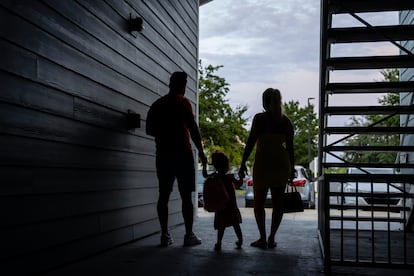
None of the proposals are close to being approved in Congress, but business leaders intend to continue their pressure to prevent business failures.
Sign up for our weekly newsletter to get more English-language news coverage from EL PAÍS USA Edition









































