
Trump’s immigration policy reduces labor, delays projects and raises costs, according to the Fed
The most intensely affected sectors are hospitality, agriculture, construction and manufacturing, notes the Beige Book
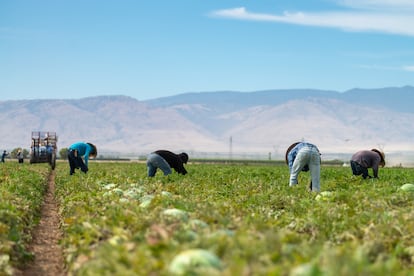

Economic uncertainty has halted the hiring plans of many U.S. businesses, but in the agriculture, construction and manufacturing sectors, companies are still looking for labor. And they are not being successful. The reason? The Trump administration’s immigration policy. This is confirmed by the Beige Book, a compilation of anecdotal information about economic conditions in the 12 Federal Reserve districts that was published on Wednesday. The report highlights the tense situation for the monetary authority, which is grappling with a labor market that is losing steam while inflationary pressures are reawakening.
The report release, which comes at a time of a data blackout due to the partial federal government shutdown, highlights situations such as that of a construction firm in Memphis, Tennessee, that is facing higher labor costs and project delays due to a reduction in available labor. “Contacts in manufacturing, construction, and agriculture continue to report labor shortages due to workers not reporting to work because of fears of deportation. For example, a construction firm in Memphis reported that the reduced labor pool was driving up labor costs and resulting in project delays,” explains the St. Louis Federal Reserve Bank.
In Philadelphia, the Federal Reserve Bank reported that its sources were also noticing a slight disruption in labor markets due to anti-immigration policies: “Contacts highlighted potential disruptions in the labor market from immigration policies. One staffing contact reported high demand from companies looking to fill positions that were recently vacated owing to changes in previous employees’ visa status.”
In Atlanta, Fed officials emphasized that the impacts of changes in immigration policy and raids are greater than previously reported: “Impacts from changes to immigration policy and enforcement were more material than previously reported but were concentrated in certain geographies like south Georgia and sectors such as agriculture and hospitality.”

The Federal Reserve Bank of San Francisco notes another aspect of the authorities’ anti-immigrant activity, especially in the non-profit sector: “Small business owners reported lower demand and strained finances, as they drew down savings and reduced investment. Contacts attributed some of the decline in demand to changes in customers’ behavior in response to immigration policy.” Reports indicate more business closures, reduced hours, and increased delinquencies among these businesses.
Fed Chairman Jerome Powell has admitted that the labor market is weak. The situation is described as “low hire, low fire” due to the current uncertainty. However, the unemployment rate is not higher due to the decline in the labor force, with a lower share among immigrants.
A negative shock
This is something the International Monetary Fund (IMF) has also observed. Its chief economist, Pierre-Olivier Gourinchas, explained at the presentation of the World Economic Outlook report this week that restrictive immigration policies in the United States are reducing the supply of foreign labor, which represents a negative supply shock that adds to the impact of tariffs. “We have seen a very sharp reduction in the share of foreign‑born workers in the labor force in the U.S. that have removed themselves from the labor market,” he said.
The fact that the unemployment rate isn’t higher hides some risks. “What the reduction in the labor supply does is, it is creating tightness in the labor market. It is adding pressures in the labor market. It is potentially adding cost. It is reducing output,” Gourinchas said Tuesday. “So that reduction in the foreign‑born share of the workers in the labor supply is something that goes in the same direction as the tariff shock and is certainly weighing on economic activity in the U.S."
This is something the Fed’s Beige Book also mentions in the chapter describing the situation in New York. After highlighting the same problems in finding staff for construction and hospitality, the New York State Federal Reserve Bank states that these sectors, in addition to education, have seen strong wage growth.
For Gourinchas, “our estimate of potential growth in the U.S. has been revised down. And that is reflecting that lower contribution from a foreign labor force that was quite significant in previous years, and we are not foreseeing that it will continue to contribute.”
Sign up for our weekly newsletter to get more English-language news coverage from EL PAÍS USA Edition









































