
Critics mock Adrien Brody’s artwork: dogs with bandanas, fried chicken and a Warhol-style mural
The New York actor has spent two years focused on creating large ‘collages.’ They sell for thousands of dollars at auction, but remain a target of ridicule for social media and art critics
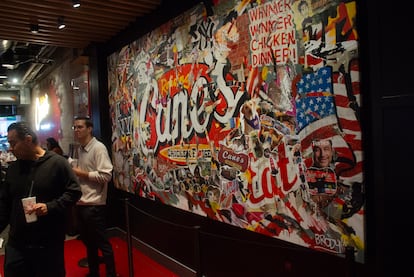

Neither the deep characters of The Pianist nor the overwhelming sets of The Brutalist — Adrien Brody’s latest work is full of bandana-wearing dogs and cheap New York souvenirs. A few weeks ago the two-time Oscar winner for best actor announced an unexpected collaboration with Raising Cane’s, the U.S. fast-food chain specializing in fried chicken. The promotion marked the third anniversary of its Times Square flagship restaurant and, to celebrate, Brody designed a large advertising mural that mixed images of founder Todd Graves and his dog with graffiti and references to Brody’s own career.
“Layered with found wheat-paste fragments, torn advertisements, and weathered street ephemera that I have gathered throughout New York City along with the playbill from my Broadway debut in The Fear of 13, the work echoes the grit, perseverance, and entrepreneurial spirit that defines Graves’s journey, the spirit of NYC and an urban aesthetic that has always spoken to me growing up here,” said Brody in an official statement. Yet this procession of hyperbole failed to convince critics and social media, which quickly tore it apart.
On X, one user called the work “dog shit art,” while in ARTnews critic Alex Greenberger described the collage as “Brody’s latest art monstrosity.” But that reaction is by no means new. The New York actor and producer has spent more than a decade dividing his time between film and his work as a visual artist and, although his collages — inspired by contemporary art greats such as Andy Warhol and Jean-Michel Basquiat — have sold at auction for hundreds of thousands of dollars, they have never stopped being the target of ridicule.
“I was surprised by that. I don’t know why I was, but I was and now I’m not. Now I understand it more. I understand why people like to compartmentalize things and people, right?,” Brody told Interview, the magazine originally founded by Warhol, reflecting on the rejection his turn to the art world provoked. “Lots of creative people need creative outlets, right? And this came to me before an understanding and a knowledge of acting,” he added. In the same interview he revealed that his father, Elliot Brody, a high-school teacher and lifelong amateur painter, had instilled in him a love of art. His mother, Sylvia Plachy — the legendary photographer for the weekly magazine The Village Voice — taught him to feel comfortable in front of the camera.
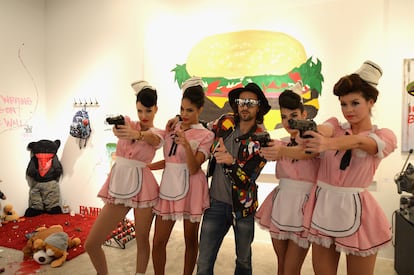
As a teenager Brody actually tried to study art at the prestigious Fiorello H. LaGuardia school. He wasn’t accepted, but was advised to enroll in the school’s acting program. It was there that his fate was decided. That was until 2015, when the actor, then 42 and with a well-established film career, made a high-profile art-world debut with the exhibition Hot Dogs, Hamburgers, and Handguns at Art Basel Miami, America’s most prestigious contemporary art fair. The show revolved around three typically American elements and already displayed the mix of tired pop-art references and urban culture that still enrages audiences today.
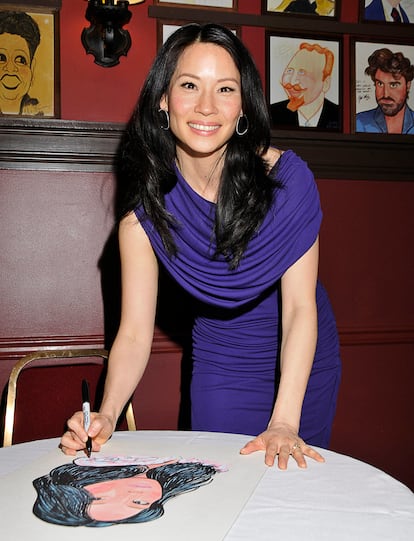
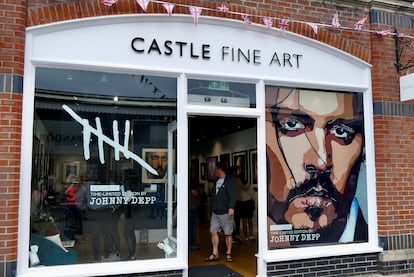
At the time, however, it went rather more unnoticed. Some magazines, such as Newsweek, wondered whether he’d have even reached that venue without his fame, but in the end he was neither the first actor nor the last to try his hand at art. The list of stars turned painters covers a wide spectrum: from the better-regarded ones — like Lucy Liu, who has been exhibiting since the 1990s and is now seen more as an artist than an actress; Jim Carrey, who nearly became a political cartoonist; or Viggo Mortensen — to the most vilified, such as the perpetually controversial James Franco, Sylvester Stallone or Johnny Depp, whose portraits of famous friends look like they came straight from early photo-editing programs. But generally none break out beyond the most closed circles.
A brutal disappointment
The animosity toward Brody’s artwork began last year with his latest major film: The Brutalist. Brody again won an Oscar and delivered moments that sparked discussion — from a seemingly interminable acceptance speech, which many compared to the film’s three-and-a-half-hour running time, to the chewing gum he tossed into his wife’s hands just before he began to speak. Barely two months after that peak of scrutiny, the actor opened Made in America, his first major exhibition in years, at the Eden gallery in New York and the reviews were devastating.
On large canvases he indulged the same fixations as always, purposefully graffitiing and degrading icons ranging from Mickey Mouse and Maggie Simpson to Marilyn Monroe, the Ferrari emblem, Jean-Michel Basquiat and even himself. The show also devoted space to New York’s rats, with which the artist said he had always felt a strong identification, and to a table full of chewing gum for visitors to chew and stick onto a blank canvas. The exhibition’s momentum led to the sale of one piece dedicated to Monroe at an auction held in Cannes for about $425,000. The exorbitant price unleashed a flood of memes about the actor and his works on social media.
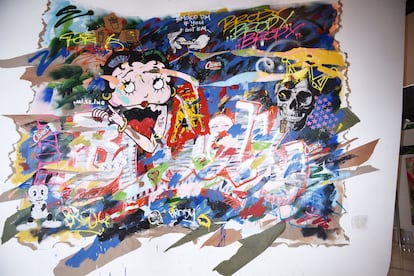
On Artnet, art critic Annie Armstrong coined the term “red-chip art” to describe the popularization of this kind of garish, cartoonish, graffiti-tinged work. The expression plays on the concept of “blue-chip,” used by collectors to refer to works by established names like Picasso, Van Gogh or Monet that are seen as safe investments because their prices tend to hold or rise. Armstrong used “red-chip” to refer to artists she considered overrated whose success she attributes to a new collector profile: men who drive a Tesla Cybertruck, invest in cryptocurrencies and listen to ultra-conservative comedian Joe Rogan’s podcast.
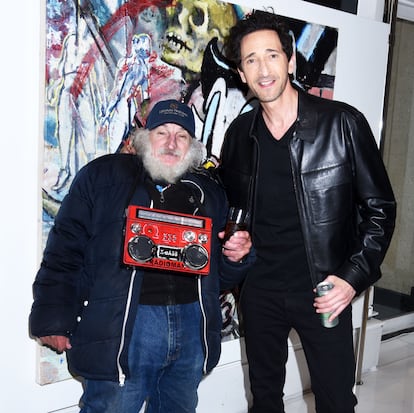
“The only noticeable difference between Brody’s efforts and those of any garden-variety red-chip artist is how often he peppers in his own visage,” she wrote. “It feels uncanny to see an artist who is so successful in one medium be so flat-footed in another.” However, the harshest critique Brody has faced to date came from Claire Bishop, a professor of art history at CUNY, in the pages of The New York Times.
“To say they look like A.I.-generated images resulting from search terms ‘90s LES graffiti’ ‘Americana’ and ‘Disney nostalgia’ would be too generous. What they actually resemble is the kind of sanitized street art that’s sold on 53rd Street outside MoMA or on the sidewalk in SoHo — work aimed at tourists seeking an arty yet unchallenging New York souvenir," Bishop concluded.
Sign up for our weekly newsletter to get more English-language news coverage from EL PAÍS USA Edition









































