
PinkPantheress, Gen Z’s most unmistakably British star: Between classic tartan and a chess player’s mind
In under five years, the singer has gone from posting TikTok clips to commanding major stages with a balance of determination and agility that made her the first woman — and the youngest artist ever — to win the BRIT Award for Producer of the Year
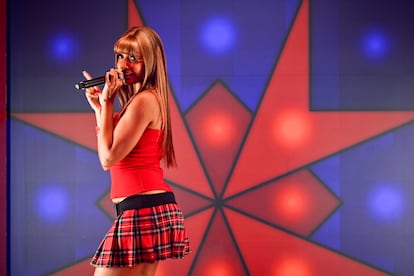

The people have spoken. The United Kingdom has a new ambassador. Her debut party took place this past April at that great hub of cultural diplomacy known as Coachella. At the most popular festival in the United States, PinkPantheress displayed the improbable mix of quirks that, at just 25, has made her the most unmistakably British star of her generation — from her fixation with tartan prints (which she wears even on her lips) to the hyper‑accelerated pulse of viral tracks like Ilegal and, of course, the cool precision of a chess player’s mind inherited from a family full of champions.
However, that Coachella performance was only the tip of the iceberg of her first major world tour, which began a year ago and ends this summer. In less than five years, PinkPantheress has turned stages across half the world into her personal chessboard, moving with a balance of determination and agility worthy of the best players. When asked on Reddit what she would be doing if she weren’t a musician, she replied: “I’d be a chess player. My family are all chess players.” The only way to understand her career, then, is to read it as if it were a grand chess match.
This game begins in Bath, a city in southwest England, in 2001. Back then, she wasn’t yet PinkPantheress, but Victoria Beverley Walker — and thanks to her rich family heritage, she started on the board with an unusually strong set of pieces. Her mother is Kenyan and worked as a caregiver; her father is English and a statistics professor. And on her father’s side, she is the niece of Susan Lalić, a chess champion with prestigious titles such as International Master. Like the rest of her family, Walker learned to play chess early, but she had a very different calling.
🥇did my biiiiiig onneeeee today #under25s pic.twitter.com/8WGKF6Nmwu
— pinkpantheress (@pinkpantheress2) July 3, 2025
When she grew up, she moved to London to study film, but it didn’t take long for her to realize her path lay elsewhere. She had played piano since she was 12, and in the dorms, she spent her nights composing music in her room. “I don’t like long processes. There needed to be some quick, quick way for me to do this,” she reflected in a 2023 interview with The Guardian. “As I realised that film is the hardest industry to get into, I just knew that it was going to be difficult. If I can’t be the best at something, I don’t want to do it.”
She had moved to the British capital dreaming of becoming a film editor, but she quickly redirected that computer‑driven instinct toward production.
That was when her great chess match in the music industry began, and she knew exactly how to move the pawns. Like many in Gen Z, she started uploading her songs to TikTok with videos titled: “Day 2 of sharing my music until someone notices.” And that’s exactly what happened: in less than a year, tracks like Just for me went viral on the platform.
Until then, she had insisted on staying anonymous — she didn’t even show her face, afraid it might affect how her music was perceived. “People are less willing to listen to electronic music that is made by a Black woman. That’s just fact,” she told The Hollywood Reporter.
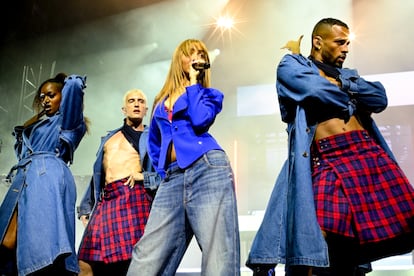
However, with success — and with a serious label behind her — that anonymity became impossible to maintain. Walker’s strength had always been production: a signature sound halfway between electronic music and pop, between the nostalgia of early‑2000s samples and the pastiche and hyper‑accelerated pulse of the TikTok era.
But she needed a new strategy, new pieces on the board: she could no longer hide behind her computer. So if she had to share her image, she decided to separate it as much as possible from herself and build an alter ego with a sharply defined style.
“I’m so happy my stage name is not my real name,” she recently revealed in an interview with singer Cairo for Interview Magazine, founded by Andy Warhol. “There needs to be some separation — that’s why I can go so hard with these music videos. Because in my head, I’m like, well, this isn’t me on the regular, this is me playing into a character. I have to be Pink when I’m onstage dancing, otherwise I go crazy. I lose my sense of self."
The name for this alter ego was already clear — PinkPantheress had been her TikTok handle, a nod to the famous Pink Panther cartoon — but everything else still had to be defined.
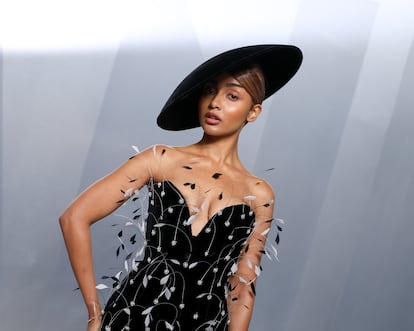
As she released, first a mixtape, To Hell with It, and then an album, Heaven Knows, she built a recognizable aesthetic she described as “young auntie” — and that fans online compared to the look of a department‑store floor manager. In other words, a return to Y2K: early‑2000s style full of tight jeans, tiny tops, and even tinier handbags, but with a more urban edge. Meanwhile, she began conquering major stages as an opening act for artists like Olivia Rodrigo and dipped into international projects such as the Barbie movie, for which she wrote the song Angel.
But she didn’t deliver checkmate until last year with her second mixtape. Fancy That pushed her onto the international board, and at that point, she knew exactly what the PinkPantheress character should look like. Through her lyrics, her sound and, above all, her image, she presented herself as the most camp distillation of what it means to be British.
“Low-key, being British is the strength that I have,” she told The Hollywood Reporter. "Every time I’ve tried to lean into a more American sound, it ends up being a song that I don’t necessarily think reflects my personal tastes as much as when I lean into being British — if I didn’t, I think it would be quite easy for [my music] to get lost in the crowd."
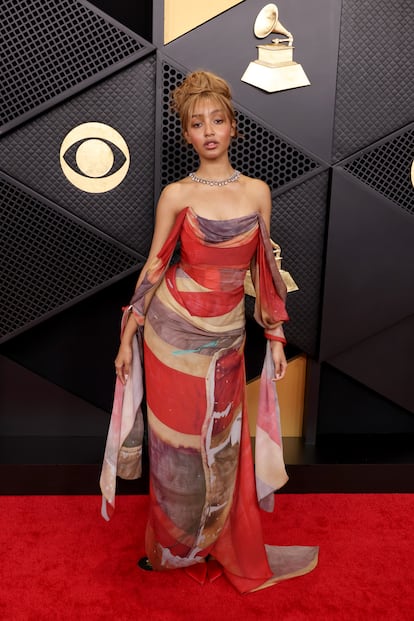
The tartan print, typical of Scottish kilts, became her most recognizable trademark. Through elaborate music videos, she proved the pattern was as versatile as she was. In Tonight, she carried it into the era of the British Regency, in a video that looked like a cross between Bridgerton and the teen series Skins. In Romeo, she paired it (finally) with the world of chess, and in Stateside, she leaned into her most kitsch, airport‑souvenir side. That last song — a remix of one of her songs with Zara Larsson — became a defining statement earlier this year, surpassing 60 million views.
“Aesthetically, I led with that pattern, which ended up leading into some other British motifs — you’ve got some telephone boxes here and tea parties. The real word, I’d say, is kitsch. I tried to make it as kitsch as possible,” she told Vogue.
Her true goal, however, isn’t to represent her country but to represent all the young women who, like her, once felt insecure about stepping into the world of production. “I do want to represent for the girls who look like me. Who want to do what I do and don’t feel like they need to feel pressured to be able to be perfect at dancing, look amazing all the time, have a curvaceous build, dress a certain way,” she told the fashion magazine.
For now, it seems she’s not far from achieving that. This past February she reached an unprecedented milestone: at the latest BRIT Awards — the same ceremony many will remember for Rosalía’s unforgettable techno performance of Berghain — Walker became the first woman, and the youngest artist ever, to win Producer of the Year. Checkmate indeed.
Sign up for our weekly newsletter to get more English-language news coverage from EL PAÍS USA Edition









































