
Ron Perlman: ‘Unless you’re Brad Pitt or George Clooney, most actors can’t pick their roles’
At a splendid 75 years of age, he still embodies intimidating action heroes. But as he demonstrates in the Spanish film ‘Ya No Quedan Junglas’ – translated as ‘There Are No Jungles Left’ – he doesn’t need to wear masks anymore

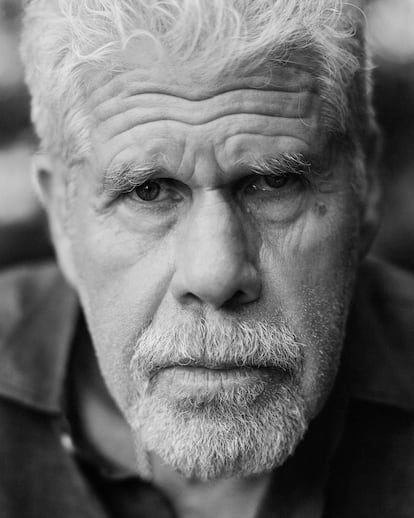
The intense gaze, the pronounced jaw, the two wrinkles on his forehead… it’s impossible to look away when you’re face to face with Ron Perlman. Because of the respect that the 75-year-old New York-born actor inspires, and because of everything he evokes: he has spent decades playing outsiders, thugs and tough action heroes, like the vigilante demon in the Hellboy saga, or the hunchback Salvatore in The Name of the Rose (1986). Today, he returns with Ya No Quedan Junglas (2025), a Spanish-language film translated as There Are No Jungles Left. Directed by Luis Gabriel Beristáin, Perlman plays the role of Theo, an aging American soldier living in San Sebastián, in Spain’s northern Basque region. Upon losing his only friend, the protagonist ends up embroiled in a bloody tale of revenge.
The film is tailor-made for an expert in crazed roles. “We love revenge stories because we’re all always looking for immediate justice, which doesn’t exist in reality. We root for my character because [he does] things we’d like to do ourselves,” he reflects, from his home in Los Angeles.
Perlman has a distant gaze while he speaks. His tone is serious and direct. He’s convincing. Even intimidating. Suddenly, he’s interrupted by barking. He stands up and, for the first time in the interview, drags his six-foot-six frame out of the room. “Silence!” he shouts. And the barking ends. No one dares to resume the conversation… but against all odds, he comes back into the room, laughing his head off. “Seems to have worked; they never listen to me,” he jokes.
When he smiles, the real Perlman emerges. Even past retirement age, he’s a man who remains dedicated to one of his favorite genres: action. In There Are No Jungles Left – which premiered in Spain on September 26 – he’s repeatedly hit, punched and stabbed. He’s even set on fire. The character endures stoically, but the actor admits that these highly physical sequences have become increasingly difficult for him. When an action scene begins, he resigns himself to prayer, trying not to think about everything that could go wrong.
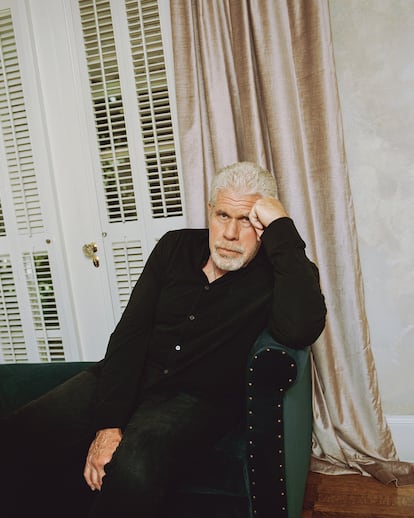
Age, on the other hand, also helps: “The only good thing about getting older is that you finally don’t give a shit what people think about you. You can go through the most embarrassing experience of your life – you can even shit yourself – and you won’t care. There’s something sexy about that attitude… and now, I’m getting roles that reflect it,” he shrugs. Aside from a brazen and somewhat foul-mouthed confidence, these characters also share a single face: his own. For any actor, this might be obvious… but for Perlman, it’s the achievement of a lifetime.
His early roles – and some of the ones that he’s best-known for – were distinguished by his unusual ability to transform into all kinds of creatures: cavemen, vampires, beasts and demons. Few actors have played such a large number of characters that were built using prosthetics and makeup. “[All those characters] spoke of wanting to be part of a world that despises you. Exactly what I would have liked to hear when I was a six-year-old locked in a room thinking I was a freaking Quasimodo,” he recalls.
“We love revenge stories because we’re all always looking for immediate justice, which doesn’t exist in reality. We root for my character because [he does] things we’d like to do ourselves.”
That bedroom was very small. He shared it with his brother, in an apartment in the Washington Heights neighborhood of New York City. And that little boy preferred to stay there, rather than go outside. He feared being picked on because he was either too fat or too weird.
Salvation came in the form of a black-and-white television that was barely 12 inches wide. At the age of eight, he saw Charles Laughton’s Quasimodo in The Hunchback of Notre Dame (1939) and he wasn’t afraid. In fact, he thought the movie was beautiful.
By his side was his father. “If anyone taught me to love cinema, it was him, even though he never received any kind of education. He was a worker who never earned much money – [he] worked his ass off for 10 hours a day. At night, we always watched classic films together. But mostly, I watched him and saw the effect they had on his body. The burden he carried during the day disappeared and was transformed into laughter, even tears.” Captivated by that which transformed horrendousness into beauty and exhaustion into fun, young Ron grew up convinced that he wanted to make a living as an actor.
He spent his twenties working on Broadway. And, at the age of 30, he got the opportunity to make the leap into the film world. At that time, one of his first agents confronted him with the prophecy that would haunt him for the rest of his life: he had the physique of a 50-year-old. Until he turned 50, his time would never come. “I hated him for telling me that. I didn’t want to wait 20 years to be able to pay the rent… but the son-of-a-bitch was right. At first, I got great roles, but they were few and far between. It took a long time for me to make it.”
“I went four years without working. During that time, the universe seemed to be telling me that I was worthless. It was a nightmare and, above all, a financial disaster. It took years of therapy to turn all that frustration into something positive,” the actor admits today.
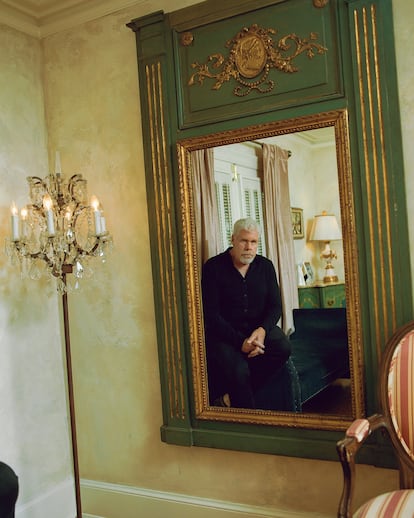
However, that prophecy had an exception: what if he played men from other ages? Or from other eras? In his first film, Quest for Fire (1981) – directed by Jean-Jacques Annaud – he played a Neanderthal from 400,000 years ago. The story recreated the struggle that different prehistoric tribes went through to master fire. “We didn’t wear shoes [and] we were almost naked. And we started shooting at the end of November, in the [Scottish] Highlands. I think it was the hardest way to start a career. But, from then on, I learned one thing: every time my agent got an offer, I asked him, ‘Am I wearing shoes in this one?’ He obviously said ‘yes.’ And so, I thought, ‘It can’t be that bad.’”
Slowly, roles began to appear, such as Salvatore, the blasphemous hunchback in The Name of the Rose (1986), also directed by Annaud. In that film, his face and body were completely covered, becoming the perfect canvas. “All those masks freed me to act without fear. Without that barrier between me and the camera, I don’t know if I would have been able to be as expressive,” he reflects.
“We filmed in San Sebastián, probably the city with the most Michelin stars per capita in the world. But whenever I had two days off, I’d go to Seville, Madrid, Asturias, or Bilbao. Every day, we had a new gastronomic experience. And the wines! I thought I liked Rioja until I tried Ribera.”
With his portrayal of the lion-like heartthrob of the Beauty and the Beast TV series (1987-1990) – a delirious adaptation of the old French tale – things began to turn around for Perlman. He won a Golden Globe and – as he recounts in Easy Street (2015), his autobiography – a magazine named him “Sexiest Man of the Year” (beast makeup included).
That performance, above all, began to bolster his prestige as an idol and muse of fantasy cinema that remains with him to this day. “The flaws I thought were monstrous as a child ended up becoming virtues. The greatest reward of my career is that all [my] inner turmoil became fuel for my roles. And, furthermore, I was able to empathize with those who had gone through something similar.”
However, as he repeatedly emphasizes in his interview with EL PAÍS, Perlman believes that if anyone is responsible for the direction his career has taken, it’s certainly not him. “I simply accepted every role that came my way… and it just so happened that many of them revealed my inner conflicts. Unless you’re Brad Pitt or George Clooney – who receive thousands of scripts – most actors don’t have any say in their careers. At least, I never have,” he clarifies.
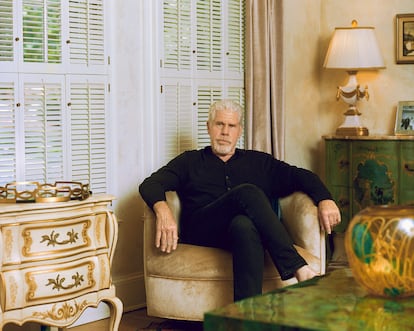
However, attracted by his unique qualities, he was chosen by foreign directors, who, in their own way, were also Hollywood outsiders. The aforementioned Jean-Jacques Annaud was one of them, as well as Jean-Pierre Jeunet, who directed Perlman in The City of Lost Children (1995) and Alien: Resurrection (1997).
“In England or France, you see magnificent protagonists with very distinctive faces,” he explains. “In the United States, casting is almost more like a beauty pageant. They don’t give you roles unless you’re a standard-bearer. I [don’t think it’s] a coincidence that, for the first 20 years of my career, I only worked with French, Italians and Mexicans.”
By Mexicans, he refers, above all, to Guillermo del Toro. “Without him, we wouldn’t be talking now; I’d be nobody,” he concludes. Del Toro – a lover of fantasy cinema – begged Perlman to participate in his first film, Cronos (1993), for a modest salary. In return, years later, the director fought the studios to make Perlman the lead actor in the two Hellboy films. By then, the actor was over 50 and, just as his agent had predicted, it became his most notable role, characterized by a relentless performance. “Guillermo always championed my strengths as an actor. And, even now, he still calls me for roles that no one else would give me. We’re like brothers; we always had the same role models… and we also share the eating habits of two damn degenerates. We eat like we’re at an eight-year-old’s birthday party,” he laughs.
His hearty appetite was more than evident last year during his trip to Spain for the filming of There Are No Jungles Left. Through the dozens of local media headlines that reported sightings in restaurants across the country, one can piece together his stay in detail: “We were filming in San Sebastián, probably the city with the most Michelin stars per capita in the world. But whenever I had two days off, I would go to Seville, Madrid, Asturias, or Bilbao. Every day, we had a new gastronomic experience. And the wines! I thought I liked Rioja until I tried Ribera, which is now my favorite. Maybe I drank too much Ribera in those two months,” he jokes.
Perlman is enjoying this prosperous moment. He’s never worked so hard. “Suddenly, just like that damn agent told me, my body finally embraced that old soul I was already carrying at 20 years old. The [obstacles] disappeared and a never-ending work streak began. Which I love, because I’m a workaholic. The busier I am, the better.” His IMDb profile proves it: now, with his true face, he has 280 credits to his name, including series like Sons of Anarchy, voice-overs in major sagas like Transformers, as well as cameos in global hits and indie films. He does it all and, he warns, has no intention of stopping: “I’ll keep going until I end up in my coffin… and if there’s a way to continue acting there, I’ll find it.”
Perlman has achieved success, but he’s critical of the system and laments the perversion of the superhero concept. Back when he made Hellboy, there was no sign of a time when comic book characters would reign supreme. Today, however, what was once the domain of freaks and enthusiasts now holds hegemonic power in theaters. “Heroism is something profound that shouldn’t be exploited. It’s almost like spirituality; it [should be] cultivated in private and not flaunted. It’s related to personal sacrifice and the fight against injustice… and these films end up devaluing that. At Marvel, there are only trappings and costumes,” he complains.
But what pains him most is the loss of a special effects craft that he experienced in its heyday. “I’m lost when technology overwhelms reality, when a film is filled with computer-generated images. I’m not interested in those kinds of films. I’m only interested in the human aspect. It saddens me that we move away from it to entertain the audience, or to get closer to what producers think entertains the audience. Because they increasingly treat the audience [condescendingly]: they think they can’t stand a film that deals with human conflicts. So, I do my best to ‘rage against the dying of the light,’ as the poet Dylan Thomas said.”
The New York-born actor also expresses his opinions on social media. He doesn’t shy away from conflict. The most notorious incident occurred in 2023 during the historic strike by SAG-AFTRA – the actors’ union – against the Hollywood studios, when Perlman threatened an executive who had stated his intention to drag out the conflict until actors started losing their homes.
Is he at all worried about ending up on a blacklist?
“Maybe. But I don’t know… I don’t think anyone’s going to come and say, ‘Hey, Ron, we blacklisted you.’ They just blacklist you, period. But even if they did, it [hasn’t affected] me. It wouldn’t do me any good to go back on [my position]; I still stand by everything I said.”
The same goes for his support for the Democratic Party and his criticism of Donald Trump’s administration, which have ended up provoking direct attacks from the president’s eldest son, Donald Trump Jr., and Senator Ted Cruz. “It’s not easy to watch Trump attack our culture. He’s withdrawn a lot of funding and even wants to name the Kennedy Center after Melania. But this bastard won’t be there for long. An undesirable like him is only passing through. You’ll see.”
In reality, though, the real stars of Ron Perlman’s Instagram feed are his four dogs. After an hour of conversation, they’re waiting for him to finish on the other side of the door. “They’re all adopted. My wife taught me the importance of taking them in to prevent them from being euthanized,” he explains with a smile.
The tough guy has been gone for a while, but he can easily return. Before he wraps up the interview, he decides to prove it: he reverses roles and asks, “Do I look anything like what you expected of me?”
We admit that we thought he was going to be more intimidating.
“Well, I kidnapped Ron,” he replies. “I’ve got him in a closet and I’m pretending to be him.”
As he says this, his smile disappears; his serious expression returns. For a second, he seems like he’s (almost) telling the truth.
Sign up for our weekly newsletter to get more English-language news coverage from EL PAÍS USA Edition









































