
Superheroes are no longer saving the box office
After the genre’s disappointments this year, it seems Marvel no longer has an infallible formula to fill theaters — what will take its place?


In 2014, a superhero movie starring an unknown alien tree and a raccoon earned $774 million, becoming the year’s third-biggest hit. The success of Guardians of the Galaxy proved that Marvel could do anything at all, and crowds would line up to see it.
That set the tone for the years to come: an African king, a wizard with a cape, and a foul-mouthed immortal mutant all made it to the big screen. It seemed any Marvel comic could be adapted for film. During that long-ago 2014, Marvel had three of the 10 highest-grossing films of the year, and theaters were happy to receive any of its projects that were capable of bringing viewers to the theater.
But in 2025, the box-office genre king of that era is “no longer the tide that lifts all boats. Superheroes are not a number one guarantee anymore,” Dave Gonzales, who co-authored the in-depth book MCU: The Reign of Marvel Studios (2023) with Joanna Robinson and Gavin Edwards, tells EL PAÍS.
Twenty years later, is it time to talk about “superhero fatigue”? “Yes, it has arrived,” Ben Fritz of The Wall Street Journal, who set out the foundations of contemporary Hollywood in his book The Big Picture (2018), says via email.
It’s not just two experts who share this opinion; what really speaks volumes are the disappointing numbers for 2025’s summer releases. For the first time in 17 years (since The Dark Knight), a film from the DC Universe, Superman, has bested Marvel films in terms of box-office receipts. Even so, while it ranks as the seventh-highest-grossing film of 2025, its $600 million haul still falls about $50 million short of the previous solo Superman film, Man of Steel (2013), largely because of weak results outside the United States (where it performed strongly). Not even inflation since 2012 is enough to make up the gap.
“It’s the end of a 15-year cycle of franchise domination,” says Gonzales. No one knows what will bring people back to the theaters. In fact, we keep talking about ‘returning to theaters’ as if we were going to get back what we had before the pandemic.”
Since 2011, there has always been at least one superhero movie among the year’s five biggest box office hits — except in 2017 (which still had four in the top 10) and, of course, in 2020 due to the pandemic. In 2018, four of the top five were superhero films. In 2019, three came from Marvel: Avengers: Endgame took the crown with $2.9 billion, while both Spider-Man: Far From Home and Captain Marvel crossed the coveted $1 billion mark. That year, nine films surpassed that threshold — something that now seems impossible despite inflation. In 2021, Spider-Man: No Way Home led the box office, and 2022 saw four superhero movies make it into the year’s top 10.
This year, however, Marvel may not place a single title on the list. Thunderbolts, a team-up of minor TV villains, hasn’t even reached $400 million. The new Captain America, spun off from its Disney+ series, has flopped at the level of Eternals. Fantastic Four: First Steps — the fourth adaptation of the team, pitched as a more contained story — has barely scraped past $500 million. Sharp week-to-week drops at the box office show that while die-hard fans still turn up on opening weekend, much of the broader audience has drifted away.
What explains this shift? Experts point to the end of a cycle, the damage done to theater-going habits by COVID-19 and fatigue caused by Marvel’s additional bid for television domination.
“It was difficult to maintain momentum after Avengers: Endgame, the climatic point after 22 films and 11 years, but Marvel made it even harder with its series," says Fritz. “There was an overwhelming amount of content, which alienated casual viewers and even devoted fans. Producer Kevin Feige has acknowledged that it became ‘homework.’ Plus, by producing more, Feige had less time to focus on each project, and there have been a lot of bad series and films.”
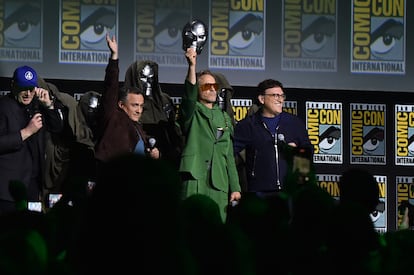
Realizing it has a problem, Marvel has quit producing one series per quarter, and in 2026, will only release one movie (Avengers: Doomsday, with Robert Downey Jr. and the Russo brothers returning as directors, in a bid to recapture the success of Endgame, a “Band-Aid,” predicts Gonzales) and a new Spider-Man, which will be distributed by Sony rather than Disney. Both are likely to be huge hits. Perhaps, this will be the grand finale.
Meanwhile, DC is looking to strike a new tone after flops like Black Adam and The Flash. “Superman is moderately successful, although I’m sure DC would have liked to exceed $800 million. But as it stands, $600 million sounds pretty good. The problem is that the Asian market has taken a significant hit,” argues Fritz, who recounted in his book how Hollywood bowed down to China to boost profits. After the pandemic, things shifted, and now neither Asia nor Russia have been adding much to the box office.
This makes it increasingly difficult for films to hit the billion-dollar mark — yet ballooning budgets still rely on those old numbers to break even. “The answer could lie in cheaper films that turn a profit, but as theater numbers plummet, there is competition to make movies into a huge event. That costs money, and budgets skyrocket,” says Gonzales.
The challenges facing theaters are growing, particularly if they lose out on movie events that are guaranteed to fill seats (luckily, Avatar 3 is still scheduled to be released later this year.)
There was great hope for The Fantastic Four, which Gonzales calls “a success — but that’s not what Marvel was looking for. They needed a clear victory.” Fritz also qualifies the movie, which stars Pedro Pascal, as a “disappointment,” even though it was the highest-grossing of all The Fantastic Four movies. Like Superman, more than 50% of its tickets sales took place in the United States.
“It’s possible that international markets are rejecting this Hollywood,” warns Gonzales. In Spain, the reception of such films has been particularly poor, and they’ve grossed less than Superman Returns (2006) and Fantastic Four: Rise of the Silver Surfer (2007).
Day one back in the suit. The story continues with #SpiderManBrandNewDay - in theatres 7.31.26 pic.twitter.com/SBbyAEfWmB
— Spider-Man Movie (@SpiderManMovie) August 10, 2025
What comes next?
In 2013, Steven Spielberg warned that when superhero films began to fail, a cycle would end and that there would be a paradigm shift. What will replace them? This year, the top box office slots are for kids: Lilo and Stitch (the only film that has broken $1 billion, except for China’s Ne Zha II), Minecraft and How to Train Your Dragon, but that public is somewhat limited.
Jurassic World Rebirth made more than $800 million, but that’s still far from the earnings of previous franchise installments. Disney has gone six years without a Star Wars, and not even Pixar is earning revenue.
“There is no obvious substitute that will last over time,” warns Fritz. “We may be on the verge of a risk-taking era in Hollywood. Auteur cinema in the 1970s was born when the blockbuster films of the 1960s no longer worked for Baby Boomers, and the studios started allowing creative freedom. Today, they don’t know what to do, with Marvel and Transformers losing steam. But Sinners and Weapons have shown this year that people still go to the movies if they see an opportunity to participate in a cultural event. We need to look for more of those.” Such was the case for surprise hit F1 the Movie, the highest-grossing film of Brad Pitt’s career.
De lo que dijeron Spielberg y Lucas se ha cumplido casi todo. Incluidas las entradas a 150$ para ver El Mago de Oz en el cine esférico de Las Vegas. pic.twitter.com/VzVHcvwPR7
— Pau Brunet (@PauBox) August 4, 2025
For the moment, the metrics have had to be readjusted. Interestingly, Warner (which owns DC) once described Man of Steel, the previous Superman installment, as a disappointment due to its reviews and the poor showing of its spin-offs (Batman vs. Superman and Justice League). Yet today, its CEO David Zaslav is eager to present this year’s Superman reboot as a promising fresh start, despite posting weaker box-office numbers
“The vision is clear, this is the moment. This is only the first step,” Zaslav said after the premiere of this year’s Superman, which was directed by James Gunn, who has been positioned at the front of the universe’s relaunch.
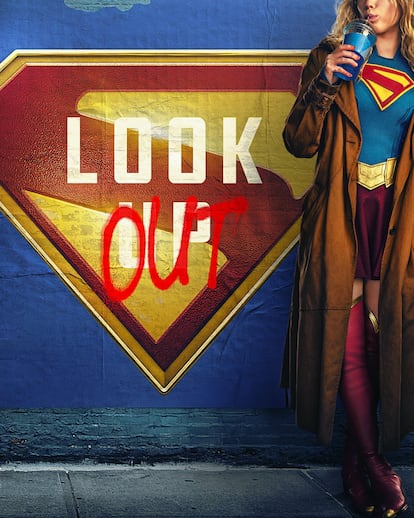
Warner will follow up the movie with Peacemaker (which shares characters with Superman), Supergirl and the horror movie Clayface, which centers on Batman’s enemy. Reviews have been positive this time around, and that helps.
But Zaslav’s message is also rooted in what the executives know well: the enduring value of DC’s intellectual property, not just in theaters but across merchandise, theme parks, cruises, comic books, TV shows, and video games.
“Marvel merchandising continues to be quite powerful. It’s the same with Star Wars. Despite the fact that there are no new films, Grogu and Darth Vader shirts sell,” says Gonzales.
Meaning, superheros aren’t going anywhere soon — Hollywood has too much at play. But what about in five or 10 years? Batman and Spider-Man will still be zipping through the air; the question is whether they’ll still be able to capture the market as they did before. The rules have changed.
“They’ll always be around, because comic are a big inspiration and are globally recognized, but they’ll only be one more kind of movie, like animated films and action franchises,” says Fritz.
Gonzales agrees. “I hope they’ll abandon the idea of shared universes, where everything is a sequel. Marvel has an opportunity with Secret Wars to reset, to forget the connections. And X-men could be a soap opera about marginalized people who are very different. They have to be deconstructed again,” he says, adding that he thinks the shift may reflect “franchise fatigue.”
Barbie and Oppenheimer could be a first step in this change. He continues: “I think people will continue to see good movies. Period.”
Top 10 global box office of 2025
- Ne Zha II: $1.9 billion
- Lilo and Stitch: $1.03 billion
- A Minecraft Movie: $955 million
- Jurassic World: Reborn: $844 million
- How to Train Your Dragon: $627 million
- Superman: $605 million
- F1: The Movie: $604 million
- Mission: Impossible - The Final Reckoning: $597 million
- The Fantastic Four: First Steps: $491 million
- Captain America: Brave New World: $415 million
Sign up for our weekly newsletter to get more English-language news coverage from EL PAÍS USA Edition









































