
Why does Indiana Jones wear glasses? The hidden mistakes in film masterpieces
The book dissects the errors and out-of-place details that can jar viewers, even in the most celebrated classics
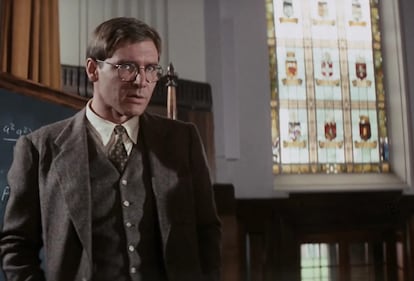

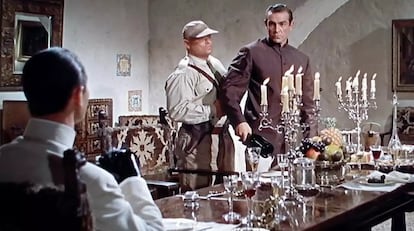
It’s a scene that’s been repeated since the very first Bond movie, Dr. No (1962). The villain of the moment explains to James Bond his Machiavellian plan to conquer the world. In Dr. No, he even invites him to dinner and to drink a 1955 Dom Perignon.
In other films, for example, the agent is tied in front of a saw that will cut him in half while receiving a lecture from his nemesis, who, film after film, always confesses his strategy; meanwhile, 007 usually resolves these confrontations with a quick shot. How can the same mistake happen again and again?
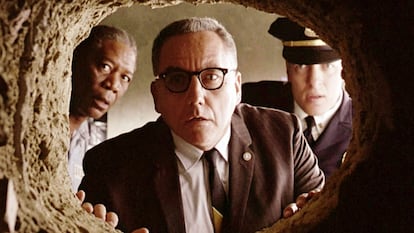
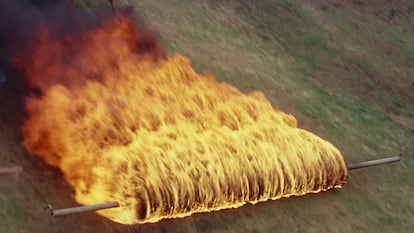
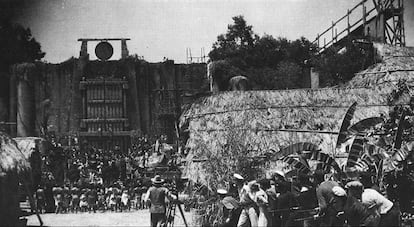
And it’s not just Bond. Why does Indiana Jones wear glasses while teaching if he never needs them for the rest of his life? And why does he claim that archaeology is a science of study when he himself is a relic thief? Why is there an Egyptian wall in the middle of the Indian Ocean in the King Kong movies? Why do some cylinders of fire scare off the tough Roman legions in Spartacus? How does the poster covering the hole where Tim Robbins escapes in The Shawshank Redemption stay in place?
Juan J. Alonso, 63, has always been bothered by the idea that in It’s a Wonderful Life Mary Hatch, the protagonist’s wife, would have become a lonely, boring librarian if her husband had never existed. “It’s very unfair,” explains this former Philosophy professor and author of several books on cinema. “Wouldn’t Mary have been happy without him? Couldn’t she have gone to pursue a career in New York? And why do they sell us the idea that being a librarian is a dull profession? Why, in that case, does she wear glasses, dress in gray, and become a timid woman? It’s a moment that takes me right out of the movie.”
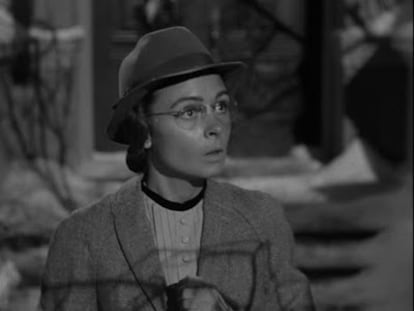
Over time, Alonso began collecting more details — senseless errors that disrupt the greatness of some masterpieces and film classics. Starting with Frank Capra’s Christmas classic, moving on to one of his favorite films, Laura, and ending with The Lost World: Jurassic Park and The Lord of the Rings: The Two Towers. In all, he compiled 41 films along with their corresponding blunders in Bibliotecaria, solterona y con gafas (Librarian, Spinster, and Wearing Glasses).
But the book goes further. In each chapter, after poking fun “at those details that stick out in films that are otherwise wonderful,” the author adds a philosophical reflection and historical context to the issue. The volume does not focus on continuity errors — the mistakes that appear on screen due to recording mishaps, like hairstyles changing back and forth, empty glasses that are then full in the same scene, crew shadows and reflections in shots, gas canisters on the chariots in Gladiator, or the croissant Julia Roberts eats in Pretty Woman turning into a pancake in the next shot. “I collect fundamental details that make the viewer think: ‘But wait a minute…’” the writer explains.
Thus, in addition to questioning why Bond is never killed, he delves into the curious fact that in Seven Brides for Seven Brothers one of the brothers never dances (answer: he was played by a former baseball player who was just starting his acting career).
Another oddity comes from the film’s studio sets. The art department wanted to bring a still-life scene to life, so they released birds on the set. The problem? The birds crashed into the fake blue-sky backdrops.
Alonso also points out Obi-Wan Kenobi’s meaningless hand gestures in Star Wars. These gestures are meant to emphasize the use of the Force. He asks, “Does the Force really need sleight of hand?”
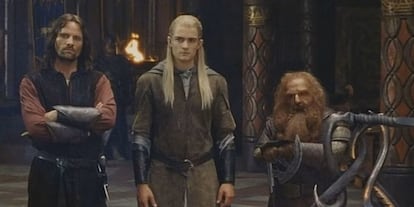
Why do Francesca’s children still fail to understand their mother, even after hearing her entire love story in The Bridges of Madison County? Why, in The Lord of the Rings: The Two Towers, does the dwarf Gimli — after confessing that he’s hopeless at walking long distances — never fall behind Aragorn and the elf Legolas, even after three days of marching? And why, in Superman II, does General Zod (played by the recently deceased Terence Stamp) want to rule the Earth, if he is then bored in the Oval Office?
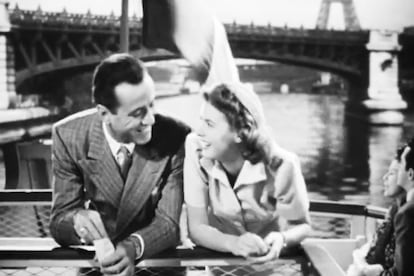
Alonso explains that some mistakes are only found in the translated version of the movie. For example, in Spain, The Man Who Shot Liberty Valance is called The Man Who Killed Liberty Valance (El hombre que mató a Liberty Valance).
A translator during the Franco era, for reasons unknown, also decided to alter a menu in this John Ford western. In Spanish, a character orders “the usual: roast, peas, potatoes, and large amounts of pineapple.” Pineapple in the Wild West? On screen, it’s clear that it isn’t roast at all, but huge steaks; there are no peas, but a bean stew; and in the original dialogue you can hear “apple pie” — not pineapple. There’s no trace of it.
Although it doesn’t appear in Alonso’s book, this kind of change is similar to what happened in Mogambo, where Franco-era censorship erased an adultery subplot, inadvertently turning it into incest.
The author is open to new contributions from readers and film enthusiasts. He doesn’t include them in the book, but he applauds being told about them — like the poster that hides, for years, the hole Tim Robbins’ character is digging in his cell in The Shawshank Redemption. You might assume it’s only secured at the top, but when the roll call comes and Andy is missing, the warden tears down the poster — yet it’s clearly glued along the bottom edge too, so no draft would reveal the hole. How did Andy manage that?
Another example that’s not in the book: Rafael Azcona, as a screenwriter, thought it was a disaster that Saving Private Ryan was told from the perspective of the captain played by Tom Hanks, only to reveal at the end that the one grieving at the grave is the Ryan of the title, played by Matt Damon. A third example: using a human-programmed computer virus to disable the alien ships trying to devastate Earth in Independence Day.
As Alonso points out in his book: why, in Blade Runner, isn’t Deckard’s character up to the poetic farewell of Roy at his death? Why, in The Nutty Professor, in Jerry Lewis’s version, does the smart side of his character not know the anecdote about Isaac Newton and the apple? Why do some decisions of the lovers in The Postman Always Rings Twice feel so jarring?
And what use was it for Arnold Schwarzenegger’s Conan — in Conan the Barbarian — to study the philosophy of Zhong for years as a youth if he solved everything with his fists? More to the point, when asked what is the best thing in life, Conan answers: “To crush your enemies, see them driven before you, and hear the lamentations of their women.”
More subtle, yet equally hilarious, are two utterly misplaced details that almost derail two masterpieces: Casablanca and Laura. In the first, during the romantic flashback to the couple’s happy days in Paris, Ilsa asks Rick, “Was that cannon fire or my heart pounding?” And Humphrey Bogart replies, “That’s the new German 77, and by the sound of it only 30 miles away.”
Alonso asks: “Really, Rick? Is this the moment to get pretentious with technical knowledge that isn’t referenced anywhere else in the drama?”
Laura is one of Alonso’s favorite films — so much so that his daughter is named after the character played by Gene Tierney in this Otto Preminger classic. “It hurts when the maid finally reunites with her beloved Laura, whom she has missed so much and thought was dead… and Laura sends her away with, ‘Can you make us breakfast?’ Please, Laura is not like that! I would cut that sequence without hesitation.”
Sign up for our weekly newsletter to get more English-language news coverage from EL PAÍS USA Edition









































