
‘Superman’, the naive superhero returns to his origins
Standing two meters tall, weighing a hundred kilos of muscle, with a rebellious curl in his black hair, the Man of Steel has had many faces over 85 years of adaptations. Now he’s being accused of being ‘woke’ and pro-immigrant
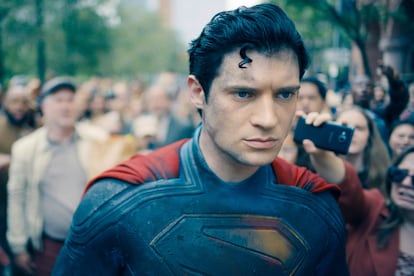

The alien immigrant who believes in humanity; the being who trusts in the kindness of strangers; the Superman first brought to life with conviction and innocence by Christopher Reeve in 1978 is the same Man of Steel now portrayed by David Corenswet, who has the same shy smile and strong physique.
While many comic book characters are tormented and riddled with doubts about their powers or past, Clark Kent–Superman is a grateful soul, thankful that Earth has given him shelter. Both Richard Donner’s film — which launched a new era of comic book adaptations — and James Gunn’s latest movie pay tribute to that spirit.
However, Reeve was not the first to wear the iconic S suit; since his debut in April 1938 in the first issue of Action Comics, Kal-El has been reimagined many times over.
The first Superman outside of the comics couldn’t be seen — but he could be heard. The Adventures of Superman was a radio serial in the 1940s that featured the voice of Bud Collyer. That same voice accompanied the Man of Steel in his cinematic debut, in the nine legendary animated shorts created by Max Fleischer between 1941 and 1942. (Eight more shorts followed, far inferior in quality, after the Fleischer brothers’ studio was bought by Paramount and turned into a low-budget production house that slashed costs — and standards.)
In 1948, Superman finally appeared in live action for the first time in a theatrical serial, with Kirk Alyn portraying the Kryptonian immigrant. As a tribute, Alyn would later play Lois Lane’s father in the 1978 film.
The first Superman to truly leave a mark on the American public arrived with television, thanks to the series Adventures of Superman. In 1951, George Reeves became the superhero in the film Superman and the Mole Men, and due to its success, the role transitioned to TV, where Reeves portrayed the Man of Steel for six seasons and 104 half-hour episodes, first in black and white, then in color.
A year after the show was cancelled, Reeves — who had fought to keep it alive, even directing some episodes — was found dead from a gunshot wound to the head. It was never definitively determined whether it was suicide or murder.
The animated TV series from the late 1960s — once again with Bud Collyer providing the voice — brought nothing new to the character, who would make a spectacular comeback with Christopher Reeve in 1978. A graduate of New York’s legendary Juilliard School (as is the new Superman, David Corenswet), Reeve was making a name for himself in off-Broadway theater when he flew to London for an audition. It went well — so well, he was invited back for a second.
Standing 1.93 meters tall (in the comics, Superman is said to be 1.90 meters and weigh 102 kilos), Reeve made such an impression that director Richard Donner recalled thinking he might actually be able to fly. Reeve became a pop icon. A sequel followed, then a questionable third installment, and finally a chaotic fourth film in which only Reeve seemed to take the project seriously.
Building on that success, another animated series premiered on television in 1988, this time with Beau Weaver voicing Superman. It was the small screen that kept the Superman legacy alive through Superboy (1988–1992) and, above all, Lois & Clark: The New Adventures of Superman, which ran for four seasons starting in 1993 and earned both critical praise and high ratings by diving deep into the character’s universe.
Incidentally, Dean Cain — the actor who played Clark Kent/Kal-El in Lois & Clark — is now a staunch supporter of Donald Trump and has publicly criticized James Gunn’s new Superman film, calling it woke in an interview with TMZ: “How woke is Hollywood going to make this character? How much is Disney going to change their Snow White? Why are they going to change these characters [to] exist for the times?”
Cain was reacting to an interview Gunn gave to The Times last week, in which the director summed up his take on Superman as follows: “[It’s] the story of America. An immigrant that came from other places and populated the country, but for me it is mostly a story that says basic human kindness is a value and is something we have lost.”
Fox News has also mocked the film in several programs, to the amusement of many Superman fans, criticizing it for describing Kal-El as an immigrant and branding it “Superwoke” for embracing “pro-immigrant themes.”
At the same time, Superman starred in another animated gem: between 1996 and 2000, Tim Daly voiced the superhero in Superman: The Animated Series, a show born from the critically acclaimed Batman: The Animated Series.
The small screen continued its love affair with the Kryptonian through Smallville, a decade-long series that ran from 2001 with 217 episodes. In it, Tom Welling delivered a standout performance as a young Clark Kent navigating life in the small Kansas town that gives the show its name — the place where the future Man of Steel was raised.
With the X-Men, Spider-Man, and Batman sagas in full swing, it was time for Superman to return to the big screen. Bryan Singer, who had skillfully handled the X-Men franchise, was hired by Warner Bros. to direct Superman Returns (2006), with Brandon Routh in the lead role. However, the film ended up being overly respectful of Christopher Reeve’s earlier portrayals — its reverence and nostalgia ultimately cost Superman Returns its chance to stand on its own.
That’s why Warner Bros. turned to a new filmmaker capable of launching a cohesive reboot, entrusting the future of Superman to Zack Snyder and casting Henry Cavill as the square-jawed, blue-eyed hero. Man of Steel (2013), Batman v Superman: Dawn of Justice (2016), and Justice League (2017) — first in Joss Whedon’s version, and later in Snyder’s 2021 cut — reimagined Kal-El with a tortured soul and a brooding inner world that never quite suited a hero defined by his earnest spirit.
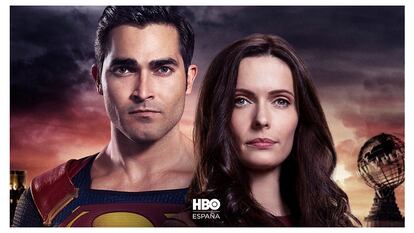
The release of Superman, which also marks a reset of nearly the entire DC Universe under the new James Gunn era, has led to the cancellation of the series Superman & Lois, currently airing its fourth season. The show explored the idea of the Kent family, with Clark Kent (played by Tyler Hoechlin) and Lois Lane returning to live in Smallville with their sons, Jon and Jordan.
Superman was created by American writer Jerry Siegel and Canadian artist Joe Shuster, both the children of Jewish immigrant families from Europe during the tense years leading up to World War II. Their goal was to highlight human goodness in stark contrast to the actions of dictators like Adolf Hitler.
Naturally, the character carried a strong message of support for immigration: though an alien, Superman was raised in Kansas and became a symbol of unity among races. In the comics, he even fought against Hitler himself.
In The Amazing Adventures of Kavalier & Clay (2001) — Michael Chabon’s novel inspired by the lives and work of Siegel, Shuster, and other Golden Age comic creators — a passage reads: “On the very last page [...] in a transcendent moment in the history of wishful figments, the Escapist [a superhero created by Kavalier and Clay] had captured Adolf Hitler and dragged him before a world tribunal. Head finally bowed in defeat and shame, Hitler was sentenced to die for his crimes against humanity. The war was over; a universal era of peace was declared.”
James Gunn responds to MAGA backlash over calling #Superman an immigrant: "I think this movie is about kindness, which everyone can relate to." pic.twitter.com/kUdzJleUsT
— Variety (@Variety) July 8, 2025
Asked in Los Angeles on Tuesday by Variety about how he would respond to criticism from the MAGA movement, Gunn replied: “I don’t have anything to say to anybody. I’m not here to judge anyone. This is a movie about kindness, and I think that’s something everyone can relate to.”
Or, as Gunn also said: “Superman, who can often be seen as old-fashioned or too earnest, too kind, he is those things. I think that’s the most rebellious thing that you can be in this day and age.”
Superman has been doing that for almost a century, with different faces but the same message — one that hasn’t always been warmly received.
Sign up for our weekly newsletter to get more English-language news coverage from EL PAÍS USA Edition









































