
When supporting Palestine stopped being taboo in Hollywood (as proven by Javier Bardem)
The Spanish actor and Jewish actress Hannah Einbinder demonstrated at the Emmys that accusing Israel of genocide no longer leads to backlash from the film industry

In the layered complexity of the United States, Hollywood stands out as a unique ecosystem. While the country may appear to lean conservative, California remains its most Democratic stronghold, and Los Angeles moves with remarkable freedom, Hollywood often navigates somewhere in between. At times, it leads the way in storytelling, living up to its role as the great theater of the world. But at other times, it struggles to move forward, weighed down by various forces — often economic — that hold it back. That’s why it’s so interesting to see how it has responded to recent expressions of outrage over Israel’s genocide in Gaza: not at all. And that’s quite a surprise.
Ten days ago, 4,500 actors signed a strong statement calling for peace in Palestine, using stark language such as “silence, racism, and dehumanization.” True, it was a massive group, too large to face individual reproach or retaliation. But there are also two specific cases.
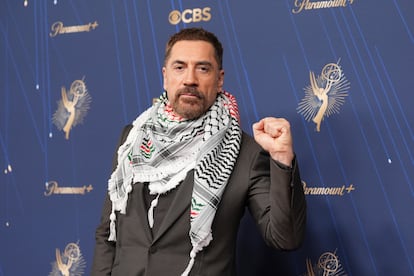
Last weekend, Javier Bardem raised his fist and wore a keffiyeh, a Palestinian scarf, on the red carpet at the Emmy Awards — arguably one of the top three award ceremonies in the Hollywood system. He did not hesitate to tell anyone who would listen that what is happening in Gaza is a genocide, in no uncertain terms. He even sat in the front row at the Peacock Theater as a nominee, proudly displaying the scarf. Bardem, though a foreigner without a local accent, is no minor figure in the industry: he has been nominated for an Oscar four times (winning once) and has appeared in cult films as well as blockbusters.
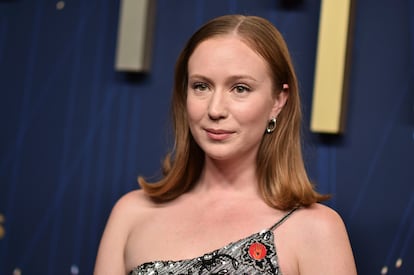
What’s more, Hannah Einbinder, a rising star on television thanks to Hacks, award winner, and — most notably — Jewish, took the stage at the Emmys and shouted, “Free Palestine.” And what happened? Surprisingly, nothing.
The reasons for this silence are many, but no less striking. Hollywood is a clearly pro-Israel industry, with hundreds of top-level executives, writers, directors, and performers practicing the Jewish faith and conducting business across all spheres. But it is also an industry connected to the wider world, aware of what is happening around it. Two years ago, Bardem’s and Einbinder’s gestures and words that night would likely have earned them, at the very least, a reprimand from their agents — if not the loss of a role, or even part of (or all of) their careers. But things have changed.
The statements from both the U.N. and independent organizations declaring that Israel is committing genocide in Gaza are something even Hollywood cannot ignore. Two years ago, following Hamas’s October 7 massacre, anyone who criticized Israel would face warning looks, awkward silences, or even an immediate dismissal. Not anymore.
Back then, it happened to Maha Dakhil, a name probably little known outside the industry but highly influential within it. Dakhil is a talent agent at CCA, one of the leading agencies in the United States, with clients including Tom Cruise, Natalie Portman, Anne Hathaway, and Reese Witherspoon.
Just a couple of weeks after the Hamas attacks, she posted a comment on social media about the conflict. Hours later, she was forced to step down from her position on the agency’s board and as co-head of its film department. She had simply reposted a couple of photos to her Instagram stories, along with a message on one of them: “What’s more heartbreaking than witnessing genocide? Witnessing the denial that genocide is happening.” She deleted the posts and apologized, expressing regret for “the pain I have caused” and thanking her “Jewish friends and colleagues” for pointing out “the implications” of her message and for instructing her. But that still wasn’t enough.
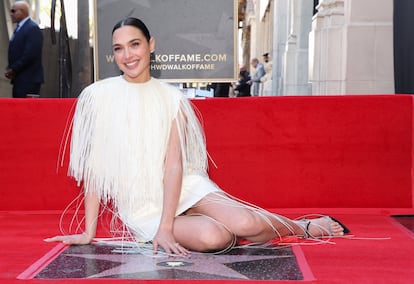
In contrast, a few months ago, in March, Israeli actress Gal Gadot received her star on the Hollywood Walk of Fame. She had previously given an interview to Variety in which she expressed her support for the State of Israel. “I am all about humanity and I felt like I had to advocate for the hostages,” she said, explaining that it’s challenging “for people to speak on social media because there is so much hate going on and so many bots and so many angry people.” At the star ceremony, there were pro-Israel groups, but also, in an unusual gesture, some pro-Palestinian attendees, who shouted: “Up up with liberation, down down with occupation.”
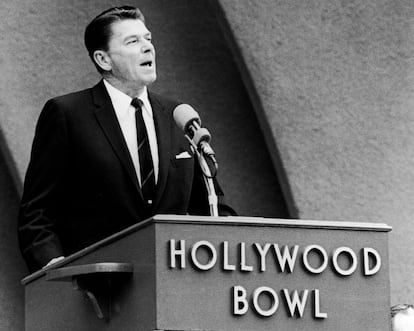
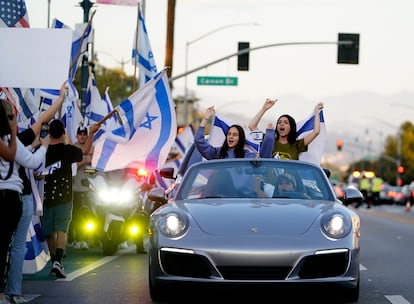
Hollywood has celebrated Israel on numerous occasions. When Israel was created in 1948, during the golden era of northern Los Angeles, a massive party was held at its centennial outdoor theater, the Hollywood Bowl, with a capacity of 17,000 spectators. And after the Six-Day War in June 1967, a rally was organized that was attended by everyone from Barbra Streisand to Ronald Reagan, who spoke to the crowd. During the October 2023 attacks, it was common to see the large green expanse in central Beverly Hills — a neighbor and friend to Hollywood and home to many of its workers — covered with hundreds of Israeli flags, and many cars proudly flying them alongside the U.S. flag. Twenty-four months later, it’s a different story.
Just a couple of years ago, newspapers such as the local flagship Los Angeles Times published lengthy articles explaining how the war in Gaza was dividing the city and criticizing celebrities for sharing their opinions on social media. This past weekend, in its fortnight of coverage on the Emmys, there was not a single mention of Bardem, Einbinder, or the issue at all. Some outlets highlighted the moment — particularly Einbinder’s — as one of the night’s most notable, but little else.
Only The Hollywood Reporter, the flagship of the local press, took a strong stance — but through a guest columnist, as its headline clearly indicated. In his piece, “No, Hannah, That Wasn’t Brave,” Israeli-born Jew and lecturer Hen Mazzig, co-founder of the Tel Aviv Institute, criticized Einbinder’s gesture, calling it “populist and dangerous” and asserting that it came at a cost for Jews — their safety — while referencing some attacks the community has suffered in the country.
“When celebrities make it trendy to vilify Israel, it fuels the climate that leads to Jewish schools under police guard, synagogues set on fire and children beaten on their way to class,” he wrote. “That is why Einbinder’s words sting so deeply. She is not just a comedian with a platform — she is a Jewish comedian. When she singles out Israel, the one Jewish state in the world, home to half of global Jewry, she is telling millions of us that the single most unifying part of our identity is illegitimate”
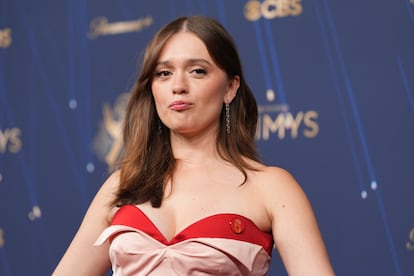
Beyond the column in the entertainment outlet, which passed with little noise, there have been barely any mentions of the pro-Palestine comments at the Emmys. The signatures of hundreds of artists on a letter organized by the platform Artists4Ceasefire, and of nearly 5,000 who signed the Film Workers for Palestine letter, seem to carry more weight. Among them are names ranging from Richard Gere to Emma Stone, Ken Loach, Gael García Bernal, Jessica Chastain, Alfonso Cuarón, Selena Gomez, Ben Affleck, Jenna Ortega, Mark Ruffalo, Ariana Grande, Juliette Binoche, Eric Cantona, and Pedro Pascal. Some of those who attended the Emmys, such as Einbinder herself or Aimee Lou Wood, star of The White Lotus, wore the red Artists4Ceasefire pin that night in protest. Einbinder’s co-star in Hacks, actress Megan Stalter, carried a purse with a handwritten sign reading “Cease Fire!”
Hollywood does not seem concerned. There are no agents trembling over their actors’ public positions, nor projects being canceled. In a country where freedom of speech, despite First Amendment protections, is increasingly restricted, a handful of artists speaking out against a genocide that has left 65,000 dead does not cause much fuss today. With the assassination of Charlie Kirk and the cancellation of programs critical of power, such as Stephen Colbert’s show and now Jimmy Kimmel’s program, the United States already has enough problems to deal with.
Sign up for our weekly newsletter to get more English-language news coverage from EL PAÍS USA Edition









































