New blood to rein in Trump
A younger generation of Democratic candidates has coalesced around a central concern: the rising cost of living facing millions of Americans
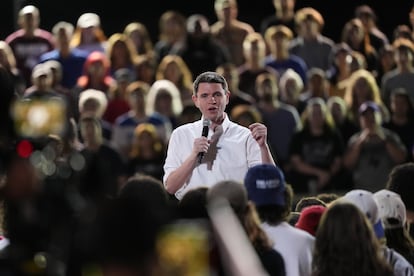
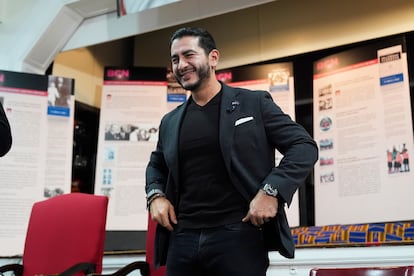
James Talarico in Texas, Jon Ossoff in Georgia, Abdul El‑Sayed and Donavan McKinney in Michigan, Darializa Ávila Chevalier in New York, Manny Rutinel in Colorado, JoAnna “Jo” Mendoza in Arizona. These are not only some of the most talked‑about names in the race for Congress; they also share one characteristic: they are all under 45. Not all of them may win on the night of November 3, but they each represent the long‑awaited generational renewal of the Democratic Party.
In the Senate races, their Republican opponents belong to an earlier generation. Their names are Ken Paxton (63), Mike Collins (59), Mike Rogers (63): familiar faces, worn by years in politics. Some, like Paxton, Texas attorney general since 2015, entered the campaign after surviving an impeachment over influence peddling and abuse of power.
Paxton is also an example of how the lines separating Democratic and Republican candidates are not only generational or ideological, but ethical as well. But the generational element is key. At the start of the current Congress, the average age was 57.9 in the House of Representatives and 63.9 in the Senate.
That is why candidates such as Talarico, 37, Ávila Chevalier, 32, and Rutinel, 31, signal that, after years of complaints about a gerontocratic leadership embodied by Nancy Pelosi, Joe Biden, Bernie Sanders and Chuck Schumer, a new generation has finally emerged. There are young Republicans in the House too, such as Gabe Evans, 40, Rutinel’s opponent in Colorado. But the MAGA succession does not respond to people’s needs; it responds to an ideology.
With just days to go before the midterms, it seems almost certain that Democrats will regain the House of Representatives. Yet this is not the moment to settle scores with the old guard. What matters most is that this new crop of politicians works with the different factions of the party in a new Congress capable of placing limits on the Trump era.
Easier said than done. For a start, Democrats will have to mend their internal divisions. In particular, the divide separating the progressives, led by Bernie Sanders and Alexandria Ocasio-Cortez, and, further to the left, democratic socialists such as Zohran Mamdani, from the pragmatic center represented by Chuck Schumer and Hakeem Jeffries.
Progressives and democratic socialists rightly argue that the pragmatists became complacent with their territorial strongholds, adopting an accommodating stance toward corporate power, turning their backs on the working class and failing to offer an economic vision capable of attracting and mobilizing younger voters. They advocate healthcare for all, free education, less brutal immigration policies and higher taxes on corporations and the super-rich. It is an agenda that stands in stark contrast to that of Trump, the MAGA movement and the plutocratic and Big Tech interests that now swarm around the White House.
But a closer look at the campaign messages of Democratic candidates across the country shows that they have found common ground, regardless of where they place themselves on the ideological spectrum. Their central message — that the cost of living has become unaffordable — resonates across the electorate.
Zohran Mamdani struck a chord when he made the issue the centerpiece of his 2025 campaign, and the party has since embraced it, pairing it with the defense of healthcare and rights such as abortion and civil liberties, calls for less dehumanizing and abusive immigration policies, and denunciations of the rampant corruption within the Trump administration.
The Bernie effect
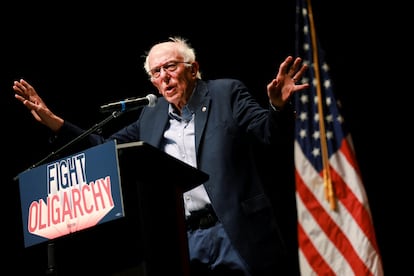
It is ironic that Bernie Sanders, an octogenarian independent, has been the architect of the Democratic comeback. The Vermont senator was farsighted enough to look beyond his own ambitions: he set aside his presidential aspirations and helped clear the way for a new generation.
Just as Mamdani provided a political framework for addressing the affordability crisis in housing and public services in New York, the other candidates owe an intellectual and ethical debt to Sanders and the progressives for spending more than a decade tirelessly denouncing the grip of big corporate money on the political system and the corruption that comes with it, while demanding that the wealthiest Americans pay their fair share in taxes.
That is not to deny the role played by Schumer and Jeffries in building a broad political center.
Whether they acknowledge it or not, the Bernie factor has been a positive influence on this generation of Democrats, helping define the boundaries between what is politically defensible and what is morally reprehensible. Among the latter is the concentration of wealth and corporate power as a driver of extreme inequality in the United States, a reality best captured by the numbers: today, the wealthiest 1% of Americans hold roughly one-third of household net wealth, nearly the same share as the bottom 90% combined.
What to do with the gains?
Polls have consistently shown Democrats holding a lead of between eight and 12 percentage points over Republicans in the race for the House of Representatives, despite the fact that a sizable share of voters view both parties unfavorably. Senate contests, by contrast, remain much tighter, and the outcome is still far from certain.
The latest national Latino voter survey by Equis, published on October 13, found Democrats enjoying their largest advantage of the cycle: 26 points. In competitive districts, Democratic support has already surpassed 2022 levels, while Trump’s approval rating among Latinos has fallen to 30%. Latinos place greater trust in Democrats on the economy, the cost of living, healthcare and immigration. Even on border security, long considered a Republican stronghold, the two parties are now running neck and neck.
Among the Democrats seeking seats in Congress this year are Latinos with very different political profiles: Ávila Chevalier, the democratic socialist who defeated the chairman of the Congressional Hispanic Caucus in the primary; Rutinel, an economist and lawyer; Mendoza, a former Marine drill instructor backed by the Blue Dogs, the party’s centrist faction; and the singer Bobby Pulido, who rejects partisan labels and describes himself as a conservative, a man of faith, a supporter of gun ownership and an advocate of a secure border.
They all, however, share the same concern about their voters’ economic hardships and access to health services and insurance. They also oppose the impact that ICE raids have had on Latino communities.
Despite the favorable outlook for Democratic candidates, nothing is certain until the votes are counted. And Trump, who has overcome some of the steepest odds in U.S. politics over the past decade, knows that better than anyone.
The president heads into the election with the worst numbers of his political career. He is being dogged by stubborn inflation and a war with Iran that has driven up fuel and energy prices, while corruption scandals continue to swirl around his administration. With an approval rating barely above 30%, he is, quite simply, an unpopular president.
Yet, as his campaign sprint of recent weeks has shown, Trump is willing to go to the ends of the earth and spend a large share of the Republican war chest. On the campaign trail, he labels Democrats communists, terrorists, extremists and jihadists. He invokes familiar ghosts from U.S. history because it is a tactic that has worked for him before. By now, however, the trick may be wearing thin.
Not even the more than $350 million that Elon Musk has poured into this election cycle to support Republicans may be enough to reverse the trend in Democrats’ favor. Even so, Trump is still capable of springing surprises, as he did on January 6, 2021. Polling has been spectacularly wrong before. Still, it is hard not to believe that Democrats will make net gains compared with the past two elections.
A critical question is what to do with that political capital and how to manage it so that it does not dissipate, as so often happens after legislative victories. With Trump in the White House, Democrats will not be able to govern from Congress: most of their initiatives would die on the president’s desk. But they can set the agenda and force him to bear the political cost of every veto.
Their first 100 days should focus on the issues voters care about most. First, legislation to protect health insurance programs such as Obamacare and Medicaid, allow public negotiation of prescription drug prices, and subsidize childcare and elder care. Second, tackling the cost-of-living crisis, beginning with housing, through a major affordable-housing construction program and incentives to bring down rents. Third, pressing for an end to the war with Iran and to Russia’s war in Ukraine, both to stabilize and reduce global energy prices and, above all, in the interest of peace itself.
Finally, they should move to rein in the indiscriminate targeting of immigrants. ICE’s funding is secured through 2029, but Congress still retains the power to investigate through hearings, subpoenas and public scrutiny of every abuse. All of this should be done with a clear assignment of responsibility: who drove up costs, and who sought to bring them down.
One more thing: a Democratic victory would be the product of a virtuous convergence among the party’s different factions, and it would require maintaining negotiations between them. It would serve little purpose for democratic socialists to push for another impeachment of Trump while pragmatists prefer to focus on more urgent problems.
Nor should Democrats forget that, if the party retakes Congress, even if only the House of Representatives, it will owe much to the momentum generated by a new generation. Space must be made for that generation to replace the old guard.
If Democrats can convince middle- and working-class Americans that they are on their side, through actions rather than campaign promises alone, they will have cleared half the path back to the White House. The other half will depend on the quality of their candidate.
Sign up for our weekly newsletter to get more English-language news coverage from EL PAÍS USA Edition