
Forty percent of US Latinos report being worse off financially than a year ago
A UnidosUS poll identifies the cost of living as the top concern for 83% of Hispanics, an electorate that will be decisive in 12 of the 37 most competitive districts
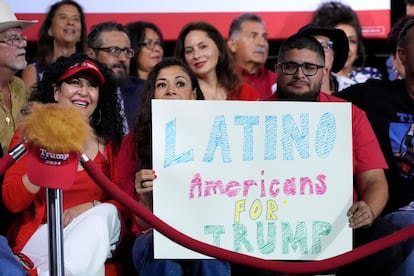

In the 2024 elections, the Latino vote took center stage, proving decisive for Donald Trump’s victory. In less than a month, their vote could determine whether Republicans keep control of both chambers of Congress or lose it in the midterms. Given that the electorate’s top concern is the economy, the outlook does not bode well for the red party.
Forty percent say their finances have worsened compared with a year ago, nearly three times the share who say they have improved. That is the finding of the latest survey by Latino advocacy group UnidosUS and BSP Research, which polled 2,700 Latinos in Arizona, California, Florida and Texas. The sample includes 1,955 registered voters, offering a glimpse of the concerns that will shape their vote.
The survey, conducted between August 28 and September 17, was limited to working-class Latinos, since the majority of community members identify as such. Nearly 80% of Latino adults (38.5 million) are part of the U.S. working class, compared with 65% of white voters. One in five workers in the United States is Latino, and because this community is growing faster, its share of the workforce will rise in the coming years. Hispanic workers are employed in essential sectors — construction, agriculture, transportation and manufacturing — and are projected to make up 78% of new workers over the next decade.
However, the poll shows that although they are working more, their finances are worsening. Eighty-three percent of Latinos rank the cost of living as their top concern, and 61% say they are just getting by or struggling to pay monthly expenses. Specifically, 60% of Hispanics fear they will not be able to pay rent, and 78% have taken extra measures just to stay afloat, such as buying cheaper food, using some of their savings, getting a second job or adding overtime to their current one.
More than half have forgone some type of health care, either by skipping doctors’ visits, not filling prescriptions for needed medications or replacing them with cheaper alternatives.
“The main factor is the economy, as we’ve heard not only in this survey but repeatedly from Hispanic voters, who are reminded of this particular worry every day when they shop, buy fuel and when it’s time to pay rent or a mortgage,” Clarissa Martínez said during the survey presentation.
ICE drags down the economy
The anti-immigration campaign launched from the White House, in which the Latino community has been the most targeted group, has also taken a toll on their finances. Sixty percent of Latino small-business owners say immigration policies have harmed their businesses, mainly due to fewer customers and sales, employee absences or difficulties finding workers. In addition, raids by U.S. Immigration and Customs Enforcement (ICE) and fear of encountering agents affected the economy of 44% of households, either because they faced higher expenses, lost income or family members were afraid to go to work or seek medical care.
Latinos will be decisive in the outcome of 12 of the 37 nationwide districts where competition is highest and that will determine who controls the House of Representatives, whose 435 seats will be decided at the polls, as well as one-third of the Senate and several governorships.
Insufficient outreach
Yet despite a large number of undecided voters, campaigns are not paying much attention to them. Fifty-five percent say no party, campaign or organization has asked them to register or vote. This trend holds even in key states such as Florida and Texas. Only 23% say they were contacted by Democrats, and just 15% by Republicans.
“About 40% of the Latino electorate sits in a kind of middle group — voters who could be persuaded or change their minds — made up of independents, those undecided about their 2026 vote, people who voted for a third party in 2024 or those who crossed party lines in 2024. So, regarding the elections, the prevailing word is discontent, not enthusiasm,” Martínez says.
The solutions Latinos want are practical. They support a national paid family and medical leave program so workers do not have to choose between a paycheck and caring for a newborn or an ill loved one; lower health insurance and childcare costs; and assistance to help pay a down payment on a home.
Sign up for our weekly newsletter to get more English-language news coverage from EL PAÍS USA Edition









































