
Mike Madrid, electoral strategist: ‘Latinos are the only voter group acting rationally in a broken system’
Ahead of the November midterm elections, the political strategist and co-founder of The Lincoln Project analyzes the growing economic disillusionment among Latino working-class voters and the declining appeal of the MAGA movement
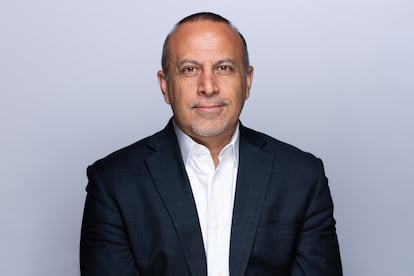
In 1980, Ronald Reagan arrived at the White House promising to restore the confidence of a country battered by Vietnam, the Iran hostage crisis, and the pessimism of the 1970s. His optimistic vision of America as a “city on a hill” left a deep impression on Mike Madrid. He was nine years old when Reagan was elected, and from then on he considered himself a Republican. But he also understood very early that he belonged to a particular lineage: that of U.S. Latinos.
That double identity, political and cultural, has defined his career and made him one of the most authoritative voices for understanding a concept as often cited as it is misunderstood: the so-called “Latino vote.” For Madrid, the label is misleading. There is no homogeneous bloc of Latino voters, but rather multiple electorates shaped by different diasporas, national histories, migration experiences, and economic and geographic realities.
Few people know that universe better. Madrid has studied it as a political science student at Georgetown, political director of the California Republican Party, campaign strategist, and co-founder of GrassrootsLab, a research and public-policy consultancy focused on Latino communities.
In The Latino Century: How America’s Largest Minority Is Transforming Democracy, he distills three decades of experience to explain how profound demographic change has made Latinos an increasingly decisive political force.
His own trajectory also reflects one of the great fractures in U.S. politics today: the break between traditional Republicanism and Donald Trump’s MAGA movement. Madrid considers Trumpism “a gangrene” that has degraded the country’s political culture. To confront it, he co-founded the Lincoln Project. His book is, at once, an exploration of the political rise of Latinos and a defense of democratic pluralism against tribalism and authoritarian impulses. All of this is the subject of this interview, conducted eight weeks before a midterm election in which the Latino vote will once again occupy a central place in U.S. politics.
Question. How are you reading the midterm elections? What do they reveal so far about the real political weight of Latino voters in competitive states and districts?
Answer. This is probably the most difficult political environment I have seen for an incumbent party in a generation. Maybe 1994 is the only comparable year. The fundamentals are awful for Republicans: coalitions reliant on lower-turnout voters of color, consumer confidence at a 50-year low, a generic ballot that favors Democrats. There’s no issue where Trump is over 50% support. An environment like this tends to paper over the tectonic plates actually shifting in our democracy. Democrats will do well this year, but that doesn’t mean people are voting for Democrats as much as they’re voting against Republicans.
Q. Republicans have made significant gains among the Latino electorate. In 2024, Trump won 46% to Kamala Harris’s 52%. Does that momentum hold for 2026?
A. It’s weakened because although Latinos are the fastest-growing group of weak-partisan voters in America, they’re the least racially polarized, by a wide stretch, and the least partisan. Most of this is driven by economic dislocation. There’s a need in the punditry class to make us an exotic caricature. Everything becomes about immigration or ICE [Immigration and Customs Enforcement]. The evidence has been clear for three decades: it’s about the economy. But we still have this need, because of the U.S.’s black-and-white origin story, to racialize our politics. Latinos are mestizo by definition: Indigenous, European and Black. There’s a need in American culture to focus more on the Indigenous aspect and almost be ashamed of the European heritage. You can’t have a Latino without the three.
Q. You don’t think they voted for Trump because he resembles a Latin American caudillo? Men voted for him in larger numbers.
A. Women shifted too. The Latin American caudillo is not the Mexican American experience. Sixty percent of the Latino diaspora is Mexican American; 70% have no experience with Latin American caudillos at all. It’s offensive to say Latinos want a strongman government. Look at the rise of the Democratic Socialists of America [DSA] — how do we explain that? Alexandria Ocasio-Cortez [AOC] — what is that? If it were racism and machismo, why were we voting for Obama and Hillary Clinton as the highest vote-getters in our history? Latinos have become more U.S.-born, meaning less connection to Latin America. And the less connection we have, the more some are voting for Trump.
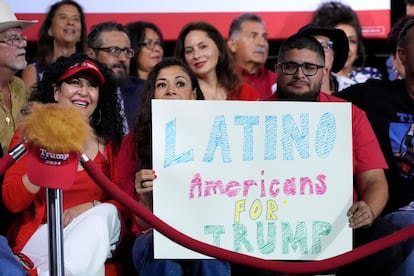
Q. Why did Latinos vote in larger numbers for Trump, and what’s motivating others to lean toward the more radical wing of the Democratic Party?
A. The answer is the same: economic dislocation. Democrats got 71% with Obama in 2012. That dropped to 67% with Hillary Clinton, 65% with Biden, and 52% with Kamala Harris — four of the last five elections, as Latinos become far more U.S.-born. The explosion is with third- and fourth-generation Latinos with weak ties to the country of origin; some don’t even know what a “caudillo” is. That’s the demographic transformation we’re putting our political biases on top of. Young Latinos in Brooklyn and East LA are driving the rise of AOC; Latino men in the Rio Grande Valley are becoming more MAGA. Same demographic, opposite outcomes. It has nothing to do with ideology. It’s an emergent Latino populism saying the power structures aren’t working, and we’re more affected because we’re younger, less educated, more working class.
Q. So, an emerging wave of populism that’s not only ideological is also taking hold in Latino communities. What are its elements?
A. Because Latinos are younger, less partisan, less racially polarized, and more blue-collar, we’re less part of the establishment and more responsive to pushing back against both parties. In the 2016 Nevada caucuses, Latinos under 35 were about 80% likely to vote for [Democrat Bernie] Sanders; Latinos over 35, 80% likely to vote for Clinton. A lot of those younger Sanders voters switched to Trump later. It’s not ideology, it’s populism.
Q. It all boils down to one thing. “It’s the economy, stupid”.
A. Eighty percent of it is. The decline of Latino support for Trump began literally on Liberation Day, when he announced the tariffs. His numbers were collapsing months before the first ICE raids in Los Angeles. I’m not saying ICE raids don’t have an impact. They clearly do. But even UnidosUS’s polling, the most left-wing Latino polling in America, has immigration at number five, and only there because a third of our community likes the mass deportations and wants more of it.
It’s rising gas prices, too. Latino men under 30 are the demographic most impacted, because we’re driving trucks, not electric vehicles. One in five Hispanic men work in residential construction — we are the home builders. Ninety percent of houses in America are built by Latinos, but we’re also the younger people at home-buying age, priced out because there isn’t enough housing stock — hit on both sides, as consumers and as employees. Trump’s racial antagonism has catalyzed this further, of course. But if the economy were doing well for us, would we see this outrage? I doubt it.
Q. Are parties still trying to mobilize Latino voters through Spanish-language outreach or immigration messaging — what you call “sombrero politics”?
A. Neither party has done a good job of this, because neither is speaking to economic concerns. Democrats lean into ICE raids and immigration, which plays to their base. But those are voters they already have. And Spanish-language media’s influence has declined dramatically: Univision and Telemundo are in deep trouble. The fastest-growing audience by far is U.S.-born Latinos who don’t speak Spanish.
Q. What would work better?
A. My answer has been consistent for 30 years: an aspirational economic policy. Neither party has one. What’s the economic policy for the Republican Party right now? What’s the economic policy for the Democratic Party? We’re pretty educated guys who follow this closely, and we don’t know, because it doesn’t exist.
Q. What role are younger, U.S.-born Latino voters playing in this cycle?
A. They’re very motivated where they’re allowed to vote. Latino turnout exploded in Texas and hit historic lows in New York City, where Congressman [Adriano] Espaillat lost his seat with 9% turnout. The difference is open versus closed primaries: New York and Florida require party registration to vote; Texas and California don’t. Because Latinos are the most likely to not be affiliated with either party, we show up where we’re welcomed. A Quinnipiac poll before the New York primary found a third of registered Latino Democrats said, “I am not a Democrat” — they’d had to join a party just to vote. That’s a form of voter suppression: close the primaries and the extremes win; open them and Latino voters back centrist candidates.
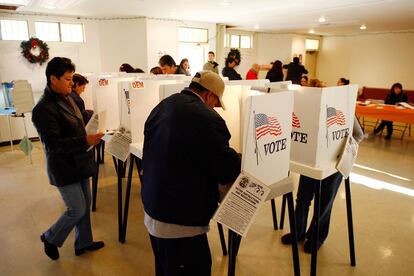
Q. How will that picture fare in November?
A. I think it spells trouble for Republicans, because these are the same voters who punished Democrats in 2024, for the same reason: the economy. They’re not apathetic. They vote in record numbers where they’re allowed to.
Q. You’ve argued there’s no single “Latino vote,” but many different Latino electorates. What are the most consequential divisions that media and polling still miss?
A. The biggest distinction, by far, is not country of origin — it’s generational. When I was young studying this, there were three generations; now there’s a discernible fourth, with no connection to the immigrant experience at all, yet we say they’re all Latinos who should worry about the same issues. There are country-of-origin differences too, but the common thread is blue-collar, working-class issues. They’re all moving as a bloc for the first time in my 35 years watching these voters, and the answer is economics.
Q. Is it only economics, or also the work ethic and values that inspire the blue-collar identity?
A. For sure — that’s what Bill Clinton used to call “playing by the rules.” I just met with Bobby Pulido, a two-time Latin Grammy-winning Tejano singer turned politician, running in a Trump-plus-18 Texas district. He’s going to win by six to eight points, a 20-point shift, the same shift we saw in New Jersey, Virginia, and New York City. That work ethic is our superpower; it’s why we’re the pro-growth constituency of America. That constituency has been alienated from the Democratic Party on economic issues for a decade, connects with Republicans on social issues, but gets ignored on working-class concerns by both. That’s why Latinos don’t feel at home in either party.
Q. Do you think Democrats emphasize cultural identity issues too much over the economy?
A. The Democratic Party is more white now than at any time since the 1964 Civil Rights Act. White progressives have used a caricature of how non-white people vote, missing that the moderates in both parties are Black and brown people focused on economic issues, while the elites are consumed by cultural fights: trans bathrooms, abortion, gun control. Latinos are focused on bread-and-butter issues like paying the rent. That’s why we’re moving away from parties without a working-class agenda. Neither of them has one.
Q. You’ve argued Latinos are an aspirational electorate — oriented toward education, work, family, homeownership. How do we understand that without reducing it to white Protestant individualism or a demand for cultural assimilation?
A. The answer is economic opportunity. The same reason our parents came here. You don’t come to assimilate; you come to make money, to give your children a better life than you had. That’s the promise both parties have broken. Until very recently, Pew Research found Latinos and immigrants were the biggest believers in the American Dream. This is heartbreaking and beautiful and tragic: the people who believe most in America’s mythology are the ones being treated worst right now.
Q. Wouldn’t a message about a rigged system and an aspirational message be mutually exclusive?
A. Maybe, maybe not. I asked James Talarico exactly that. He said: “I’m speaking to a generation broadly — doesn’t matter what color you are. This generation doesn’t feel it has a place in the promise of this country the way every generation before it has.” Some politicians speak to that negatively — like Trump: the country’s going to hell unless you vote for me. That’s dangerous populism. What Talarico is saying is aspirational — if we unite, we can fix this — the opposite of Bernie Sanders’s “the system is rigged,” or Trump’s “I alone can fix it.”
Q. What would it take to turn disconnection into sustained civic engagement, beyond advertising and late campaign outreach?
A. Build houses. Create a Marshall Plan for housing. It’s a double irony — we build 90% of the houses in America, but we’re also the younger people at home-buying age, priced out because there isn’t enough stock. This is what Ezra Klein has been saying with Abundance: California’s a mess; government has strangled growth. The only way to fix this for the Latino community is to build — infrastructure, dams, bridges, homes — and deregulate, which Democrats in California are finally talking about.
Q. If you were rebuilding the Democratic Party’s approach to Latino voters from scratch, what would you change?
A. The Democratic Party has to shed the prioritization of racial and ethnic politics and replace it with class-based politics. It needs to become a working-class party again, like under Franklin Delano Roosevelt. That’s why the Bernie Sanders wing is ascendant — he, AOC, and [New York Mayor] Zohran Mamdani talk about class, not race. The wealthy white elites focus obsessively on racial identification, and that’s not helping the guy swinging a hammer on a construction site.
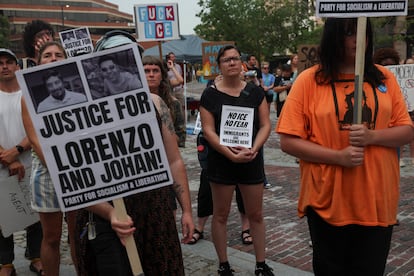
Q. Don’t you think the killings we’ve seen — a Latino construction worker in Houston or Maine — have an impact on Latinos as a cultural-ethnic group, even beyond economics?
A. They’re having an impact, but nowhere near what conventional wisdom suggests
Q. Have you been a Republican your whole life? Are you still one?
A. I’m registered as a Republican the way Frederick Douglass was — never trusting the party — the way I’m Catholic even though I don’t agree with a lot in my church. I know why I became a Republican, and it’s not for what’s going on now — it’s the opposite.
Q. Would you vote Republican in these midterms?
A. No. I won’t, maybe ever again.
Q. Are there other leaders in either party who can build a broad Latino coalition without treating Latinos as a homogeneous bloc?
A. There’s a DC/New York parochialism fixated on the idea that the future of the Democratic Party is the Rust Belt, the blue-collar white guy. Those guys are gone. The future of both parties is the Sun Belt: Texas, Arizona, Nevada, Georgia, California. And the way you win there is the Latino vote. Talarico and Pulido are the demographic archetypes of both wings — a Harvard-educated progressive and a self-described conservative Tejano singer — and they need each other. The Democratic Party doesn’t exist as a majority party without both. If Texas can pull that off, Democrats will be the dominant party of the next decade. If not, the Republicans likely will be.
Q. How do you distinguish the normal tension generated by demographic change from the political exploitation of “replacement” fears that turn it into a racial threat?
A. What’s unique about this moment is that we’re transforming our understanding of race, ethnicity, and minority politics, because we don’t see the world through a black-and-white lens the way white conservatives want us to. Whites — especially progressives — need us to vote like Black voters, using anti-white messaging; white conservatives do the reverse: drop the hyphen, be American. Latinos are changing America’s understanding of race, class, and partisanship. That intersection will define American democracy for the next generation. My primary view is through a blue-collar lens: an affordable life, a better one for my children. Neither party can speak to that, because they’re too racially polarized and hyper-partisan to understand a voter rejecting whoever’s in power for failing the electorate. Latinos are the only voter group acting rationally in an irrationally broken system — the seeds of what can fix American democracy when it looks irreparably broken.
Q. How can Democrats acknowledge discrimination and inequality in Latino communities without reducing them to a politics of victimhood or racial identity?
A. They’re learning how — you do it through a class lens, the way Talarico does, the way Jon Ossoff is doing it too, another son of the South. One of the ironies of a truly pluralistic, more colorblind society is that Black and brown people are seeing class issues more than racial ones now, though they’re intertwined. Until we solve class issues, we’ll never solve racial ones. I’m as committed to a poor white kid in Appalachia as a Black kid in Mississippi or a Latino kid in the Central Valley — they’re all God’s children who need help from government, and an aspirational message.
Q. You sound like a conservative Catholic Marxist — all these words coming together.
A. That’s well put. It’s ultimately a class-based discussion. I have the benefit of being mestizo — if I were Black, would I have the luxury of saying that? No. Black people have a harder time for racial reasons than Latinos; that’s just true. We can be both allies to that and, because we can navigate a white world in ways our Black and Asian brothers and sisters can’t, sometimes enemies of it. But from my Catholic tradition, I have a compulsion to look out for the poor, the least among us. That’s our job. That’s the beauty of who we are, a people of exceptions and qualifiers. Because we’re a mestizo, mixed-race people, I believe we are the bridge to a non-white America — closer to the mythology of who we’ve always said we are than either Black or white America has managed to be. That’s the promise of the Latino Century, and why I wrote the book.
Sign up for our weekly newsletter to get more English-language news coverage from EL PAÍS USA Edition









































