
Live with Bobby Pulido, the Tejano music star running for the United States Congress
Just days before a pivotal primary in Texas, the singer and Democratic candidate for the US House takes a break from a bruising campaign with a concert for Mexican fans in Puebla

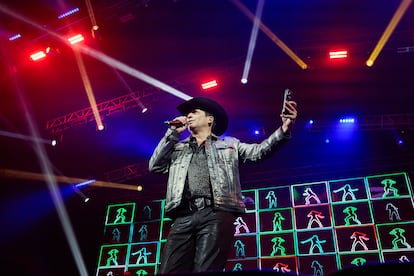
In a packed Auditorio Metropolitano in Puebla, filled with heads topped by cowboy hats, a candidate for the United States Congress takes the stage. He is not there to deliver a campaign rally. Here, nearly a thousand miles south of the Texas-Mexico border, he is simply Bobby Pulido, a two-time Latin Grammy winner and an icon of Tejano and regional Mexican music.
The singer is also, according t o an internal poll, the clear favorite this Tuesday in the Democratic primary to decide who will face Republican Representative Mónica de la Cruz in November’s midterm elections in Texas’s 15th Congressional District, in the Rio Grande Valley, which stretches along the southeastern tip of the state. That Democratic stronghold turned red for the first time in its history, and Pulido is determined to paint it blue again as part of a national wave to return control of the House to his party. The country is watching the contest closely as a barometer for the midterms nationwide.
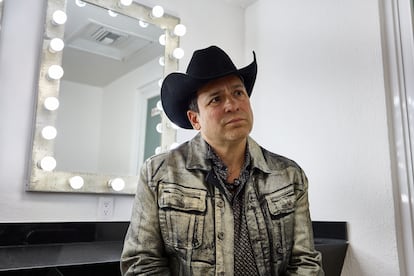
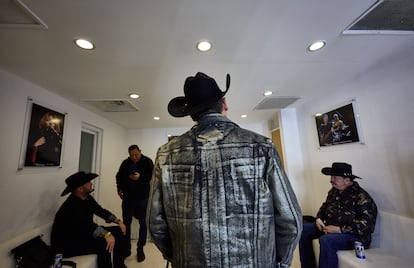
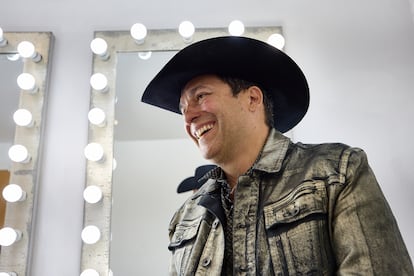
“Tonight I will just feed off of the people. It’s like riding a bike; you don’t forget,” Pulido says backstage, already dressed in his silver jacket and black hat, shortly before beginning the concert on his Por la Puerta Grande tour, which signals his imminent retirement from music. “I haven’t sung in so long... I’ve been campaigning,” he adds, explaining that he has thoroughly traveled each of the 11 counties that make up the congressional district he hopes to win. His approach, he says, is grassroots politics—face-to-face contact with voters.
The first objective is to defeat Ada Cuéllar, an emergency room physician who launched her campaign with little institutional backing from the party and on a platform positioned further to the left than Pulido’s. She has attacked him mainly on social media over his ties to the party establishment and over past inappropriate or sexist posts.
He has not shied away, but neither has he engaged in personal attacks. Pulido sees his connections to established members of Congress as an asset rather than a liability, arguing that the ability to build alliances on Capitol Hill — including bipartisan ones — is essential to advancing legislation. He dismisses criticism over past posts as desperate attempts to smear him, saying they lose their impact once voters meet him in person. Aware that he starts with an advantage as a well-known figure in the district — and buoyed by polls that give him 68% support, compared with 19% for Cuéllar and 13% undecided — he expects his grassroots campaign to intensify between now and November, with concerts becoming increasingly sporadic.
That does not mean his concerts are devoid of a political tint — or at least, it is hard not to see them that way in the current climate. This Saturday, just before Pulido took the stage, the opening sequence of the music video for his 2010 song Algún Día played on the screen. At a construction site, Pulido boasts that thanks to his girlfriend he now has his “papers.” A coworker replies: “Yeah, man, but with the way the law is these days, you know what? If you look Mexican, they’re going to stop you just to check you out.”
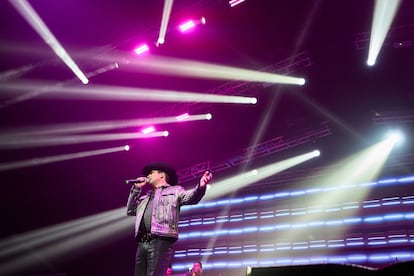
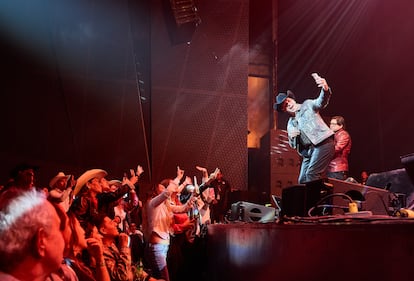
Pulido then climbs onto a stack of pallets serving as a makeshift stage to deliver an impassioned defense of the American dream, as if he were already a politician. At that moment, the singer steps out in his cowboy boots and begins performing live before five thousand fans who couldn’t care less about his political ambitions.
An emerging star
But politics has been part of his life for a long time. Before launching his singing career in the mid-1990s, Pulido — the son of Roberto, also a Tejano musician — studied political science in San Antonio. Now, three decades later, Politico describes him as a “rising Democratic star.” He does not feel so tightly bound to the party, however. “People are disillusioned with both parties. They want to hear what each candidate has to say, not what the party tells them they should think,” he explains. And for him, the biggest motivation is immigration. “We need to fix this issue because I feel like the Latino community in general has been a political football that’s been kicked back and forth.”
That perspective has a lot to do with the place that raised him: the Valley — as the southeastern Texas region from San Antonio to the border is known — where the population is more than 90% Latino. Though it had long been Democratic, it is far more conservative than the party’s national strongholds in New York and California, and over the past decade, it began voting for Trumpism, driven by economic concerns and culture wars. Now, Pulido says, many regret it.
“The way the government has been staging things with ICE has substantially affected our economy. It’s hurt tourism, which depended on Mexicans crossing the border to shop, and they’re not coming anymore. They’re afraid of being approached by men with guns and covered faces. A lot of people voted for Trump because they thought he was going to help the economy, and now he’s making it worse.”

The candidate understands that position, but what he feels is anger at Trump’s immigration policy. “I have a very big problem with their quotas [for deportations]. What they’re doing in order to meet those quotas is going after the lowest-hanging fruit. They go to construction sites and take people who don’t have any criminal record. I have a huge problem with racial profiling and with profiling based on language, which the Supreme Court has now allowed them to do. I don’t have a problem with enforcement, but how you do it is very important. When I go on social media and see them making fun of the people they’re deporting, it pisses me off. And it pisses off my community too, because it doesn’t look serious when they put rap music to a video and they’re laughing. I can’t help but think, ‘fuck them.’”
In this context, Pulido’s campaign is being described as a gauge of the electorate’s mood. It is a smaller-scale version of the parallel contest between Democrats James Talarico, a more moderate figure, and Jasmine Crockett, from the party’s more progressive wing, who are battling to become their party’s Senate nominee in Texas.
They would face whoever prevails on the Republican side — another race with national implications — where John Cornyn, a conventional Republican who has served in Washington since 2002, is up against Ken Paxton, the state’s controversial attorney general and an ally of President Trump; and Wesley Hunt, a House member who falls ideologically between the other two, though he is far less well known.
On his more local stage, Pulido is compared to Talarico, a state representative and pastor-in-training known for his viral speeches on the House floor and for combining his religious background with a progressive agenda centered on public education, gun reform, and social justice. Some have described him as timid, but Pulido rejects that idea outright: for him, it is precisely what allows for building broad coalitions.
“I don’t believe that’s the proper framing. At the end of the day, it is one thing to have your political stance, but you still have to go and negotiate and convince other people about your ideas in Congress. I don’t think being moderate is being timid at all. I mean, they call me ‘moderate,’ but moderate on what? On social issues, cultural issues? On the economy? There are so many different levels from which you can judge someone,” says the candidate, who supports comprehensive immigration reform that has languished for decades, backs assistance for low-income families, but is personally opposed to abortion — while believing it is an individual decision and should remain legal.
Regarding the attack by the United States and Israel on Iran, launched less than 24 hours before his performance in Puebla, Pulido is clear about his position: it is an illegal action, and any U.S. military deployment must be approved by Congress. However, he does not believe it will weigh heavily on his voters; it is an issue too distant for Texans, unless it triggers an energy crisis that drives up prices and worsens an already stubbornly high inflation that has been steadily eating into people’s wallets.
By contrast, a factor that will loom much larger is the fact that he is running in a district that was very recently redrawn by the state legislature to benefit Republicans. Pulido, however, turns that argument on its head and believes it actually works in his favor. “Sixty-five percent of the district is new. That takes away a lot of her [De la Cruz’s] advantages as the incumbent, because they don’t know her. So she’s going to have to go out and campaign hard — and I’ve already been going there. On another note, they went by Trump’s 2024 numbers. In 2022, that district wasn’t as red as they think it is. Not even close. And that was in a Biden midterm, which usually favors the opposing party. We’re going to have the wind at our backs,” he says confidently.
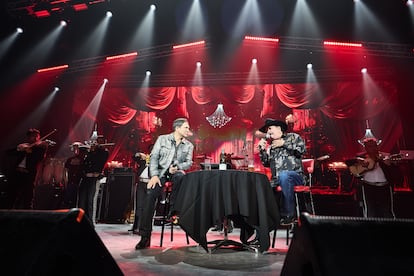
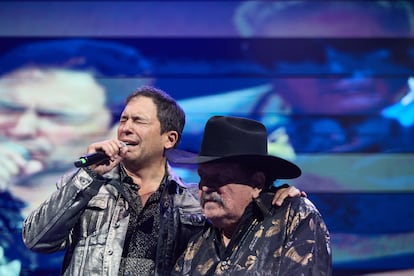
A little later, back on stage, the concert turns personal, and politics seems forgotten. Roberto Pulido, his father, has come out to sing a couple of songs with his son. Bobby celebrates his dad’s birthday with an emotional rendition of Las Mañanitas and a song especially dedicated to him.
It is hard to imagine Pulido smiling as much on the campaign trail as he does on stage. Until, in a brief moment of silence, someone in the audience who has been singing all night shouts, “Congressman!” Then, the singer removes his hat.
Sign up for our weekly newsletter to get more English-language news coverage from EL PAÍS USA Edition









































