
ICE is laying off agents hired during its rapid expansion after discovering discrepancies in their backgrounds
A ‘Washington Post’ investigation reveals that the agency hired thousands of officers with incomplete background checks, while a whistleblower warned of an unprecedented lowering of hiring standards

Joseph Moore had spent years trying to build a career in law enforcement. A former Marine reservist and father of two, the 38-year-old finally landed a job as a deportation officer with U.S. Immigration and Customs Enforcement (ICE) in 2025. Less than a year later, the agency decided to fire him. And just hours after going to an ICE office in Philadelphia to learn about his employment status, Moore died from a self-inflicted gunshot wound, according to police.
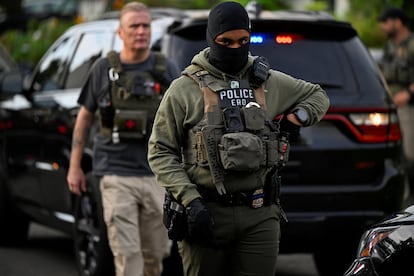
His case was part of an internal review of some of the thousands of officers hired during ICE’s rapid expansion to increase migrant arrests and deportations. Months after bringing in about 12,000 new officers, the agency has begun firing some of them after identifying problems in their backgrounds or reports of inadequate performance, according to an investigation by the Washington Post.
Moore had previously worked for police departments in Pennsylvania and as a criminal investigator with the Internal Revenue Service, but he had been fired from both jobs. In May 2026, seven months after joining ICE, the agency began questioning his suitability because of those employment records. Moore challenged the decision and continued working for another three months.
On August 21, he was involved in an accident with an official vehicle that left him with a concussion and several broken bones. Days later, the agency informed him that he would be fired. On August 28, he went to the ICE office in Philadelphia carrying his service weapon. Local police said officers attempted to intervene before Moore shot himself.
His family has challenged the official account and says Moore was speaking by phone with an ICE official who was trying to calm the situation. Police, meanwhile, said none of the officers fired their weapons and that Moore was the one who drew his gun.
The episode came amid a review of hiring carried out during one of the largest expansions in ICE’s recent history. The strategy, fueled by billions of dollars approved by Congress, called for increasing the agency’s workforce from approximately 10,000 to 22,000 officers. To attract candidates, the agency offered signing bonuses of up to $50,000 and received more than 220,000 applications. In January, it announced that it had hired 12,000 new officers in less than a year.
But the pace of hiring had raised internal concerns about the quality of background checks. A supervisor in ICE’s Office of Professional Responsibility, who oversaw background investigations, warned in August 2025 that the agency’s human resources staff was making final job offers before preliminary checks had been completed.
The official said some candidates had been allowed to begin training before fingerprint, identity, and credit checks had been completed. In a memo to the Department of Homeland Security’s Office of Inspector General, the whistleblower warned of an “unprecedented lowering of standards” and argued that the rush was sidelining basic measures designed to mitigate risks.
The complaint also said the failures could increase ICE’s vulnerability to insider threats, infiltration, and foreign influence. The supervisor called for the practices to be suspended, recent hires to be reviewed, and potential security risks to be identified.
Nevertheless, the expansion continued despite those warnings. The agency cut weeks of basic training and allowed some candidates with previous law enforcement experience to bypass its training academy. Two former officers interviewed by the Washington Post described onboarding processes conducted primarily by email and online courses, without in-person interviews.
The pressure on ICE facilities was also evident. One former officer said his office went from bringing in one or two new employees at a time to receiving as many as 60, resulting in a shortage of desks and workspace.
Concerns about the hiring process have grown following other incidents. In July, the government announced that it would review ICE’s screening procedures after an immigrant was fatally shot in Maine by an officer hired during the agency’s major expansion, despite having a history of domestic violence, according to his family and people close to him. He had also been accused of assaulting several women. In addition, an Associated Press investigation found that some new officers had serious financial problems, allegations of misconduct, and troubled employment histories.
ICE has defended its procedures and said it rigorously applies its background-check requirements. The agency has also said that firings are nothing new and that personnel decisions are made when employees fail to meet established requirements.
Sign up for our weekly newsletter to get more English-language news coverage from EL PAÍS USA Edition









































