Susan Sarandon: ‘Sometimes people call me a communist. I think that’s just their way of saying someone is out of their mind’
This grande dame of the screen has seen it all. Yet after more than 100 films, she still has an appetite for curiosity and activism. She spoke to EL PAÍS about ‘Thelma and Louise,’ Zohan Mamdani, and the lessons life has taught her
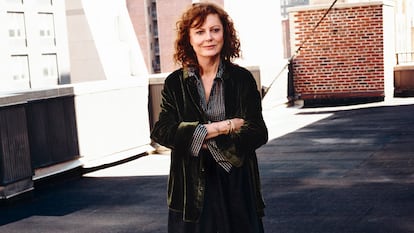
On September 25, just a week after this interview, Susan Sarandon, 80, was arrested outside the United Nations headquarters in New York. She was protesting, alongside actresses such as Hannah Einbinder and Cynthia Nixon, against Israeli Prime Minister Benjamin Netanyahu’s address to the General Assembly. It was not the first time she had been arrested, and it may not be the last.
Sarandon, who has appeared in more than 100 films, has starred in Hollywood hits such as The Client, Stepmom and The Witches of Eastwick; cult classics including The Rocky Horror Picture Show and Thelma & Louise; and socially engaged films such as Dead Man Walking, which earned her an Academy Award. She has also appeared in the TV series Friends and worked with French director Louis Malle.
Sarandon chooses her projects much as she lives her life: without preconceived limits, guided by a mix of curiosity and defiance. “When I read a script, I want to be moved. I want the character to be something I haven’t done before. It’s great if there’s a proven director, but sometimes they’re new directors. It’s great if you can get paid, but sometimes you don’t.”
Her latest project, The Accompanist, for example, is by first-time director Zach Woods. In the movie, she plays Sylvia, a troubled and eccentric foster mother.
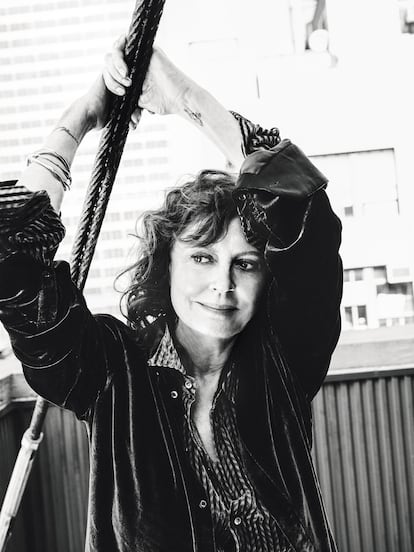
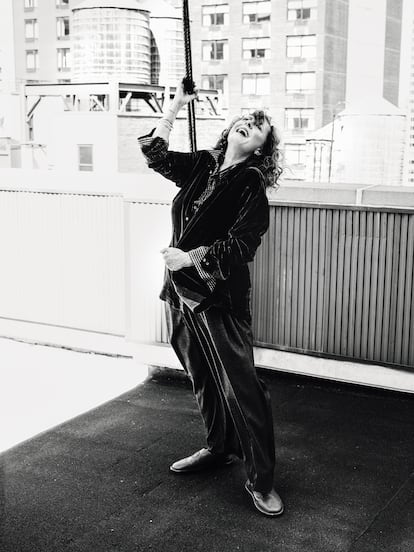
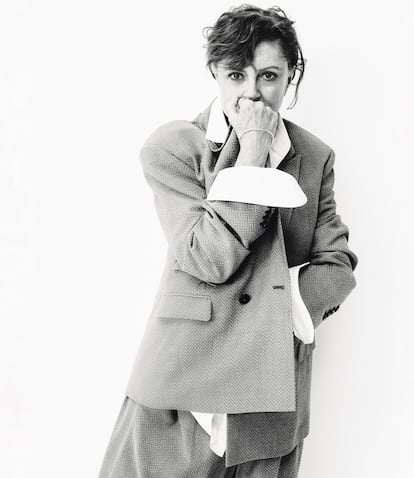
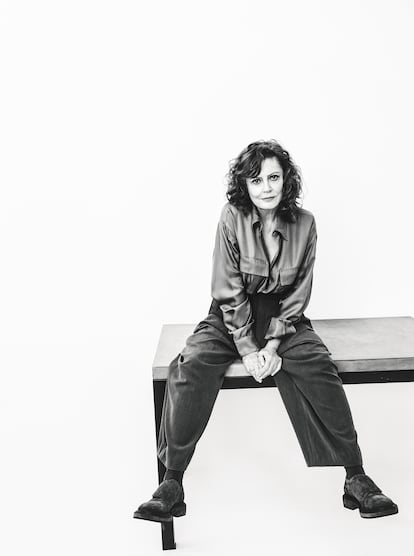
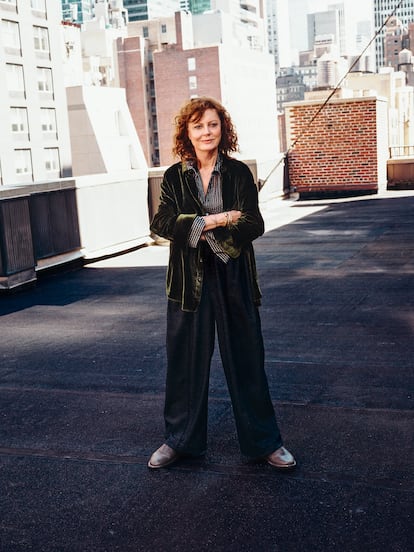
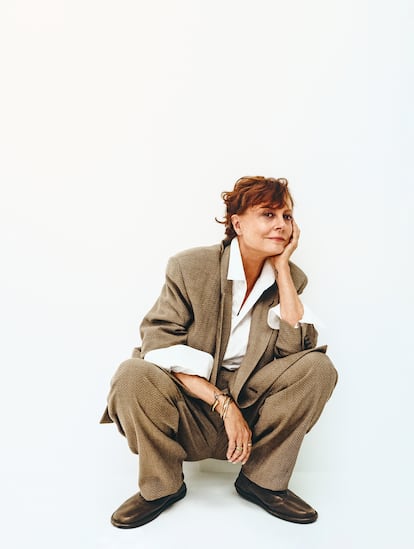
Sarandon arrives right on time for the interview with EL PAÍS’ fashion supplement Smoda. She tries on clothes for the shoot and eats breakfast while having her makeup done. Later, during the photo shoot, she jumps onto a table in a single bound and effortlessly crouches down. Nimble in both body and mind, she sits for the interview just days before turning 80, a milestone she has already celebrated at a ranch in Montana with her grandchildren and her three children: Eva Amurri, whom she had with Franco Amurri, and Jack and Miles Robbins, from her more than 20-year relationship with Tim Robbins.
“I wanted to be with my family, and the only week my grandkids had open in their busy schedules was in August,” she says.
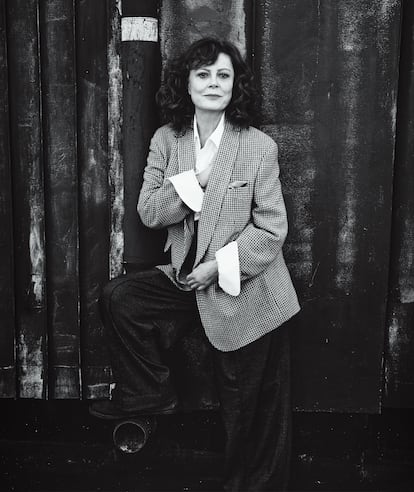
Question. In The Accompanist, you play Sylvia, a funny, tough and vulnerable woman who also happens to be remarkably tolerant as a foster mother. Were you an open-minded mother yourself?
Answer. Let’s say certain things don’t bother me that maybe bother other people. I talked to my children about drugs, about sex... They grew up in New York, and if you live downtown, it’s not hard to raise a kid to be open to different religions, races and family structures… That was one of the reasons I wanted to raise them in the city, because I felt I wasn’t vigilant enough to raise them with that openness to difference, and the city is great for that, you know: all kinds of art, all kinds of everything... that helps. My feeling was that if you’re going to raise privileged kids, at least you have to make sure they’re aware of their privilege and don’t take it for granted.
Q. The film presents exactly the opposite of a privileged upbringing: a young girl is forcibly removed from her home by an inexperienced child welfare worker, played by Aubrey Plaza.
A. Yes, and I want to mention one thing that we found out during a press junket: Aubrey’s mother and my mother were both in foster care. My mother grew up in foster care and an orphanage, and so did her mom. We didn’t know that while we were filming. There are a few problematic things about the foster system, but one of the worst is that when foster kids turn 18, they’re thrown out without any job, without any housing, without anything. No training, no education, no job, no money. Boom, you’re out.
Q. You are the eldest of nine siblings. What was your childhood like?
A. My childhood was fine. I mean, I didn’t know any different. It wasn’t a very playful childhood because, as the eldest, my sisters tell me I was the one who put them to bed, bathed them and did all those things because there was always a baby at home. A large family definitely teaches you to survive in chaos. I’m very good at that. You also get used to having no privacy. When I was little, I didn’t go out much because they needed me at home. But it was okay.
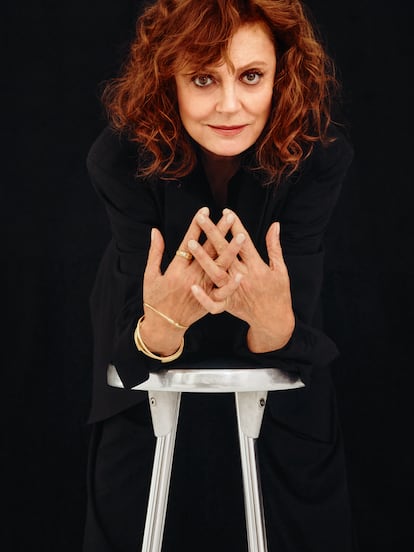
Q. Did becoming a mother affect the choices you made in your career?
A. Yes. For example, Jane Campion offered me a very good part in a film and it was exactly when my daughter was starting middle school, which is a huge transition and she was very nervous, and Jane Campion told me I could go back and forth, but I would spend the whole time waiting to leave. Of course my daughter doesn’t know or remember this. I should throw it in her face now [laughs]. But yes, there were things I turned down because it wasn’t the right time. I tried to have big movies line up with the summer, like Thelma & Louise or The Client. They were all done on location and my kids were with me in the summer. I remember the first time I did a film without my children with me. It was the one with Richard Gere and JLo, and I thought, “Jesus, what do I do?” I no longer had to arrange for them to come to set at lunchtime or look up where the museum was. I think one of the gifts I gave my children is flexibility. They’re adaptable, you know, because of their horrible upbringing [laughs].
Q. Did they complain?
A. I remember one of my kids saying: “When I was little, there were all these artists dancing in our living room, playing the piano and helping us make art.” He was telling a friend who said something like: “That sounds great, actually.” It’s normal — you have to be mad at your parents, but only until you’re 30. After that, you have to start taking some responsibility for yourself. Your dad was cold? OK. Then you be warm.
Q. You often play strong but vulnerable women. That’s the case with Sylvia, but also with Sister Helen, the role that won you the Oscar for Dead Man Walking, your fourth nomination. How important was that Oscar?
A. If I was going to win for anything, I’m glad it was for that film because I found the book, I found the nun who wrote it and she gave me the book, I worked on the script; I basically produced the film. There was a huge responsibility because I knew it was the first time a film was going to show both sides of what the death penalty means. People have very strong opinions about the death penalty, just like they do about birth control, but nobody had any idea of the specifics of what actually happens or how unjust it is or how it doesn’t really bring any solace to the victims. What I loved about the book was that Sister Helen doesn’t start out as a hero. She gets pulled in, little by little. She’s a real person who sees something wrong and begins to ask questions. Those are the women I love to play. Sister Helen and I are still friends. She lived in our house while Tim was deciding whether he wanted to do the film, until one day I threw a hissy fit and said, “You have to decide now if you’re going to do it because otherwise I’m going to take the book to someone else.” And he said: “Okay, I’ll look at it.”
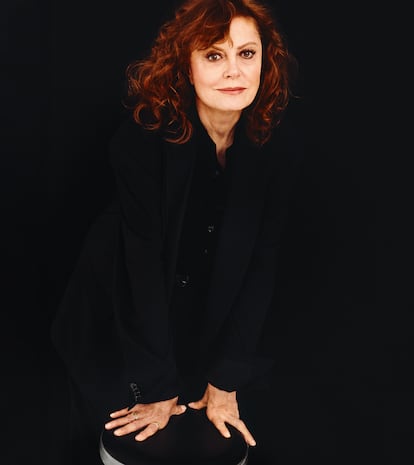
Q. Did your own activism evolve in much the same way, almost by accident?
A. No. I was already taking part in protests at college; in the late 1960s it was easy to be against the Vietnam War. And I kept doing it. In 1984 I was in Nicaragua delivering baby formula and things like that. I’ve been an activist for a long time because I believe you have a responsibility within your community to do everything you can to make sure people are fed, have a home and can live with dignity.
Q. Protesting and speaking out about the genocide in Gaza has cost you work. Is this the first time your activism has had consequences for your career?
A. No, it has happened before, but not so badly. For example, during the AIDS epidemic you weren’t supposed to speak about it publicly, and when I spoke at the Oscars about Haitian refugees with HIV who were in Guantánamo, I was kicked out of the Academy. But the important thing is that I’m not a victim; we should be talking about the victims and what is happening in Gaza and the West Bank.
Q. In 2018, you were arrested for protesting the separation of children from their parents at the U.S.-Mexico border. Are you still active on immigration issues?
A. Yes, I was arrested years ago during that first wave of children being separated from their parents at the border, and I think I’m due to go to the Elizabeth detention center [an immigrant detention center in New Jersey] and raise some hell there about what is happening to refugees in this country. A lot of the people being picked up are citizens; they have all their paperwork. They’re not arresting criminals.
Q. You’ve also been active in supporting refugees in other parts of the world.
A. I was on Lesbos, and it was heartbreaking because migrants thought that once they survived that existential threat of getting on those boats with fake life jackets, everything would work out. But then they ended up in that camp. Those days my cell phone barely worked, but I managed to speak with my daughter Eva. She was calling with my granddaughter, who was then two, and there was a woman there with a child about the same age, and the two girls looked at each other and pointed, and I thought: “My granddaughter simply got lucky being born where she was.” I asked a woman how she could risk making that journey with her small child, and she said: “If you’re on the top floor of a burning building and you know you’ll die if the fire reaches you, you jump. You hope for the best, but you jump.” And that’s what all these people were doing.
Q. For decades, you have used your fame and platform to champion social causes. Is there a misconception about you that you’ve stopped trying to correct?
A. I’m not sure because I don’t read any of that stuff. Every now and then, someone calls me a communist. I think it’s just the easiest way to try to say somebody’s out of their mind, a lefty. But I’m definitely not a communist. I’m not a Democrat either, though. I’ve said it before. I’m a patriot. I’m an independent.
Q. But do you vote?
A. Yes. But I can’t vote in the primaries because I’m not a Democrat, so I can only vote in the general elections. But we got [New York Mayor Zohan] Mamdani anyway, even without my communist vote.
Q. Do you like Mamdani?
A. I love him. He’s making substantial, concrete, actual positive change in New York; he’s making life materially better for many working people. He’s very smart.
Q. At 80, is there something you wish you had understood earlier?
A. Make mistakes faster. Make mistakes — big ones — but make them faster. You know when something is toxic, so get out of it. You feel it in your gut when you’re not being authentic, when you’re not being true to yourself, so listen to that and absorb it, but it doesn’t need to take two years. You could probably learn the lesson in about four months. I always give everyone too many chances.
Q. Is there anything you miss about being younger?
A. Definitely. Physically, because mentally I don’t think of myself as 80 — that still surprises me. But you notice how the body slows down. The other day I was talking with my grandkids, and I said, “I just want to be all used up when I die.” With nothing left to spare. As they say in sports, “don’t leave anything on the field.” Just show up. That would be a good epitaph if I were going to be buried, which I’m not. But if it were, “She showed up” seems like a good one. It’s pretty simple.
Q. This year, Thelma & Louise was featured on the official poster for the Cannes Film Festival to mark its 35th anniversary. It’s become an iconic film. When you were making it, did you have any sense of what it would become?
A. We were making a cowboy movie with trucks and women, and it turned into this other thing because we really didn’t understand how that genre was held by white heterosexual heroes. When you gave two women guns and freedom, it was very threatening to people. There was a lot of pushback. At first, they said we were condoning suicide, although no one said that about Butch Cassidy and the Sundance Kid. But, of course, they also said the film hated men and that the male characters weren’t very good. The film provoked an unexpected backlash. And then, because it became so controversial and popular, I don’t even know how much money it made. It’s funny because I get letters saying: The Rocky Horror Picture Show woke me up, and after seeing Thelma & Louise I left town.
Q. You’ve worked with Joel Schumacher, Barry Levinson and George Roy Hill, as well as with new directors like Zach Woods. Is there any director you’d like to work with?
A. I love all those fabulous Mexican directors: [Alejandro] Iñárritu, Guillermo del Toro, Alfonso Cuarón… Anything they did I would like to have done. Another director I love is Danny Boyle. He’s such a good filmmaker; last night I watched his film Ink. And Chloé Zhao is also a director I’d like to work with. When I saw Nomadland and Hamnet, I thought: “These are grown-up films.” These are people who know how to make a film. It’s not just television. They’re actual filmmakers.
Q. You recently received a Goya in Spain. What did that recognition mean to you?
A. I hadn’t realized what a big deal it was when I went. I might have been too scared to go if I’d known… [laughs]. But I love Spain. I’m sure there are terrible things in your country, like everywhere. But Spain and Ireland have really come through and dared other countries to be more morally responsible, and I appreciate that.
Q. How familiar are you with contemporary Spanish cinema?
A. There used to be all these little cinemas in New York that programmed independent films. When I was with Louis Malle, he would physically take his films to the projectionist because everyone knew the good projectionists. That’s how old I am. And that’s also how The Rocky Horror Picture Show was discovered — in gay cinemas and tiny venues. But there’s hardly any left, so it’s hard to see films that aren’t commercial and I don’t know much about contemporary Spanish cinema. Of course, I love all of Pedro [Almodóvar]’s work. He has a very particular point of view. I protested with him in Los Angeles against the Iraq War, right around the Oscars. I really admire him. Although I’m kind of mad he’s never put me in one of his films, but that’s okay.