
Corinna Lain, death penalty expert: ‘Lethal injection has been problematic from the start’
The author of ‘Secrets of the Killing State: The Untold Story of Lethal Injection’ examines Christa Pike’s failed execution in Tennessee


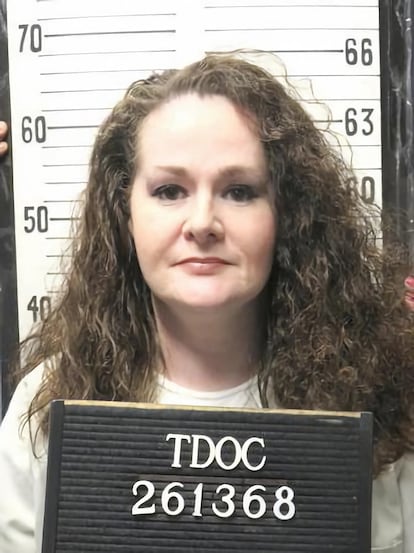
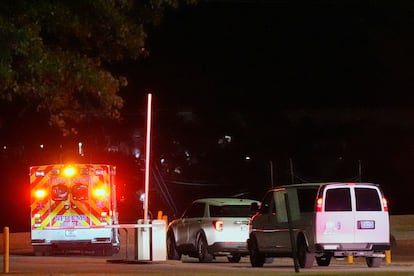
Christa Pike was supposed to be executed on September 30 at a Tennessee prison for the 1995 murder of a fellow student. But after receiving two supposedly lethal doses of pentobarbital, the 50-year-old survived. A week later, she remains hospitalized in Nashville. Her attorneys say she is now conscious and able to speak, though she continues to require medical care and faces a lengthy and uncertain recovery.
Pike was sentenced to death 30 years ago for the killing of 19-year-old Colleen Slemmer in Knoxville. Had the execution gone ahead, Pike — who was 18 when she committed the crime — would have been the first woman executed in Tennessee in more than two centuries. Authorities have not yet explained what went wrong and say they followed protocol, but the case has reignited the long-running debate over execution methods and the death penalty itself.
Corinna Lain, a law professor at the University of Richmond and an expert on capital punishment, says the case has thrust into the spotlight a method that is often presented as a peaceful death but can in fact cause extreme suffering. As part of extensive research for her book Secrets of the Killing State: The Untold Story of Lethal Injection, Lain has documented executions that lasted for hours, people who tried to rise from the gurney and the injuries caused by repeated attempts to insert IV lines.
Lain reflects on Pike’s case, explaining which questions remain unanswered and whether the state could try to execute her again.
Question. How does what happened to Pike fit with what you found in your research on lethal injection?
Answer. Lethal injection has been problematic from the start. It’s just that now people are starting to pay attention. These executions are botched in different ways. My book is the result of seven years of studying lethal injection around the country. I document all the different ways that lethal injections can go wrong.
I found people being executed for an hour, two hours, three hours. I also found autopsies where the body has 10, 12, 14, 16, 18 puncture wounds. I found people who have woken up in the midst of their execution and tried to get off the gurney. They’re moaning, talking, trying to get off the gurney. I found someone who was throwing up repeatedly on the gurney. The executioners had to come back into the execution chamber and wipe the vomit off their mouth. They were choking on it because, of course, they’re strapped down on their back.
Q. Do lethal injections cause suffering?
A. When you inject drugs into the vein, the first place they go is the heart, and the next place they go is the lungs. [In most cases], the person dies of pulmonary edema, which happens when fluid seeps into the lungs. The sensation, as one doctor said, is like drowning from within. We like to think that these people are just dozing off to sleep, but the closer truth is that we are waterboarding them to death.
Q. Tennessee says it followed all the steps in the protocol. Could something like this happen even if the protocol was followed?
A. Absolutely. The protocol just tells you what to do. They lean on it as though it’s proper, and therefore the execution was proper. It wasn’t. It clearly wasn’t.
You can say you followed the protocol. Yes, you injected pentobarbital. You sure did. In that sense, you followed the protocol. But where did you get it? How did you store it? Who was doing the injecting? All of the questions that will answer what happened to her are hidden behind secrecy.
Q. What might have happened for Pike to receive the injections and still be alive?
A. I have a few ideas. One is that the drugs may have infiltrated surrounding tissue. That is to say, the needle or catheter may have popped out of the vein and been shooting the drugs into the tissue around it. That would be consistent with [Pike’s] statement: ‘My arm feels like it’s about to burst open.’ If the drugs were being shot into the tissue surrounding the vein, that’s exactly what it would feel like. That also would have blunted the effect of the drugs because they’re not going straight into the vein. They’re going into the tissue. It’s a possibility.
Infiltration can happen because a person has fragile veins and the vein may have collapsed. I have documented case after case in which the catheter slips out of the vein and therefore the drugs are injected into the surrounding tissue.
In lethal injection executions, this also often happens because the people pushing the syringes and administering the drugs are non-medical prison guards. They are not doctors. They do it from another room, a little antechamber, through seven feet of tubing. They are not next to the gurney.
Q. If Tennessee tries to execute Pike again, what legal issues would arise?
A. The Supreme Court said in 1947 that if a state attempts an execution and it fails, it may try again. However, there is a separate doctrine that requires the person to have the mental competency to be executed. They must understand that the state is trying to kill them and understand why.
There have been cases of people with Alzheimer’s or various brain injuries who do not remember their crime. They do not have to remember whether they actually committed it. They have to understand what the state is doing and why.
Q. There are other methods, such as firing squad or the electric chair. Do they introduce different risks?
A. It’s not about introducing different risks. It’s about introducing different tortures.
The electric chair is a ghastly death. People smell burning flesh. People bleed through their orifices, even on their face. It is a gruesome, terrible death. The firing squad is bloody and brutal.
But there is a slightly different question to ask: is there a humane way to take someone’s life? That is different from asking whether there is a humane way to execute.
Every state that has the death penalty also has life without parole. I think that sentence is also quite draconian, because I believe in the possibility of redemption. But for those who say ‘an eye for an eye, life for life,’ my response is always that the state can take a life without asking some poor prison guard to kill somebody for their job.
Sign up for our weekly newsletter to get more English-language news coverage from EL PAÍS USA Edition









































