My testosterone levels are low… so what? Why the ‘softboy’ is suddenly being celebrated
Studies confirm that levels of this hormone have declined, but none link it to the so-called ‘masculinity crisis.’ Amidst an era of ‘gymbros’ and virility, many are demanding something revolutionary: just being normal

Just a few days ago, the magazine InsideHook published a rather unusual piece of journalism. Written by New York writer Jaed Coffin, it’s essentially a tribute to the average man as an alternative to the Nietzschean superman of social media. The essay is also an exhortation to stop going to the gym so much and to gracefully accept the defeat that comes with the passage of time.
Coffin intended to weigh in on a never-ending controversy: the supposed masculinity crisis in the United States, as well as the social and political consequences attributed to it. But his piece veered off course and ended up becoming an exercise in lateral thinking, with a refreshingly simple thesis: so what if masculinity – at least, hormonal masculinity – is actually in decline? And, to go a step further: what’s wrong with having low testosterone?
Coffin allows himself such a dialectical shift because he belongs to a generation that came of age at the turn of the century. He’s among those who studied at progressive universities on the East Coast. As he himself explains, he never wanted to be a gladiator in ancient Rome, break a world record for burpees, or defend the Battle of Thermopylae while baring his chest. Unlike members of the manosphere, he’s not obsessed with halting the decline of the anabolic steroid produced by men’s genitals.
Moreover, the writer admits that, today, 15 years after regularly hitting the gym, he attributes some of his most commendable personal qualities – such as his tolerance, his lack of aggression and his sense of humor – to low testosterone levels (which, incidentally, he doesn’t seem to have measured).
It’s not an urban legend
“Where has all that lost testosterone gone?” asked an article published by The Atlantic this past August. It’s worth clarifying some concepts: beyond the biased interpretations and unfounded sociological analyses, the decline of the male sex hormone is a proven fact. Just a few months ago, in London, UK, one of the main studies presented at the annual meeting of the European Society of Human Reproduction and Embryology (ESHRE) quantified the phenomenon: the average testosterone level in men fell by 54% in just 47 years, between 1972 and 2019.
Previous studies had yielded similar results. However, some analysts have attributed such striking data to methodological problems.

The large-scale study just presented is endorsed by Dr. Hagai Levine, a fertility expert who co-authored a pioneering analysis nine years ago, demonstrating that sperm concentration had fallen by more than 50% in just four decades. Furthermore, this time around, the sample size is very large (around 118,000 men of reproductive age from five different countries: the United States, Brazil, Israel, Finland and Denmark). The gradual decline is particularly evident after the year 2000, when the methodological and measurement issues pointed out by some experts had already been corrected.
According to Levine, we are facing a “major crisis in male reproductive health” and “it’s not given enough attention.” In his opinion, this could be attributed to lifestyle factors that are prevalent in high-income 21st-century societies, especially stress, overeating and a lack of exercise. Individuals struggling with obesity and those with early-onset diabetes are the most likely to suffer from male hypogonadism – that is, abnormally low testosterone levels. However, a significant drop in hormone levels is also observed in the rest of the population.
Let’s clarify a concept again: hypogonadism, or severe testosterone deficiency, is a medical condition that some males experience from puberty, while others develop it during the transition to middle age (roughly coinciding with andropause, colloquially referred to as “male menopause”). In the latter case, it usually produces a variety of initial symptoms, such as lack of energy, loss of libido, or depressive states. The uncontrolled progression of hypogonadism frequently leads to infertility, erectile dysfunction, loss of body hair, decreased muscle mass, breast tissue growth and bone loss.
In other words, testosterone deficiency tends to cause a series of disorders that can be perceived as a gradual loss of “virility” – the attributes we traditionally and culturally ascribe to masculinity. But acute hypogonadism (that is, at levels that cause discomfort and may make hormone treatment advisable) affects less than 1% of men under the age of 40 and between 2% and 6% of those who have already reached andropause.
The decline in average testosterone levels, on the other hand, is a global trend, affecting most men. And yet, its significance is primarily statistical: the fact that men in the 21st century have less of this hormone than our fathers and grandfathers doesn’t imply that we’re experiencing a rampant hypogonadism pandemic, nor that we’re rapidly becoming feminized. And it doesn’t mean that the fertility of our species is in danger in the medium term.
It’s not a Biblical curse
We now enter the very slippery terrain of cultural perceptions. In the United States, the political consequences of the so-called “masculinity crisis” have been discussed for at least 30 years now.
The scope of the debate is somewhat blurred. But during the initial phase, there was a lot of speculation around the disruptive effects of so-called “toxic masculinity.” This involved young men who, faced with a new context, given the partial dismantling of patriarchal barriers, felt disoriented, unsure of what social role they should adopt or what was expected of them.
These kinds of theories were by no means the exclusive domain of the new waves of feminism. Even the conservative theorist Francis Fukuyama considered the rising crime rates of the late-1990s to be reflective of the “failure to socialize young men by giving them breadwinning, fatherly role models.”
Around that time, another academic – this time a progressive one, the writer Beatrix Campbell – argued that the mass vandalism occurring in cities like Liverpool and Los Angeles was a direct consequence of the consolidation of a “tribe” of violent offspring of postmodern capitalism. She described “the vanity of fragile masculinity with nothing but time on its hands and a borrowed car to break into.”
Years later, however, came the fierce backlash against these theories. The narrative of “fragile masculinity” began to be seen by some opinion leaders as an attempt to emasculate and domesticate young men, forcing them to conform to a series of social behavior patterns that are contrary to their nature.
In the words of Ana Yara Postigo, a researcher at the University of Málaga in Spain, there’s recently been a self-serving attempt to link the crisis of masculinity to another supposed phenomenon: “male loneliness.” Apparently, “men today are more isolated, have fewer friends and feel more emotionally disoriented than in the past.” Hence, in line with this premise, increasingly radical and aggressive narratives of male empowerment are proliferating on social media, in podcasts and magazines, and via other more or less niche channels.

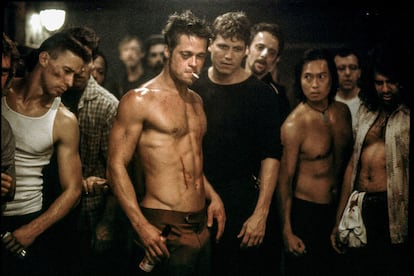
This is the case with the influencer Andrew Tate and his recipes for resisting what he perceives as the “tyranny” of feminism, while developing a mutual support network among men. In more ways than one, this harkens back to the dystopia of Fight Club (1999). Also, speaking from more conciliatory positions, there’s Scott Galloway, who in Notes on Being a Man (2025) offers practical tips for young men, in an era that’s seeing a transition toward a series of “different” masculinities (something he perceives as not necessarily positive).
It was only a matter of time before public figures who are heavily inclined toward conservative views, such as Donald Trump’s secretary of health, Robert F. Kennedy Jr., connected the dots to conclude that masculinity is in crisis because testosterone levels are declining (or vice versa?). And they think that the United States, consequently, needs an urgent “remasculinization” treatment that isn’t merely ideological, but also hormonal.
In a famous conversation with the podcaster Joe Rogan, the sitting vice president of the United States, J.D. Vance, dared to claim that there’s a direct correlation between conservative voting and high testosterone levels. Rogan served up the conclusions on a silver platter by suggesting that maybe healthier young men vote for Trump, while the effeminate and sickly ones opt for his Democratic rivals. This goes back to the biased logic of the 1930s, when magazines like Newsweek and Time – imbued with the atrocious eugenic thinking of the era – asserted that testosterone injections could revitalize the elderly, cure homosexuality and transform weak young men into patriotic paragons of masculinity.
As the University of Sydney denounces in a damning study, “young men are being encouraged to undergo testosterone testing and start hormone therapy through Instagram and TikTok content.” These calls for hormone therapy on social media are “normalizing unnecessary testosterone testing and treatment among healthy young men, despite these therapies being associated with potentially serious health risks.”
The University analyzed 46 Instagram and TikTok posts that reached a total audience of 6.8 million users and accumulated more than 650,000 likes. One of the study’s coordinators, Dr. Brooke Nickel, denounces that self-proclaimed influencers and “sex coaches” are telling perfectly healthy young men that they need to undergo treatment if they don’t want to “lose” their virility. Nickel identified several harmful messages, such as this one: “If you’re not waking up in the morning with a boner, there’s a large possibility that you have low testosterone levels. Get it checked!”
Jaed Coffin, who penned the essay in InsideHook, is entering his fifties. He doesn’t know if his testosterone levels are high or low, and he’s long since lost count of the days he wakes up without an erection. But he doesn’t care. For him, reclaiming his identity as a “low-T man” (that is, a man with low testosterone) seems to be a good way to oppose the delusion and toxicity of “high-T” men — the apostles of a kind of masculinity that’s enhanced by compulsive physical training and hormone therapies.
At a roundtable on new masculine models organized by The New York Times, writer Nadja Spiegelman noted that the political debate in the United States is heading toward a dangerous place: “Men are moving more to the right, women are moving more to the left, and it’s only exacerbating these problems. And I think part of what I’m really interested in is, how does the left bring men back into the fold?”
Perhaps part of the answer lies in reclaiming the “low-T man” that Coffin proposes. He’s imperfect, but empathetic; “fragile,” but trustworthy.
Sign up for our weekly newsletter to get more English-language news coverage from EL PAÍS USA Edition