
Mamdani’s plan for public supermarkets outrages New York merchants
The mayor responds to inflation alarm with an announcement of five stores that will open between 2027 and 2029. Competitors say it will push many businesses into bankruptcy
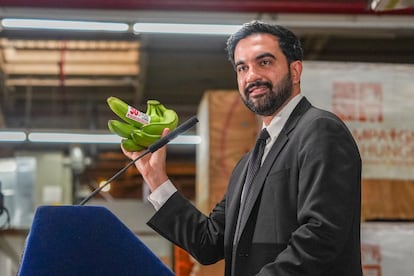

Grocery shopping in New York on a tight budget is a nightmare. A walk through a store on the Upper West Side is enough to see that a $10 bill only buys a dozen eggs or a chocolate bar; with seven or eight dollars you can get a pound of chicken breast or a pack of four yogurts. A City Hall report estimated last year that food prices have risen 56% over the past decade, 10 percentage points higher than the U.S. average.
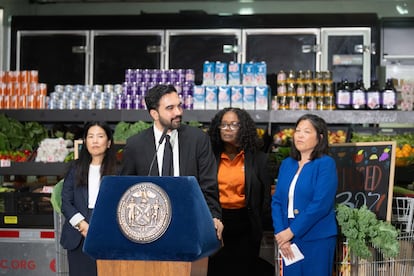
Zohran Mamdani, who took office earlier this year promising to help the families struggling most to make ends meet, has just unveiled his response to that pledge: publicly owned supermarkets run by private managers that will sell food at lower prices, with discounts on some items of up to 30%. But the solution is not to everyone’s liking.
Criticism has not focused on the fact that the five supermarkets he plans to open (one in each borough: Manhattan, Brooklyn, Queens, the Bronx, and Staten Island) will barely supply a population of 8.5 million. Nor that New Yorkers will have to wait years to shop in these affordable-consumption havens. The first supermarket, in the Bronx, is scheduled to open at the end of next year. Not all will be operating until 2029, the end of the mayoral term. The biggest complaint comes from small business owners, who denounce unfair competition, especially those located near the new public supermarkets. They say they will not survive competing with a state-subsidized rival.
The idea is to create a basic basket of everyday foodstuffs — fresh produce, meats, fish, shellfish, dairy products etc — priced 30% lower than in other stores. Fixed prices during each month will apply to all customers regardless of income. The rest of the products will be sold at market prices. The city will build the stores and exempt the managers from rent and some taxes. It will also provide funding to finance the discounts.
“There will be no weekly fluctuations or unpleasant surprises at the checkout,” Mamdani said on Monday when presenting the program. City Hall estimates these stores will cut the average customer’s bill by 15%, which equals about $90 a month or nearly $1,000 a year.
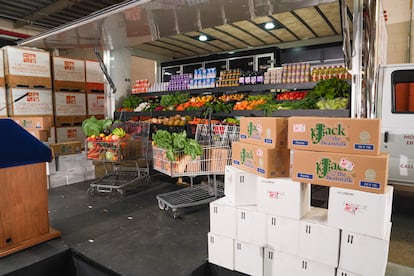
With these stores, New York’s first socialist mayor is delivering on one of his campaign promises. He does so after winning another victory by freezing rent for one million rent-regulated apartments. If then it was landlords who protested, this time it is merchants who say the innovative initiative could drive them out of business. They argue their profit margins are very slim — often around 1% — and they face high costs for rent, raw materials, and insurance.
“[The new outlets] will compete directly with small shops and supermarkets that have been operating for years,” says Francisco Marte, founder of Bodega and Small Business Group, an organization that represents small grocery stores. Marte believes it would be far more effective for the city to direct those funds to local merchants, who could then pass the discounts on to consumers. “We could fulfill your promise,” he concludes.
Mamdani’s response is that his administration already runs some subsidized markets and that these have not harmed local commerce. “In such densely populated neighborhoods, there is room for existing stores and for the city,” the mayor said on Monday. By his estimates, more than 65,000 people live within 10 minutes of the supermarket they will open in Manhattan, and more than 150,000 within 10 minutes of the one in the Bronx.
Risks
Some economists fear taxpayers will end up covering the losses of these public supermarkets and even that, if some existing stores close, prices in the free market could end up rising. Despite the criticism, it is undeniable that the initiative aims to ease a growing poverty problem in a city that is emblematic of capitalism. The The Poverty Tracker Report, presented last year by the Robin Hood nonprofit and Columbia University, indicated that around 40% of New York families could not afford the weekly cost of food and that one in three adults lacked enough money to do the grocery shopping.
Mamdani is also unveiling his public supermarkets at a time when the rising cost of living has returned to the center of the debate in the United States. It will be one of the key issues in the midterm elections to be held in November.
One reason that helps explain Donald Trump’s victory in 2024 was the very high inflation U.S. families experienced during Democratic President Joe Biden’s term. Prices rose driven by shocks such as the coronavirus pandemic and the war in Ukraine. And, although figures improved by the end of his term, Biden and his vice president and presidential candidate, Kamala Harris, never shook the label of being inflation leaders.
Trump won the presidency promising he would fix all this. But the Iran war and the tensions it has caused in energy markets have pushed prices up again. Although statistics improved somewhat in June thanks to a ceasefire with Tehran that has now unraveled, prices rose 4.2% in May compared with previous months, the fastest pace in three years.
While U.S. families saw their expenses rise, they have had to listen to the president make comments such as: “I love inflation.” Mamdani, for his part, has decided to go all in on a risky project that may not necessarily help the majority of working-class New Yorkers. But at least for now, he has managed to project the image of someone who cares about them.
Sign up for our weekly newsletter to get more English-language news coverage from EL PAÍS USA Edition









































