
California 2026 primary: what’s on the ballot, who’s running, and how to vote before June 2
With no clear front-runner in the race for governor and numerous offices up for grabs, the nation’s most populous state is heading into a decisive election
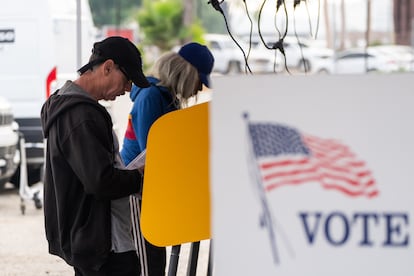

The 2026 California primary elections are already underway. Starting this week, millions of voters began receiving their mail-in ballots for an election cycle that will conclude on June 2, featuring a gubernatorial race with no clear front-runner and dozens of state and local offices up for grabs.
This is a key election not only because it will determine who advances to the midterms in November, but also because it could set the political course for the nation’s most populous state on issues such as the cost of living, the insurance crisis, housing, and natural disaster management.
Despite the magnitude of what is at stake, numerous polls show that many voters are not yet fully engaged in the election. The absence of high-profile figures and the large number of candidates have contributed to this lack of enthusiasm.
However, recent events—such as televised debates and shifts in the campaigns—could increase attention in the days leading up to the election.
What’s on the ballot in the 2026 California primaries?
Although the race for governor is drawing the most attention, the ballot includes much more. At the state level, voters will elect candidates for offices such as lieutenant governor, attorney general, treasurer, superintendent of public education, and insurance commissioner, among others.
More than half of these positions do not have an incumbent running for reelection, which has opened up the political landscape. In particular, the position of insurance commissioner has taken center stage amid rising prices and the loss of coverage following recent wildfires in the state.
There are also elections for the U.S. Congress, state legislatures, and a long list of local offices—from city councils to boards of supervisors—that can directly influence public policies such as public safety, infrastructure, and economic development.
Competitive congressional districts, redistricting, and tax proposals—such as taxes on large corporations or measures to fund public services—are also on the ballot.
In cities like Los Angeles, voters will decide whether incumbent Mayor Karen Bass will win a second term or if one of her challengers will unseat her.
It’s worth noting that in these primaries, voters do not directly elect the next officials, but rather the candidates who will advance to the November vote.
Who are the leading candidates for governor?
The race to replace the current governor, Democrat Gavin Newsom—who cannot seek reelection due to term limits—is one of the most wide-open in years. Eight leading candidates are competing in a fragmented field, with no clear front-runner.
Prominent figures among the Democrats include Xavier Becerra and Tom Steyer, a businessman who has invested large sums of his own money in the campaign. On the Republican side, political commentator Steve Hilton has gained visibility, especially after receiving Donald Trump’s endorsement. Meanwhile, the race was shaken by the withdrawal of Democrat Eric Swalwell following allegations of sexual misconduct.
Under California’s electoral system, the two candidates with the most votes—regardless of party—will advance to the election in November.
Can a Republican win in California?
Although there is a mathematical possibility that two Republicans could advance to the election if the Democratic vote is split, recent polls suggest that such a scenario is becoming increasingly unlikely.
California hasn’t elected a Republican governor in over 15 years, and the Democratic voter registration advantage remains significant. Still, voter turnout will be a key factor: historically, primaries without a presidential election draw less interest. Experts estimate that less than 40% of voters may turn out this year, which increases the influence of the most consistent and politically engaged voters.
How does voting work in these elections?
All registered voters automatically receive a ballot by mail. From there, they have several options:
- Mail the ballot—no stamp required—as long as it is postmarked by June 2.
- Deposit it in official drop boxes, which are now available throughout the state.
- Vote in person at polling places, which will begin opening on May 23.
The deadline to register online is May 18, although same-day registration is also available at polling places on Election Day.
Voters can verify their registration or track their ballot through the Secretary of State’s website, which also offers tools to resolve common issues before Election Day.
Common mistakes when voting
One of the most important aspects of voting by mail is the signature. If the signature on the envelope does not match the one on file, the ballot may be held until the voter verifies their identity.
Other common mistakes include forgetting to sign, sending an empty envelope, or using the wrong ink. If a mistake is made, voters can request a new ballot or correct it according to their county’s instructions.
If there are issues with the signature, there is a process called “curing” that allows the ballot to be validated later.
Key dates
- Ballot mailing begins: early May
- Voting drop boxes open: now available
- Early in-person voting begins: May 23
- Online registration deadline: May 18
- Election Day: June 2









































