
US offers $5 million reward for capture of Juan José Ponce Félix, cartel boss loyal to El Mayo Zambada
The State Department accuses ‘El Ruso’ of drug and arms trafficking as well as bribing government officials, police, and military personnel in Sinaloa with over $1 million per month
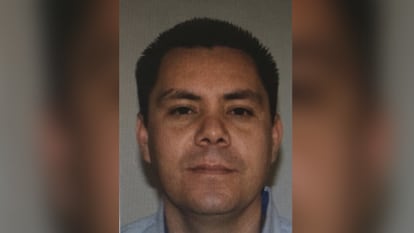

The United States is tightening its grip on the Sinaloa Cartel, particularly targeting followers of Ismael “El Mayo” Zambada. On Tuesday, the State Department offered a $5 million reward for Juan José “El Ruso” Ponce Félix, a cartel leader based in Culiacán. Authorities accuse him of drug trafficking — primarily cocaine, fentanyl, methamphetamine, and heroin — as well as arms trafficking and bribing government, police, and military officials with $1 million per month to maintain operations in Sinaloa, according to a statement.
Ponce Félix began working for Zambada in 2012, according to the DEA. At the time, he was responsible for leading “a fleet of cartel soldiers” in Culiacán who carried out kidnappings, took hostages, and committed torture and murder for the cartel’s benefit at a ranch owned by El Ruso in the Sinaloa capital. Over time, Ponce Félix formed a group known as Los Rusos, the armed wing of the Sinaloa Cartel loyal to Zambada in Culiacán. The State Department says that the DEA and FBI have tracked him for over a decade, and their investigations indicate that Ponce Félix traffics narcotics worth millions of dollars. He is also accused of moving drug proceeds back to Mexico.
His other operations include firearms trafficking, and he is accused of kidnapping, torture, and murder “as mechanisms to maintain his power and control over this valuable territory along the U.S.-Mexico border.” Ponce Félix is also accused of taking part in the Sinaloa Cartel’s “public corruption schemes” and is alleged to have bribed various Mexican government officials, police, and military personnel with over $1 million per month to “maintain his drug distribution enterprise,” according to the statement.
The State Department identifies Ponce Félix as one of the Sinaloa Cartel leaders who broke agreements with the sons of Joaquín “El Chapo” Guzmán Loera, known as Los Chapitos, triggering the violent factional war that has plagued Sinaloa for the past year. Authorities say that during the 10 years they have been tracking him, El Ruso has been formally charged four times in two different California judicial districts.
The multimillion-dollar reward for information leading to Ponce Félix’s arrest marks the latest move by the U.S. in its campaign against Mexican cartels and fentanyl trafficking. The posting of his wanted notice coincides with the White House sending a presidential determination to Congress identifying 23 countries as drug producers or transit points. In addition to Mexico, Washington listed the Bahamas, Belize, China, Costa Rica, the Dominican Republic, Ecuador, El Salvador, Guatemala, Haiti, Honduras, India, Jamaica, Laos, Nicaragua, Pakistan, Panama, Peru, Afghanistan, Bolivia, Myanmar, Colombia, and Venezuela. The last five were specifically criticized for failing to meet “their obligations under international counternarcotics agreements.”
However, the U.S. government acknowledges Mexico’s efforts in the fight against narcotics. “President Claudia Sheinbaum has increased cooperation to confront the powerful cartels that poison both our countries with drugs and violence,” the document states, citing the deployment of 10,000 National Guard personnel to the border, fentanyl and precursor chemical seizures, and the extradition of 29 criminals — including major drug lords — to the United States for trial.
The presidential determination continues: “My administration has worked closely with President Sheinbaum to achieve the most secure southwest border in history, saving lives and protecting communities from the scourge of fentanyl. This surge in Mexico’s efforts must be sustained and institutionalized.”
The document also argues that “much more remains to be done by Mexico’s government to target cartel leadership, along with their clandestine drug labs, precursor chemical supply chains, and illicit finances.” The White House expects to see “additional, aggressive efforts” from Mexico over the next year, adding that, to combat the threat to national security, the United States will use their “own sovereign authorities” if necessary.
Sign up for our weekly newsletter to get more English-language news coverage from EL PAÍS USA Edition









































