
Chapter 6: The art of deception in the White House
Trump has a wide repertoire for positioning his own truths: sometimes he uses the rhetorical device of hyperbole, other times he overwhelms his audience with a huge amount of data. And in some cases, he simply lies
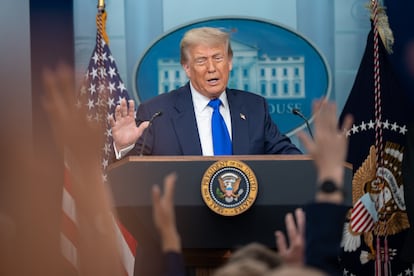

In 1987, Trump published his autobiographical The Art of the Deal, in which he offered advice on how to succeed in business. The book was a huge success and made it onto The New York Times bestseller list, helping its author rise to fame. In one of the most famous passages, the now president stated: “I play to people’s fantasies. People may not always think big themselves. but they can get very excited by those who do. That is why a little hyperbole never hurts. People want to believe that something is the biggest, the greatest and the most spectacular.”
Trump continues to apply this technique to the letter, but now not only in business, but also in politics. The president has taken to the extreme what political communication expert Javier del Rey Morató warns about in his book Political Communication, the Internet, and Election Campaigns: “Rhetoric is not based on truth, but on what is plausible.” He knows that reality exists in the human mind, and that he can construct a parallel truth if he sells it well enough.
Trump has a wide repertoire of techniques for positioning his own truths. Sometimes he uses the age-old rhetorical device of hyperbole, which consists of exaggerating or downplaying a fact. Other times, he confuses his audience with an overwhelming amount of data. And in some cases, he simply lies, plain and simple. But he does so with confidence and earnestness, enough to generate doubts in the average citizen and maintain the trust of his loyal followers. During his first term in office, it was estimated that he made a false statement every five minutes of speech, and the Wikipedia page that compiles his misleading statements warns at the beginning that the article may be too long to navigate comfortably.
In a world where competition for attention is increasingly fierce, Trump deceives to capture interest. In a world where mistrust has surged and there is less and less consensus on what the truth is, Trump deceives to position his ideas. In a world where citizens are increasingly in need of heroes who fight for justice and vindication, Trump deceives to present himself as the savior.
Below, we present five facts and examples that show how and why Trump has applied the art of deception during his second presidential term and earlier:
A failing grade after fact-checking
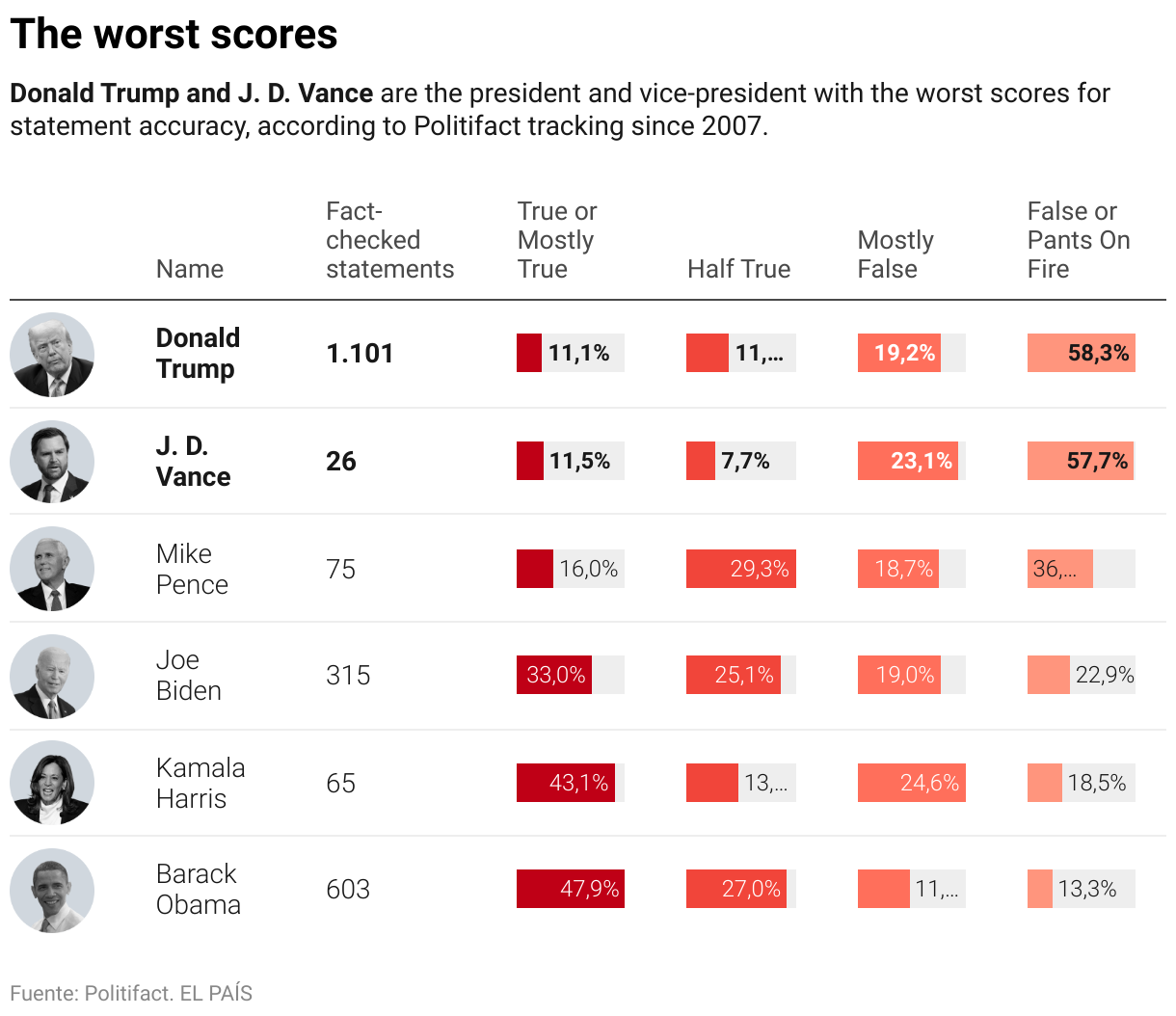
According to popular culture, all politicians lie. But does Trump lie more than the rest? To evaluate this, we turned to PolitiFact, a website dedicated to verifying controversial statements. Trump fails this test. The site was created in 2007 by the Poynter Institute, a journalism and research school based in St. Petersburg, Florida. In 2009, they won the Pulitzer Prize for their fact-checking work during the 2008 presidential election. Trump has the worst score of the three presidents the website has evaluated since it went live.
Declaring emergencies to increase his power
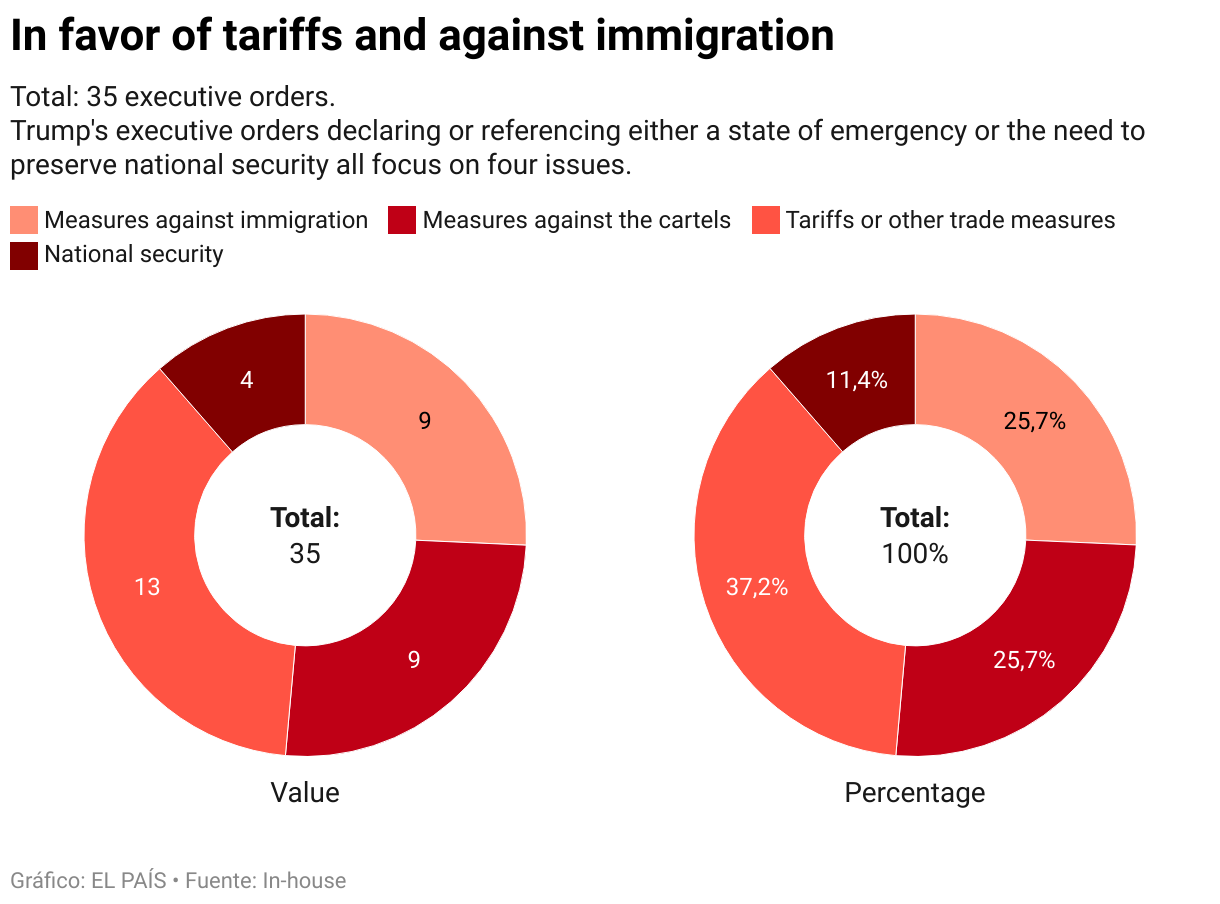
Since his return to the White House, one of Trump’s most often repeated strategies to extend his decision-making power and justify his most controversial measures has been to declare a national state of emergency or warn that national security is at risk. Of the 171 executive orders signed by the president as of July 17, one in five has been justified with these arguments. He first did so to reinforce border control, reduce the influx of illegal immigrants, and combat the drug cartels. Later, he also applied it to impose tariffs on different countries and completely upend global trade.
The machine gun of fallacies
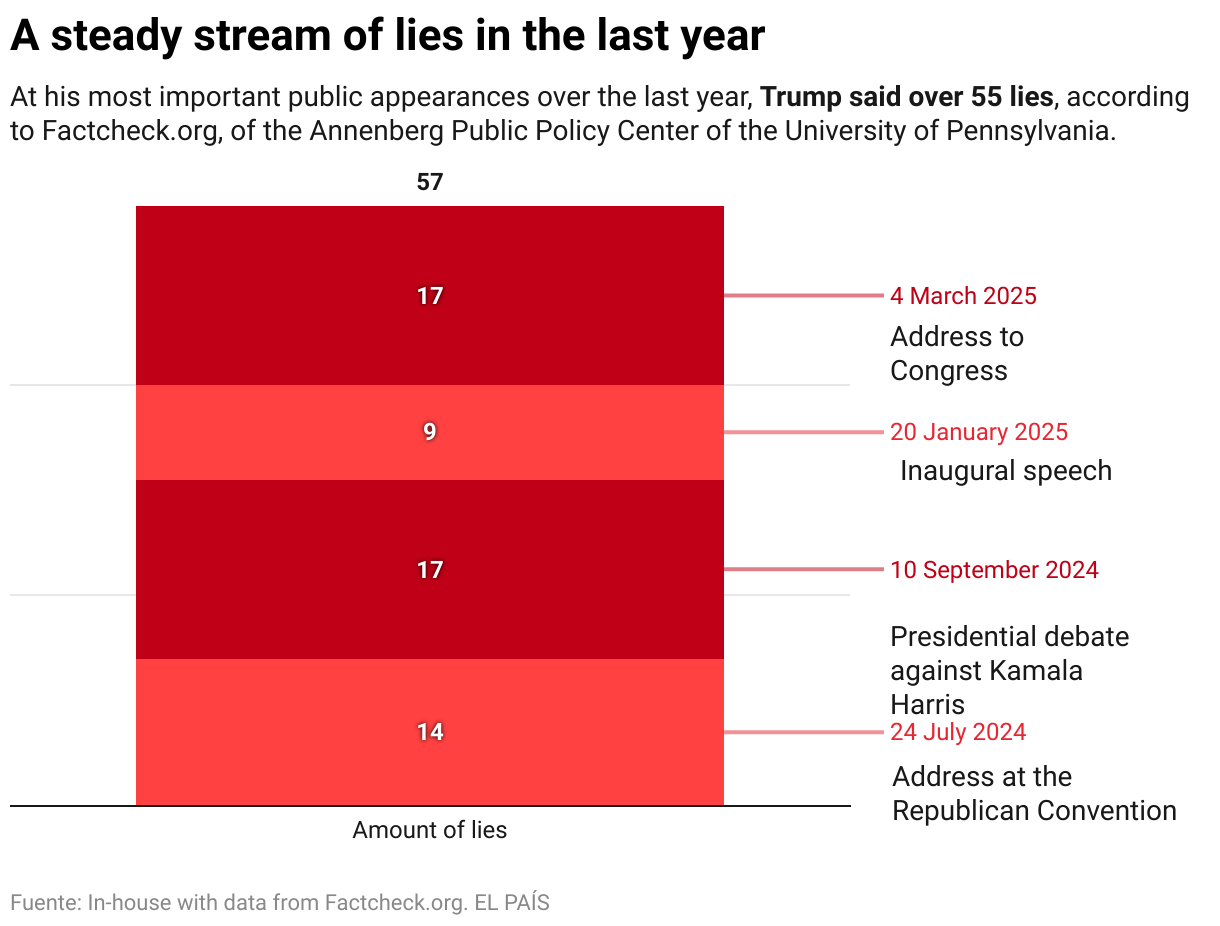
In his speeches and electoral debates, Trump tends to apply a technique that was popularized by the biochemist Duane Gish, one of the most influential figures in the creationist movement. It is called the “Gish gallop,” and it consists of throwing out a huge amount of data, regardless of whether it is inaccurate or outright false. The goal is to overwhelm the audience and opponents, who are often unable to refute everything that has been said and run out of time to share their own ideas.
Deceive to surprise?
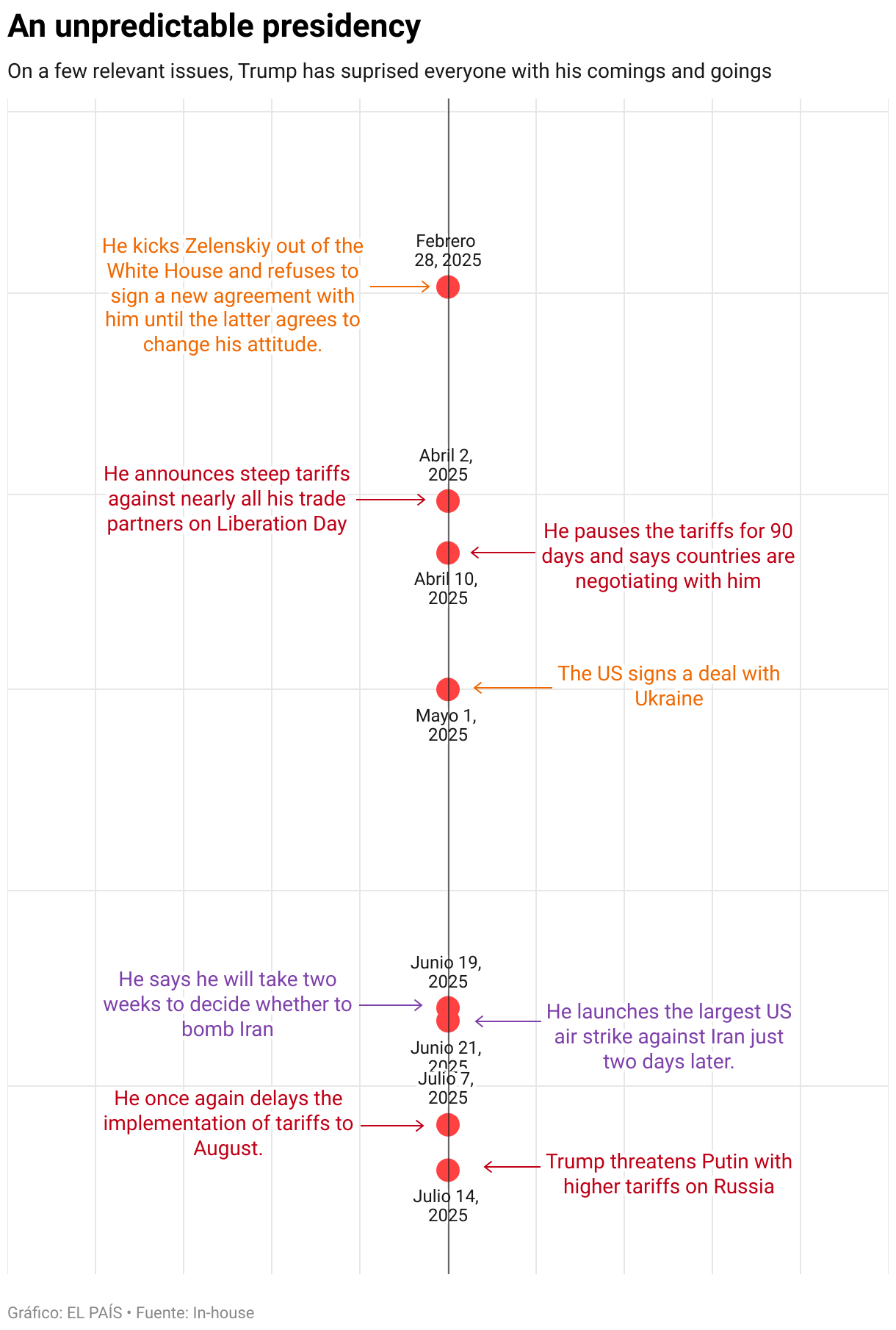
The president uses the so-called “madman theory” as a negotiating tool. According to analysts who believe that behind all his chaotic appearances there is a certain method and strategy, what Trump is doing is deceiving others to make them think that he is capable of anything and thereby get his rivals to give in and give him what he wants. Whether or not it is planned, the truth is that his threats, advances, and retreats have made his presidency highly unpredictable, which undermines his position in the world. According to the latest Pew Research study on the United States and China, the former’s image has deteriorated in the last year, while that of its rival has improved.
The deterioration of political discourse
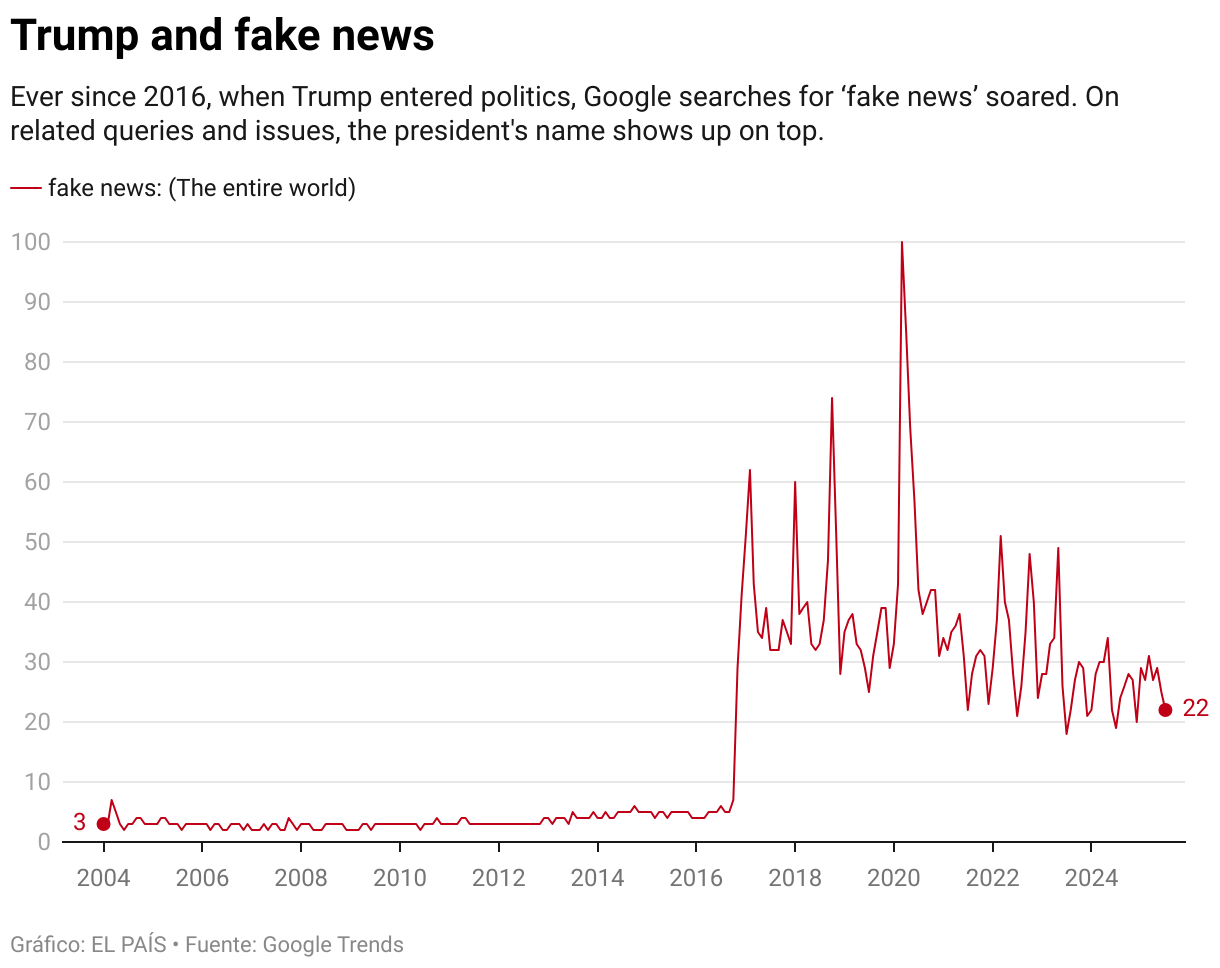
The rise of fake news is not solely Trump’s fault. However, his style has contributed to the deterioration of political discourse and has fueled mistrust in institutions and their leaders. The United States has traditionally defended liberal democracy, characterized by strong institutions capable of checking each other. The new ways of the US president allow the actions of illiberal regimes, such as that of Vladimir Putin, to gain ground and not be so easily challenged. Democracy is the loser. This has been the case since the beginning of Trump’s first term, when his advisor Kellyanne Conway popularized the expression “alternative facts” to defend the falsehood that more people had attended Trump’s inauguration ceremony than Barack Obama’s.
To learn more
Books:
- Javier del Rey Morató: Comunicación política, Internet y campañas electorales
- Ignacio Ramonet: La era del conspiracionismo: Trump, el culto a la mentira y el asalto al Capitolio
- Catherine Orecchioni: Le Discours polémique
- Pablo J. Boczkowski and Zizi Papacharissi: Trump and the media
Articles:
- Antoni Gutiérrez-Rubí: Inundar la zona
- Allan Little: How Trump is using the ‘Madman Theory’ to try to change the world (and it’s working)
- Adan Liptak: Trump Declares Dubious Emergencies to Amass Power, Scholars Say
- Gil Duran: Trump’s Fake Emergencies Follow Authoritarian Playbook
- Sophie Sceats: A Legacy of Lies: Examining Donald Trump’s Recor s Record-Breaking Dishonesty
- Wikipedia: False or misleading statements by Donald Trump
- Susan B. Glasser: It´s true: Trump is lying more, and he is doing it on purpose
- CNN: Fact check: Debunking 11 of Trump’s false claims at Cabinet meeting
Podcasts:
- Now This: The Biggest Lies of Trump’s Presidency
- The New York Times: How Trump Lost Control of the Epstein Narrative
- Now This: The One Word Trump Uses When He’s Lying









































