
Chapter 5: The ‘Trumpian’ approach to news
The White House has launched an intensive disintermediation campaign. The goal is to weaken the traditional press as much as possible and strengthen a new media ecosystem
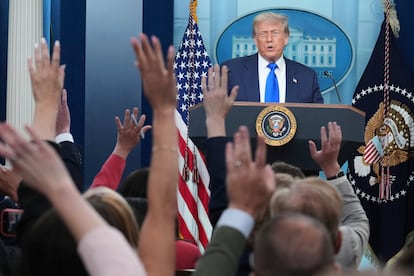

Where people get their news — and whether they follow it at all — played a crucial role in the outcome of the last U.S. elections. While Kamala Harris won by 8 percentage points among those who closely follow the news, Donald Trump led by 19 points among those who do not keep themselves informed. And that’s not all. The Democrat won 57% of voters who rely on traditional TV channels as their main news source, but lost by 6 points among those who get their information from social media.
Trump and the Republican Party are well aware of these numbers and what they mean for the future. That’s why the White House has launched an intense campaign of disintermediation. The goal is to weaken traditional media as much as possible and strengthen an alternative system — a new media ecosystem in which institutions and new actors communicate directly with citizens, without troublesome intermediaries. Control over the message, and over the medium that spreads it.
The shift in news consumption habits that made this new scenario possible began with the rise of social media. Martín Gurri wrote about this in The Revolt of the Public, where he explains how the proliferation of new actors and channels creates a chaotic environment that makes it difficult for governments and institutions to operate. However, the same author believes that Trump has figured out how to navigate — and benefit from — these new waters.
In this fifth edition of the Trump Observatory, we examine five key that make it clear why the U.S. president is benefiting from the weakening of the traditional media ecosystem, the tactics and strategies he uses to accelerate that decline, and how the White House is activating alternative channels to replace traditional ones.
The king of news deserts
Of the 1,566 counties in the United States, 206 are considered news deserts because they no longer have any traditional media outlets covering local news, according to the 2024 report from the Local News Initiative. This number has been increasing in recent years and plays in Trump’s favor with his disintermediation strategy: in last year’s presidential election, he won in 91% of these areas. And he didn’t just win — he dominated. He did so with an average margin of 54 percentage points. Where there is no traditional news coverage, the influence of social media and alternative digital outlets grows. In that landscape, Trump reigns supreme.
Coercion of traditional media
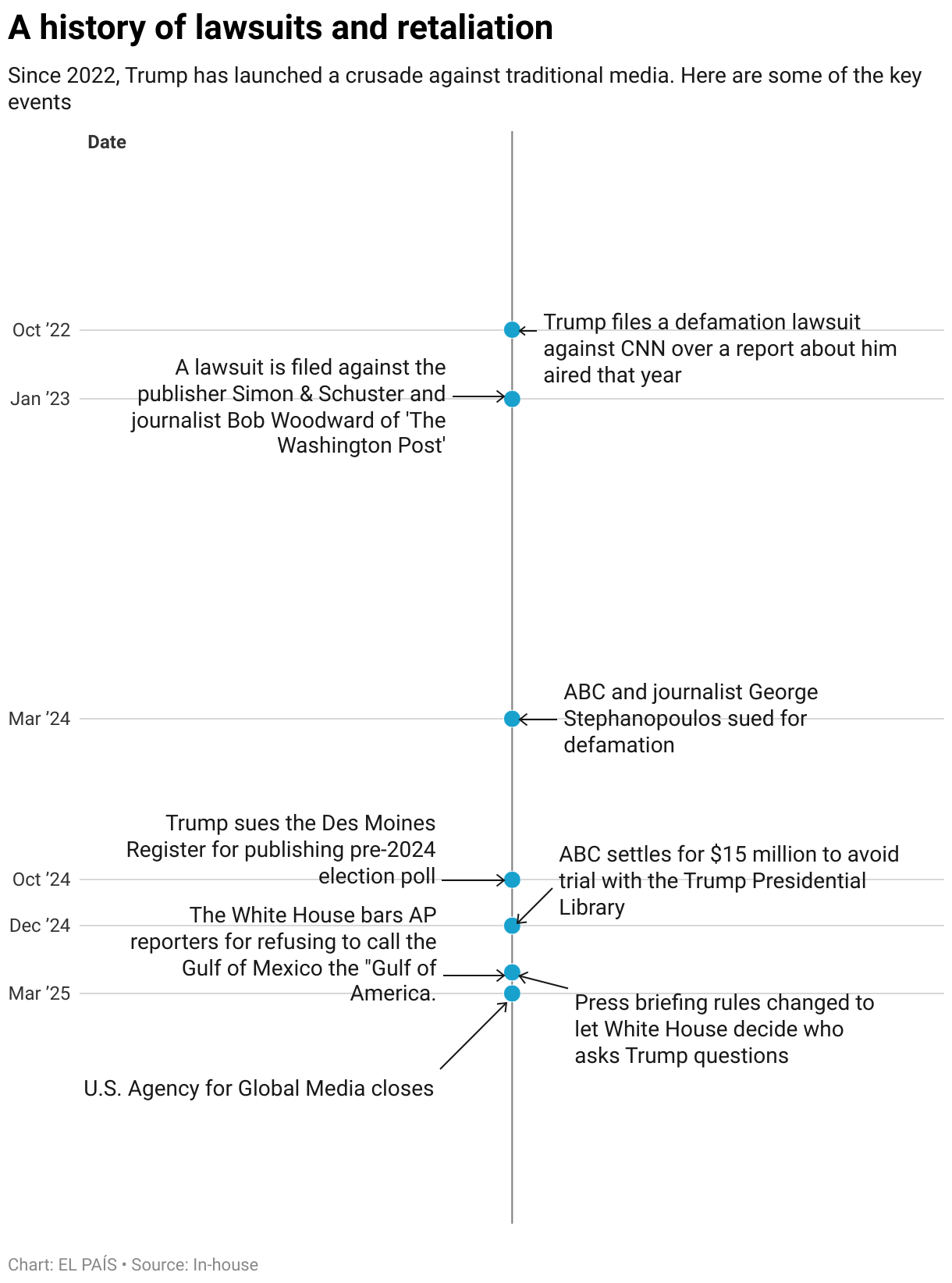
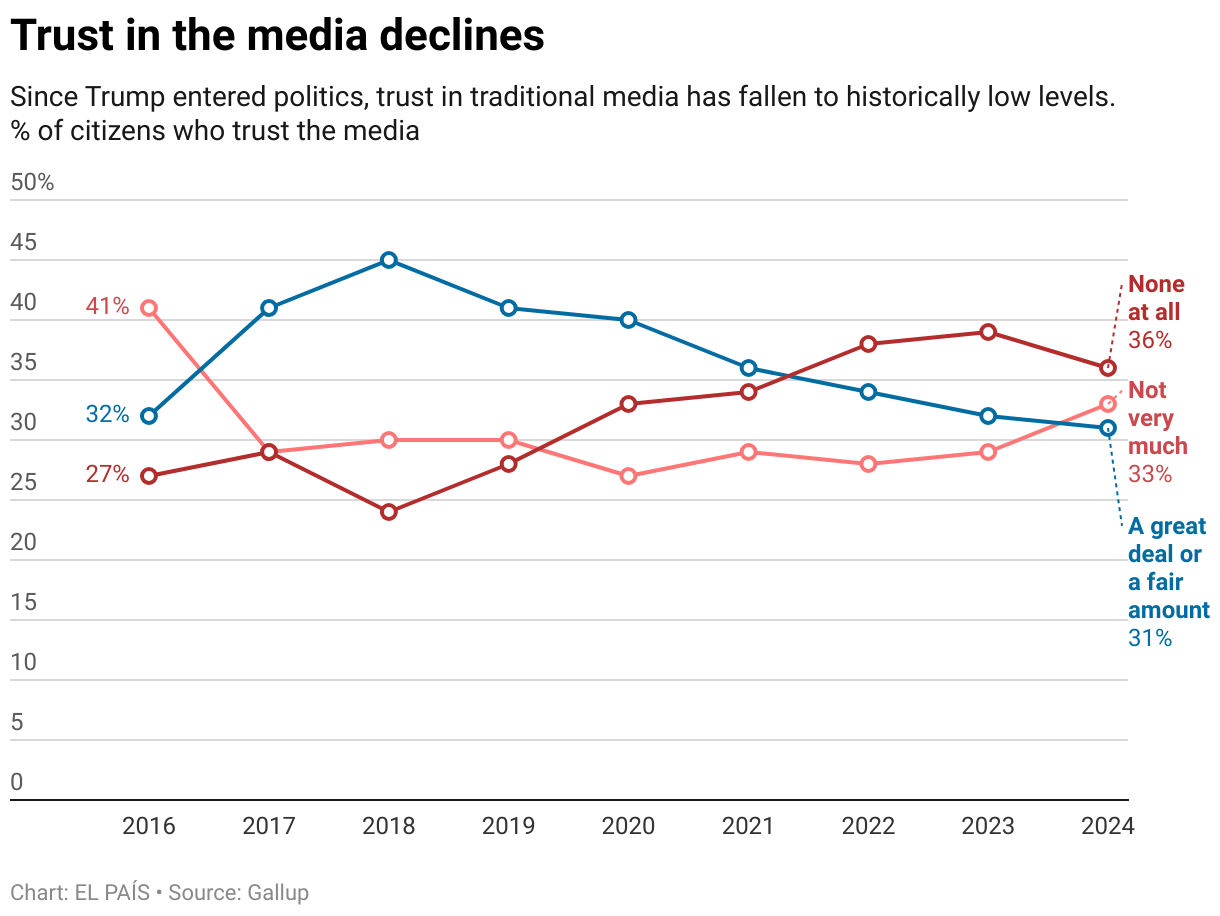
Trump and his team know that their success is inversely proportional to that of traditional media. The fewer people watch TV news or read newspapers — and the less trust they place in them — the more opportunity he has to spread his message and gain followers. That’s why, for several years now, he has been waging a campaign against various media outlets, a campaign that has intensified since his return to the White House. His goal is to shrink these outlets’ audiences or, at the very least, pressure them to alter their editorial lines and coverage of his presidency. In some cases, he is succeeding — thanks to high legal costs or because media organizations choose to settle rather than face drawn-out legal battles.
Direct promotion of achievements
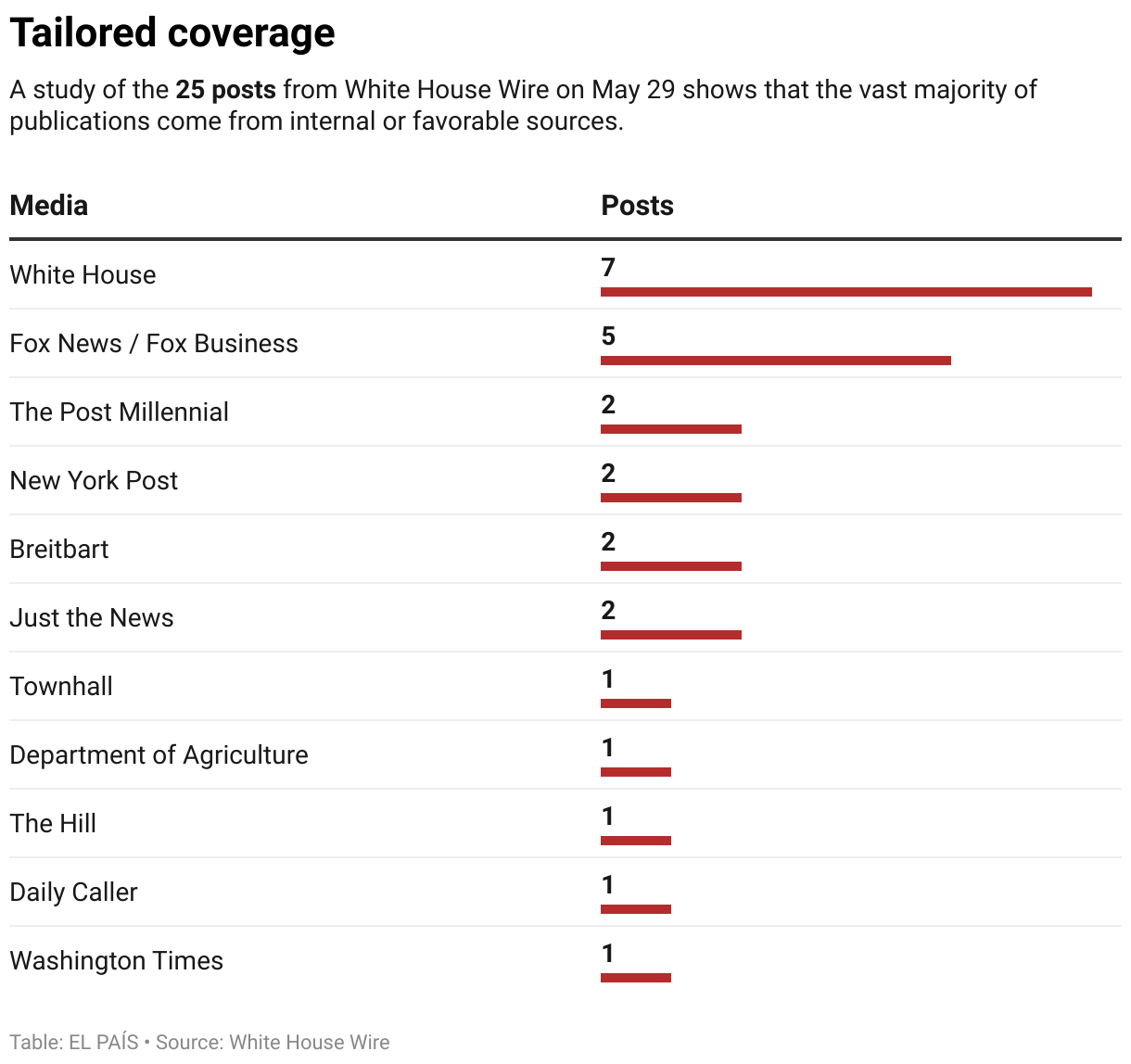
On May 1, the White House launched a new news service linked to the official government website. Called White House Wire, its main goal is to create a steady stream of positive news about the Trump administration. To do so, it draws from a variety of sources: official press releases, publications from other government institutions, and favorable articles — often from politically aligned websites. Several media outlets have reported that this is the first time public funds are being used in the U.S. to finance the dissemination of partisan news. In addition, a new social media account, @RapidResponse47, was also created to amplify pro-Trump content from television and other outlets.
Information overload
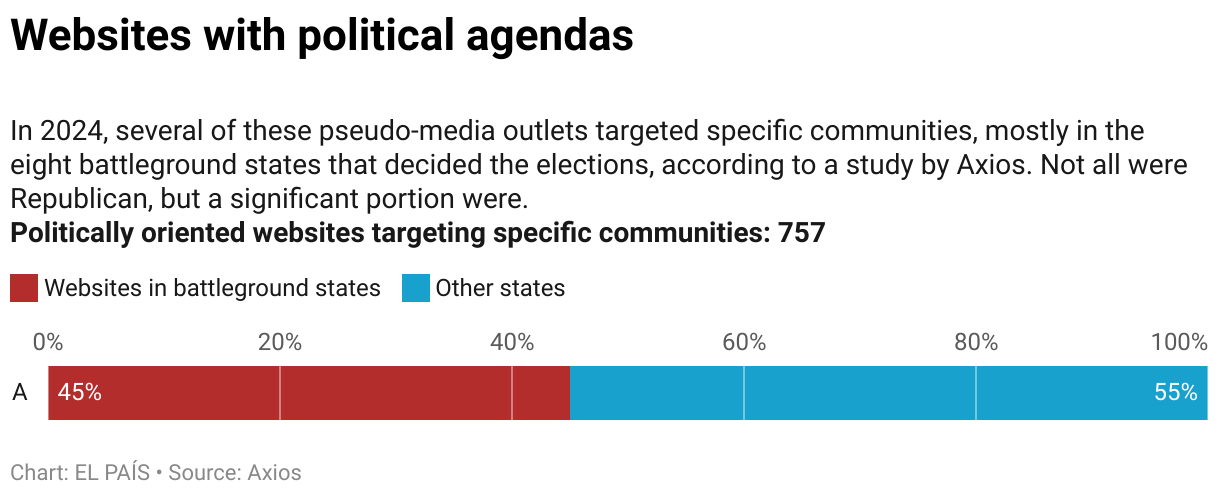
The Republican strategy goes beyond minimizing the influence of traditional media and developing direct communication channels. It also involves encouraging the creation of new outlets that present themselves as independent and mimic the format of traditional journalism, but are in fact propaganda platforms publishing unverified content disguised as news. The goal is to confuse audiences and reinforce ideological echo chambers. According to the organization Newsguard, as of June 2024 there were a total of 1,265 such websites in the United States. Typically funded by partisan groups, they now outnumber the 1,213 remaining local newspapers nationwide. These sites fuel an information war that further erodes public trust in traditional media.
Straight to your phone or inbox
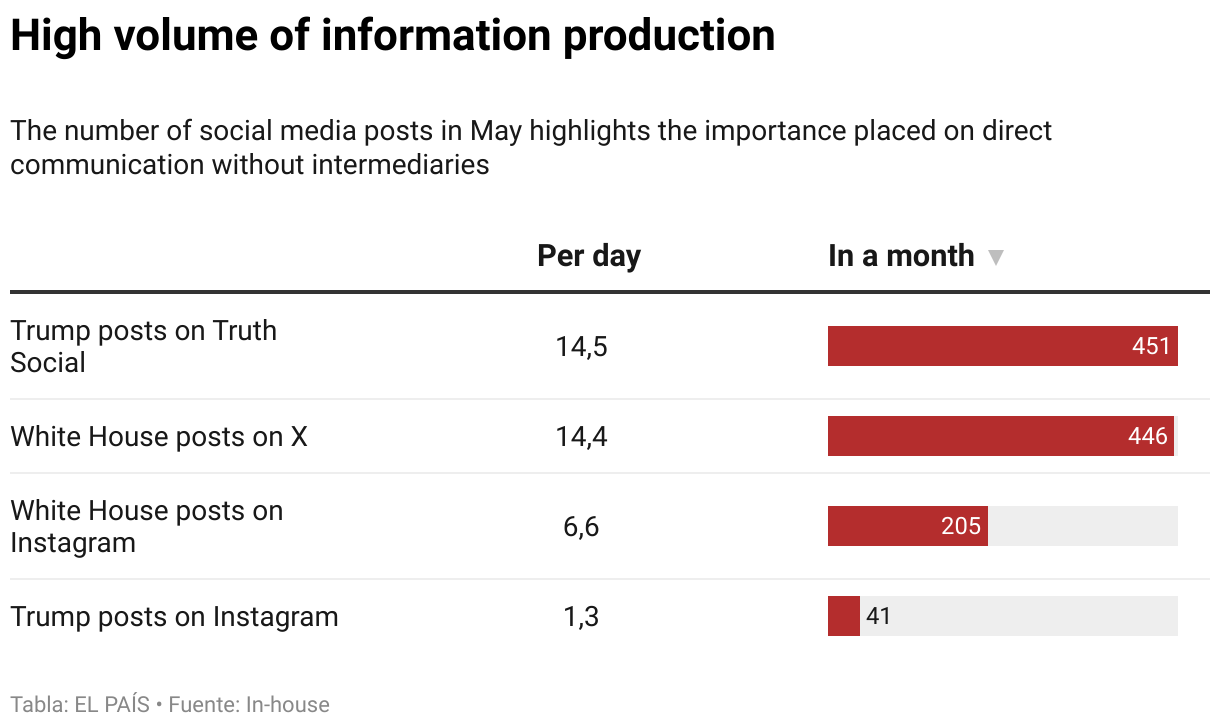
The White House is aware that social media and the rise of alternative outlets have created an information overload. In the United States, 43% of citizens say they feel exhausted by the sheer volume of news available. As a result, over the past decade, the percentage of people who say they are very interested in actively seeking out information has dropped by 15 points, according to the Digital News Report 2024. In this context, it’s become essential to maximize the use of multiple channels to push information directly to citizens, rather than waiting for them to seek it out. Trump’s team runs highly active social media accounts and produces a regular newsletter with weekly summaries and special editions tied to key events and milestones.
To learn more about the subject:
Books:
- Martín Gurri: The Revolt of the Public
- Miquel Pellicer: Communication in the Trump era
- Francisco Pérez García: The media in the digital age
- Eduardo Arriagada: Hyperconnected: How to communicate in the 21st century
Articles:
- Miquel Pellicer: Is propaganda louder than journalism?
- Makena Kelly: The ‘Contentification’ of Trump Policy
- Axios: White House launches Drudge-style website to promote Trump
- Antoni Gutiérrez-Rubí and Xavier Peytibi: A decade of COMPOL transformation in social networks
- Ignacio Jiménez Soler: Political communication in the era of disintermediation
- France 24: Trump’s White House creates own media universe
- Lucrecia Escudero Chauvel: The people of the Web. Consequences of the mediatization and transformation of the political sphere
- Stig Hjarvard: Mediatization: Reframing the Analysis of Media Effects
Podcast:
- The New York Times - The Ezra Klein Show: Donald Trump and the ‘Revolt of the Elites’
- Katie Couric: How the Trump Administration Is Killing Free Press and What That Means for the Public









































