
Jimmy Wales: ‘Grokipedia’s political perspective seems to very closely match Elon Musk’s personal views’
The co-founder of Wikipedia, which is on the brink of turning 25 years old, says that his online encyclopedia is in good shape despite having been labeled ‘woke’ by the far right
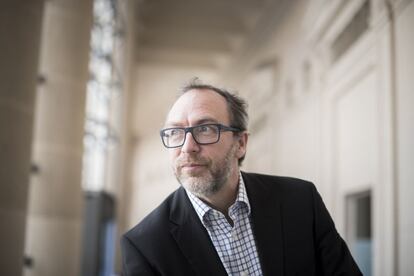

“Not thinking about something you rely on is the ultimate expression of trust. Around the world, Wikipedia has achieved that level of trust with an immense number of people.” Such is the summation of Jimmy Wales, 59, of the secret to the success of his creation, the most popular online encyclopedia, whose monthly page views number 26 billion. “And that is, I must say, the fulfillment of my very personal dream,” he continues.
Wikipedia turns 25 years old in January, a milestone that will take place, according to Wales, as the world is confronting a massive crisis of trust. People want to read their truth, and technology makes that increasingly easier. Therein lies the importance of maintaining references like Wikipedia, which has also faced recent criticism. The president emeritus of the Wikimedia Foundation, the non-profit organization that supports Wikipedia, calls himself a “pathological optimist” and in an interview that takes place via video call, tells EL PAÍS that the great fragmentation we are facing has a solution. And that Wikipedia, the encyclopedia edited by its own users, which he and his colleague Larry Sanger put into action, has a lot more fight left in it.
Question. How would you describe the evolution of Wikipedia, from its creation up to current times?
Answer. We’ve gone from me typing “Hello world” to being in over 300 languages. It’s something like two billion devices every month that see Wikipedia. So it’s part of the infrastructure of the world, which is pretty amazing. In terms of the content, the quality has steadily improved over time. One of the things that I’m always most excited about is the growth of Wikipedia in the languages of the developing world. We are here to share free knowledge with everyone.
Question. How did your team of two people get thousands of internet users to share their knowledge in articles they edit themselves?
Answer. When I think about the seven rules of trust, one that I think is really important is having a clear purpose. The idea of a free encyclopedia for everyone on the planet in their own language is something that people love, and it motivated them to try and work together in a positive way.
Question. At first, the fact that Wikipedia articles weren’t written by experts on the subject was criticized. How did you overcome that obstacle?
Answer. Wikipedia has a very, very deep respect for experts. But it turns out that to write an encyclopedia article which explains something to the general adult reader, you don’t necessarily need the experts. And sometimes, the experts actually aren’t the best people to write it. It’s similar in that respect to journalism: a science journalist isn’t necessarily the greatest scientist in the world, but if they can understand and ask the right questions and explain it to the public, that’s really powerful. Oftentimes, the experts may be biased, as opposed to a more balanced [source] that journalistically reports on all the different schools of thought and so forth.
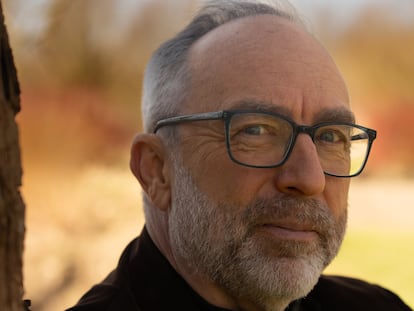
Question. In the book, you underline that we are facing a global crisis of trust. How did we get here?
Answer. If you look at the data, there’s been a long-term decline in trust across many aspects of society, with many different causes. One of the ones that I point to in the last 25 years is the devastation of the business model for local journalism. That means that that personal connection to news in my area is is lost in many places. That’s not good for trust, because now the news is mainly about far-off, big national issues, and people don’t have that same kind of personal connection.
Question. You say that many people seem to live in different realities, each with their own internet ecosystem that reinforces their ideas. Can that be solved?
Answer. I think it can. The public isn’t happy about it. There’s been quite a rise in low-quality, online-only media that is hyper-partisan. Research shows that people, even if they agree with it, don’t necessarily trust it, because they’re aware that it’s campaigning for one point of view and they know they’re probably not getting the whole story.
Question. That war for the truth has arrived to Wikipedia, which some have called a woke publication. Elon Musk launched Grokipedia as an alternative. What do you think of it?
Answer. I haven’t had time to do a really deep dive, but it seems to be exactly what we would expect. Large language models put out a lot of low-quality content. They make things up, and they often bluff their way through by saying things that sound plausible, but have no relationship to reality. Also, many people have noted that the political perspective or bias in Grokipedia seems to very closely match Elon Musk’s personal views. That isn’t really what you want from an encyclopedia — you really want neutrality. And you know, there are criticisms of Wikipedia’s neutrality. I always say, we need to take those criticisms seriously. Where might we have a problem? What do we do to improve? That’s really what the open model is all about.
Question. What responsibility does social media have for this crisis of trust?
Answer. Certainly, when we see algorithms that focus exclusively on engagement, keeping people on the site as long as possible to show more ads, it ends up very toxic. It ends up promoting the most divisive content, it promotes things that aren’t true. That’s unfortunate because rather than having really thoughtful discussions and debates, it ends up with people screaming at each other, and that’s not helping anything.
Question. How do you think we might approach that problem?
Answer. We need more competition. People are unhappy with existing social media and are interested in alternatives. Young people are the highest group listening to podcast long-form content, and I think that’s in part because they know social media is not bringing them ideas and thoughts in a more serious way. Social media can be very entertaining, but for certain things, it’s growing less popular. And that’s a good thing.
Question. What kind of alternatives do you imagine?
Answer. I have a pilot project called Trust Café. It is still a very experimental, small community that promotes content based on who are the most trusted people in the community, rather than on engagement and so forth. People do believe social media is not working, so then, let’s have more competition, more experimentation. The danger of regulation always is that it tends to get co-opted by the existing major players, who then use it to squeeze out new ideas and new competition. The Wikimedia Foundation doesn’t police the content of Wikipedia. The community does, and they do a really good job. We need more of that kind of community-centered models.
Question. But competition in social media is quite fierce. BlueSky, for example, tried competing with X, but it couldn’t make a dent in terms of size.
Answer. It is it is difficult, but these things do tend to come and go. We should remember when people thought that MySpace had won social networking, and MySpace is gone now. We see declining traffic to the core properties on Facebook, because people aren’t happy with it anymore. It’s not necessarily the solution to the problem, but TikTok came out of nowhere and it’s become enormous. There is room for new things.
Question. We in the media know that it is very difficult to build trust and very, very easy to lose it. Can we rebuild global trust in such a fragmented world?
Answer. Yes, I think we can. This is a pendulum that swings back and forth. I don’t want to lay everything at the foot of Donald Trump, but he’s a very untrustworthy person and he does everything he can to undermine people’s trust in journalism and facts. He will pass, life will continue, and I think there will be a real demand by people for leadership who believe in facts and who want to do trustworthy things.
Question. How do you see Wikipedia in 10 years?
Answer. All of my thinking has been about the long haul: how do we make sure that Wikipedia is safe as an institution, that it stays true to its mission of neutrality and so forth? When I think about the future within five to 10 years, I think the core will be the same. Probably, we will be using AI — not directly with readers, but as tools behind the scenes to help the editors, the people who are doing Wikipedia. Reading all the sources and spotting an error could be very helpful.
Sign up for our weekly newsletter to get more English-language news coverage from EL PAÍS USA Edition









































