
Could Ozempic reduce violent crime? ‘It weakens the leap from impulse to action’
A population study indicates that the link between impulsivity, alcohol, and violence falls by as much as 62% among users of these drugs
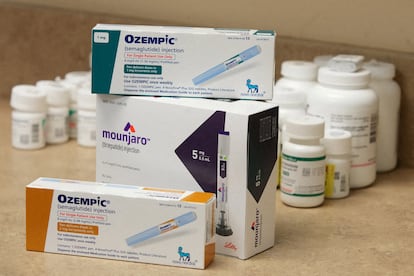

The link between alcohol and violence is well documented. Some studies estimate that between 30% and 50% of assaults and homicides are committed by someone who is at least somewhat intoxicated. But a study published on June 17 in the journal Criminology suggests that relationship could be weakened in an unexpected way: by Ozempic. The study is population-based, used a sample of 821 adults, and does not allow claims of direct effects on criminality. Still, it offers clues about how violence takes shape in the brain — and about how we might control it.
The connection between Ozempic (a drug intended to treat type 2 diabetes) and criminality may seem, at the very least, far-fetched. But looking at how this family of drugs acts in the brain, it makes a certain amount of sense. “There is growing evidence that these medications can affect processes such as compulsive desire, reward sensitivity, stress regulation, and impulse control,” says Daniel C. Semenza, a criminologist at Rutgers University in the United States and the study’s lead author. Those processes are also relevant to some forms of violent behavior.
Semenza and his team analyzed data from a survey of 821 adults who had used GLP-1 medications. They found that impulsivity and alcohol use were associated with committing violent crimes — and that those associations were significantly weaker among users of GLP-1 receptor agonists. The link between impulsivity and violence was reduced by about 62%. For alcohol, it fell by about 52%. Therefore, even when a user of these drugs drinks or behaves impulsively, the situation is less likely to escalate into a violent crime. The study does not prove that GLP-1 medications reduce violence. “The simplest interpretation is that they weaken the transition from impulse to action, not that they eliminate impulsivity,” Semenza notes.
GLP-1 receptor agonists mimic a hormone that regulates appetite. They act on the gut but also on the brain. That is where a range of possible behavioral side effects opens up. “This study does not show that GLP-1s reduce violence,” says endocrinologist Cristóbal Morales. “But it does reinforce an increasingly solid idea: these treatments act on brain circuits related to reward, addiction, and impulse control.” Their effects go far beyond weight loss.
The most comprehensive meta-analysis on alcohol and violence, published in The Lancet, was based on data from about 830,000 individuals across 61 countries. It concluded that roughly one in six cases of injury from violence could be avoided without this drug. “Alcohol lowers inhibitions, impairs risk perception, and increases impulsivity,” explains Francisco Pérez, a criminologist at Camilo José Cela University. “It acts as a pharmacological disinhibitor.”
The link between alcohol and violence is therefore well known — as is the interaction between weight-loss drugs and alcohol. That is why some have connected the dots and called for someone to complete the picture. In a recent Substack piece, John Roman, a law professor at the University of Chicago, lamented that public debate over whether these drugs should be financed has not taken into account the effect they might have on criminality. He put it in a striking headline: “Medicine can reduce crime.”
Pérez is much more cautious in his conclusions. He welcomes the study and, above all, reminds readers of the basics: Ozempic and similar drugs reduce patients’ alcohol consumption. “If you lower consumption, you lower behaviors linked to consumption. That makes sense,” he says. But he warns against leaping from that idea to a direct relationship with criminality. Crime depends on the interplay of multiple factors: impulsivity, but also opportunity, environment, and social control. Within that framework, a drug would affect only one part. “We are complex psychosocial beings, subject to interactions between physiology and environment,” he says. “We are not only physiological. We are not chemically controllable.”
The study’s author agrees with that interpretation. “Violence is influenced by poverty, trauma, inequality, the social environment, and many other factors,” he argues. “Medications cannot replace structural prevention strategies. But as their use becomes more widespread, we need to understand their broader behavioral effects. That goes beyond their impacts on weight and diabetes.”
Sign up for our weekly newsletter to get more English-language news coverage from EL PAÍS USA Edition









































