
Consequences of the blow to the populist international in Hungary
Viktor Orbán’s defeat opens a new political cycle in Europe, where the far right has already suffered several setbacks

Viktor Orbán was an energetic and talented anti-communist student leader when the Berlin Wall fell. He studied at Oxford on a George Soros scholarship, and upon his return to Hungary he founded Fidesz, a liberal and pro-European party. But he couldn’t win elections, and with the Great Recession, he turned to the dark side: he orchestrated a sharp, fierce and brutal shift to the far right. In 2010, with Hungary mired in a deep crisis, he finally seized power. He never relinquished it: he began a systematic dismantling of democracy and the rule of law in best “populist’s handbook” style.
He seized control of the judiciary, colonized independent institutions, took over the media, and placed his friends at the helm of major corporations. At 62, he has accumulated 16 consecutive years in power: no one in Europe comes close to that record. In this metamorphosis, Orbán became fiercely anti-European and an archetype of the successful far-right leader, especially in Eastern Europe. That era is now coming to an end.
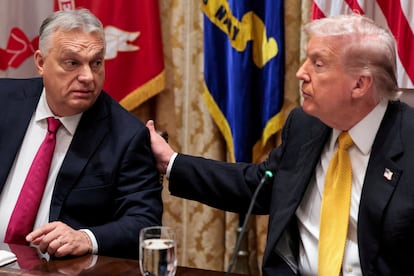
The Hungarian leader infested the entire state with corruption. He found a goldmine in anti-immigration policies, even though his country is losing population at an alarming rate. And he became the prototype of a populist, even beyond the EU’s borders: “He’s a hero to the nationalist movements in the West,” said Steve Bannon, the spin doctor of Trumpism; “it’s like we’re twins,” Donald Trump himself asserted. Putin and Xi have been less explicit, but they have relied on him time and again to secure their interests in Europe.
For all these reasons, Orbán’s defeat has a twofold interpretation. First, it is a major setback for the international far-right movement, which considers him a model of success. And second, it opens a new political cycle in Europe, where the far right has already suffered several defeats, but none like this one.
Furthermore, everyone is waiting for the 2027 French presidential elections. With those elections firmly in mind, Brussels has managed to get rid of a Trump, Putin, and Xi underminer. Orbán has been torpedoeing the entire European strategy to help Ukraine. He has acted more as a partner of the U.S., Russia and China than of the EU. And he has placed every imaginable obstacle in the way of the Union moving toward strategic autonomy in defense, energy, the economy, and each and every one of the agendas in which Europe must take a step forward amidst the geopolitical revolution based on the law of the strongest.
Pro-Russian, pro-Trump, and pro-China, Orbán has inspired other leaders of the European far right, such as Slovakian prime minister Robert Fico and the Czech Republic’s Andrej Babiš. During this campaign he received the backing of Trump, Italian Prime Minister Giorgia Meloni, Spanish far-righ party Vox leader Santiago Abascal, and Alice Weidel of Alternative for Germany. Right-wing populists on both sides of the Atlantic see Orbán as a kind of role model. And he has run a classic populist campaign, presenting the vote as a sort of plebiscite between war and peace, with the goal of “preserving Hungary as an island of security and tranquility,” while employing all sorts of post-truths, false flag incidents and constant accusations against Ukraine.
For 15 years, Orban has reformed the electoral system hundreds of times to give himself an advantage, and in recent months he has accelerated patronage politics to secure all kinds of support. But in the end, he suffered a crushing defeat at the hands of Péter Magyar, a candidate who emerged from his inner circle and based his campaign on fierce allegations of corruption.
Magyar, a textbook conservative or ultraconservative, has managed to unite the center-right and center-left around him to oust Orbán. Hungary represents only 1.1% of the EU’s GDP and less than 2% of its population, but we are still talking about the most important elections in the EU in 2026: in a way, these elections gauge the strength of the far-right wave on European soil.
These are, roughly speaking, the consequences of Orbán’s defeat:
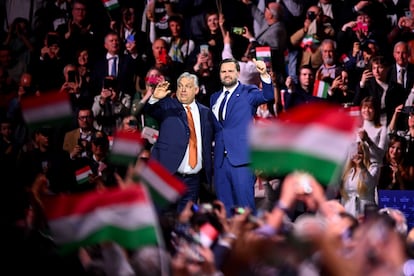
Europe. It’s a theatrical spectacle to see Orbán enter the headquarters of the European institutions as if he were the Death Star. This modern-day Darth Vader is a kind of Trojan horse in the EU. He is at odds with Brussels, which has frozen some €15 billion in European funds due to Hungary’s illiberal drift and lack of spending controls. He is a thorn in the side of the EU on immigration policies, everything related to the judiciary, and minority rights. He champions the populist international in Europe, to the point that US Vice President J.D. Vance campaigned on his behalf in Budapest: Orbán himself describes Hungary as an “illiberal democracy,” a defender of traditional Christian family values.
He has continued to buy energy from Russia despite sanctions. He has repeatedly torpedoed financial and military aid to Ukraine. He has been repeatedly accused of leaking classified information to the Kremlin. “If he wins, he will intensify his confrontation with the EU. But if he loses, he will continue to fight, because barring a colossal defeat, he will still control some institutions. But that defeat could mark the beginning of a very positive cycle in Europe, the first sign that the pendulum is swinging and the populist wave is peaking, and the possibility of making progress on fundamental agendas for which consensus is lacking due to positions like Hungary’s,” European sources said last Friday.
Brussels has had to opt for enhanced cooperation and voluntary coalitions in the face of opposition from Orbán (and his Visegrad Group partners) in crucial recent events. The EU has thus circumvented the Hungarian blockade to protect Ukraine and take steps toward strategic autonomy, reducing its reliance on U.S. defense and cheap Russian energy. Without Orbán, all of this will be easier: Hungary has promised to reorient its European policies.
But it may not be that easy. A survey by the European Council on Foreign Relations (ECFR, a think tank) reveals that three out of four Hungarians are in favor of the EU; two-thirds want closer ties with the Union and some even support joining the euro. “But European partners shouldn’t expect a radical shift, especially on foreign policy and Ukraine; on that issue there is still a deep division in society,” notes Piotr Buras of the ECFR.
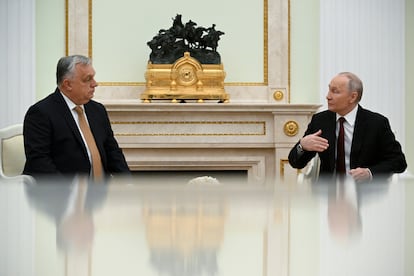
United States, Russia, China. The appeasement policy toward Trump pursued by the head of the European Commission, Ursula von der Leyen, has yielded poor results in the last year, but Trump has a fervent supporter in Orbán (and other populist leaders). The MAGA movement and Trump himself have been enamored with him for years. Orbán has funded his think tanks and was an inspiration for Project 2025, which propelled Trump to his second term. And he is even more amenable to Vladimir Putin; he has repeatedly torpedoed all of Brussels’ maneuvers against Russia during the war in Ukraine, handed him sensitive information on a silver platter, bought oil from him, and met with him despite the war.
The third point of Hungary’s Bermuda Triangle is China: Xi Jinping has also concentrated a significant portion of his EU investments in Hungary. A couple of years ago, he invested more in this small country, which serves as his gateway to the European market, than in France, Germany, and the United Kingdom combined.
A model to assemble. “Orbán is one of the great moral leaders in this world,” Bannon has said with that gassy chatter characteristic of Trump supporters. Although he was embedded for years in the European People’s Party, when he was expelled he managed to form a solid group in the European Parliament, the Patriots, and he is a model for the Spanish populists of Vox (to whom he has granted millions of euros in loans), for the Czechs, for the Slovaks, even for the Germans.
Sunday’s defeat highlights that being touched by Trump’s magic wand no longer works. It’s a blow to the ethnonationalist tide and so-called “competitive authoritarianism,” which is polling above 25% in many countries across the continent. “If he is ultimately ousted, it closes a door on populism and opens the way for a stronger EU,” summarizes Zslyke Csaky of the Center for European Reform in London, with the French elections on the horizon and the need to grit their teeth in Ukraine, Gaza, and Iran.
Counter-model. For the far right, Orbán is a hero; for liberals, he’s the man who managed to transform a democracy into an autocracy through supposedly democratic measures and with substantial European funds. Peter Magyar now becomes a counter-model, a kind of paradigm of how to defeat one of the world’s most successful populists.
First: a charismatic, skillful candidate is needed, one who shines at rallies and on social media. Second: this leader must speak as clearly as the far right does; Magyar has spent two years denouncing Orbán’s corruption, and his criticism of the regime’s moral decay has attracted some undecided voters, young people, and those from less fortunate regions. Third: rather than abstract ideas, Magyar has gone straight to the heart of the matter: the economy and purchasing power.
Hungary has been virtually stagnant for three years, while its neighbors, especially Poland, are booming. Cronyism and the misappropriation of European funds, Magyar emphasizes, are fundamental explanations to Hungary’s economic stagnation. The country has 7.5 million inhabitants, and its population has declined due to emigration, despite pro-natalist policies.
Inflation skyrocketed with the Covid pandemic and the war in Ukraine. The average salary is just over €1,000, the third lowest in the EU, and per capita income is 75% of the European average. Unemployment is barely 5%, but it is at its highest level in 10 years. Public debt stands at 75% of GDP, below the European average, but debt interest payments are equivalent to healthcare spending and double that of education, two policies that generate significant public discontent.
Orbán has experimented with a cocktail of economic policies, including nationalist industrial policies, aggressive tax cuts for certain groups to bolster his electoral prospects, cheap energy from Russia, and large Chinese investments. It hasn’t worked. In part, this is because Brussels has frozen the aforementioned €15 billion, an enormous sum for such a small economy. Magyar promises reforms, the release of European funds, and an end to corruption. Starting this Monday, we’ll see if he can move from rhetoric to action.
Sign up for our weekly newsletter to get more English-language news coverage from EL PAÍS USA Edition









































