
Members only: Private clubs for the wealthy take over Madrid
In just two years, three new establishments have opened up in the Spanish capital. They symbolize a city that’s climbing the ranks on the international luxury map. The club promoters say that the city ‘has finally grown up’
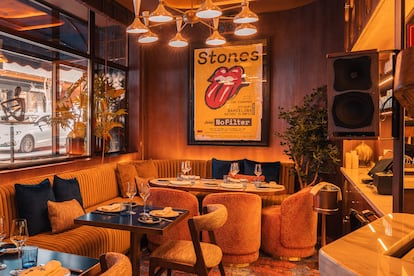
“In Europe, Madrid was playing in a lower league than it deserved. The major European capitals are Paris and London. And then, there’s another tier: Berlin, Milan, Amsterdam… [but] Madrid wasn’t even there.”
“[he city] finally had the opportunity to grow up. And I think the fact that [Spain’s economy] is doing well has also played a big role, since money attracts money,” explains Andrés Rodríguez, sitting in the lobby bar of Forbes House, a five-story private club (plus rooftop and basement). He’s the director, founder and mastermind of the establishment.
In an interview with EL PAÍS, he tries to answer the following question: what has had to happen in Madrid for so many private clubs to suddenly spring up like mushrooms?
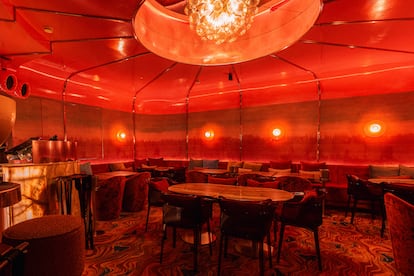
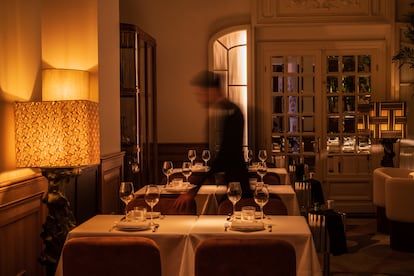
Rodríguez explains how, for decades – and until just a year-and-a-half ago – the world of private clubs in Madrid was divided into two types. “The traditional clubs, which, with all due respect, were like our parents’ clubs: Nuevo Club, Club Financiero Génova, Puerta de Hierro,” he lists. “And then, there was the Matador Club, geared toward a creative crowd.”
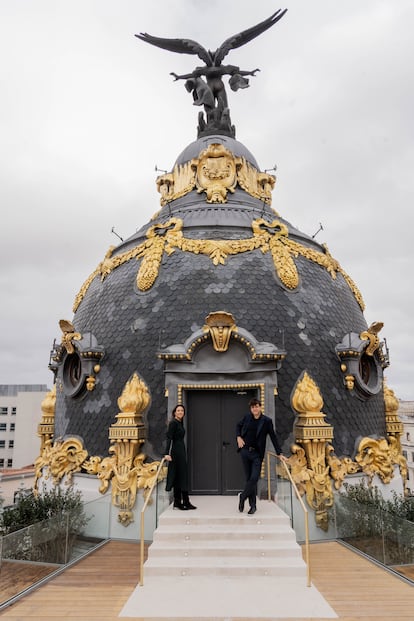
However, in 2025, Forbes House arrived on the scene. And, this year, Club Metrópolis has emerged, located in one of Madrid’s most emblematic buildings. “It is the second-most photographed after the Puerta de Alcalá,” the club promoters affirm, referring to the triumphal arch that Madrid is known for.
The promoters – Sandro Silva and Marta Seco – lead the Paraguas Group, a set of six fine dining establishments. They’ve spent more than 20 years leading the biggest success story in Madrid’s restaurant industry, including an international expansion to London, Dubai and Monte Carlo.
“Many of the clients we’ve had over the years are the ones who put their trust in us to set up this club, even before we even started construction,” they state. Conceived as an exclusive, international private club, Metrópolis houses seven different dining spaces, including a restaurant specializing in lobster and a terrace under its famous dome. There’s also a luxury boutique hotel for clients and VIPs.
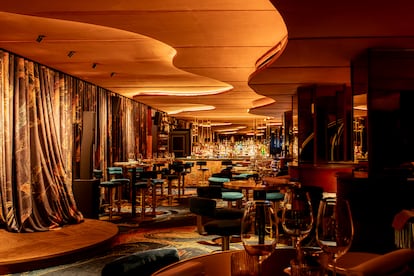
The latest arrival is Club Vega, in the Salamanca district. Its public face is Iñigo Onieva, the “bad boy” with a heart of gold. He’s beloved by the tabloids for his marriage to Tamara Falcó. The daughter of socialite Isabel Preysler and aristocrat Carlos Falcó, she is the singer Enrique Iglesias’ half-sister.
Onieva’s explanation for the shift in Madrid begins in London. He studied there, experiencing a lifestyle in which many personal, professional and social interactions take place within private clubs. When he returned to Madrid in 2018, he considered importing the model, but he ultimately concluded that the city wasn’t ready yet. Now, he affirms, it is.
“Madrid is finally ready for this,” he repeats several times, during his conversation with EL PAÍS.
Over the past few years, Madrid has been changing so rapidly that it seems as if nobody has had time to realize it. For decades, it was a reasonably large and important capital. But suddenly, it began appearing in international investment rankings. Luxury hotels multiplied. Major brands began competing for prime locations along the so-called “Golden Mile.” Investment funds set up shop on the Paseo de la Castellana, a major thoroughfare. “Latin American students arrived, attracted by the business schools. And then, their parents came,” Rodríguez notes.
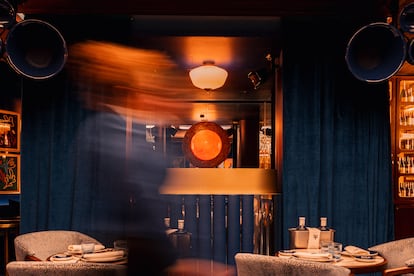
Vega is a prime example of the new Madrid: it occupies a huge space on Lagasca Street, surrounded by luxury boutiques, law firms and asset management companies. The club combines a restaurant, event space and meeting rooms, giving the impression that it’s essentially a place for celebrities to have fun, without fear of appearing in the press. This must be what Onieva means when he constantly talks about “community.”
He explains that they want a mix of businesspeople, artists, athletes, designers, politicians and executives. Spaniards and foreigners, youngsters and older folks. “We don’t want it to be a business club or a creative club. We want diversity,” he emphasizes.
But not diversity when it comes to finances, of course. Membership in these clubs costs around €4,000 a year, or $4,500. And that’s just for entry: drinks are extra. And exclusivity isn’t so much in the price as in the selection process. To get in, you have to be recommended by a member and accepted.
Rodríguez insists that Forbes House isn’t a club for the rich. Rather, he clarifies, it’s a club for success. The difference seems minor, but for him, it’s fundamental. “In Spain, there’s still a certain idea that success has to be invisible,” he explains. “Here, there’s no shame in saying that you want to boost your business, your personal brand, or meet interesting people.”
For members only
The three projects are distinct. And yet, they share an intuition. Madrid no longer behaves like the open and relatively egalitarian city that it once was. Or, at least, not only like that. There have always been clubs for Madrid’s elite, but leisure activities mostly revolved around the bar: a democratic space, open to everyone (in principle). The new clubs reflect the expansion of the elite social class and replicate its principle of exclusion. Forbes House has an admissions committee. Vega has a selection process. And, at Metrópolis, memberships sold out before the club even opened. These are places where who gets in is just as important as who gets left out.
Sign up for our weekly newsletter to get more English-language news coverage from EL PAÍS USA Edition









































