
EU opens channels to the Taliban as part of push to increase deportations
Human rights organizations and left-wing parliamentary groups warn about the ‘alarming’ outreach to the Afghan regime
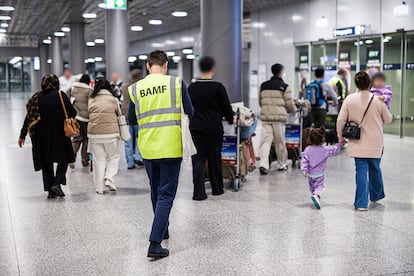

Determined to widen its deportation options, the European Union has adopted an increasingly unrestrained pragmatism. In addition to the agreements with Tunisia and Egypt — both with authoritarian track records — designed to tighten Europe’s borders and reduce arrivals, the EU has now taken another controversial move: opening channels to the Taliban, a regime accused of grave and systematic human‑rights abuses in Afghanistan, especially against women and girls.
The European Commission’s invitation to a Taliban delegation to discuss how to increase deportations has reignited the debate over the limits of migration policy and over the risk of whitewashing authoritarian regimes when they align with European interests. Human‑rights organizations and left‑wing political groups warn that the Commission’s initiative could amount to de facto legitimization of the regime.
The backdrop is particularly troubling: an increasingly hard‑line migration discourse, ever‑stricter asylum conditions, and a Europe moving toward creating deportation centers outside the EU. Step by step, the EU has toughened its migration policy and is fast‑tracking the dismantling of taboos that would have been unthinkable only a few years ago. These moves threaten to upend the current asylum system, one of the founding values of the bloc, which was formed after the Second World War. Among those taboos is the outreach to the Taliban, who seized power in Afghanistan in 2021.
The EU does not recognize the Taliban government, yet despite this, a delegation from the Afghan Islamist regime —led by Foreign Ministry spokesperson Abdul Qahar Balkhi— will visit Brussels in June to meet with senior officials from the European Commission, the European External Action Service (EEAS) and representatives of several member states, including Sweden, which is helping coordinate the contacts, according to European sources.
The meeting comes after another meeting — described as “technical,” according to the European Commission — between the Taliban and EU officials in Afghanistan. The Brussels meeting, still taking shape, is expected to focus on finding “practical and diplomatic” ways to increase the removal of migrants without a right to asylum, especially those with criminal records, according to diplomatic sources. EU Asylum Agency data show that Afghans, with 17,000 applications, were the nationality that filed the most asylum claims in the bloc in 2025.
Social Democrats and left‑wing groups in the European Parliament have criticized the Commission’s initiative, which follows a request by some 20 countries — Spain did not sign the letter, which was endorsed by Germany, Sweden, Belgium, Austria, Italy, the Netherlands, and Poland, among others — urging Brussels to find ways to step up returns of migrants to Afghanistan.
Juan Fernando López Aguilar, a Socialist MEP and member of the Parliament’s Committee on Civil Liberties, Justice and Home Affairs, reacted with “astonishment” and “outrage” to the news of the Taliban invitation. His group will seek to bring the issue to a plenary debate, even though the agenda — like the rest of the chamber after the 2024 elections — is dominated by the right.
It’s a stark paradox. Not only because of the mass evacuation operations carried out by many Western allies to rescue vulnerable Afghans in 2021. In 2024 and 2025, the European Parliament also passed resolutions condemning the Taliban regime for its systematic oppression of women and ongoing human‑rights violations in Afghanistan, which it described as “gender apartheid.” At the same time, it demanded the immediate lifting of restrictions on women, the release of detainees, and an increase in humanitarian aid.
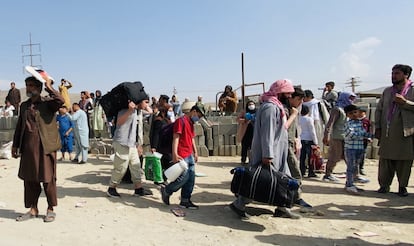
“How low has the European Commission fallen, entirely subordinated to the ultraconservative majority of the Council, inviting the Taliban to Brussels to discuss how to repatriate Afghans without any security, without any guarantee of respect for their rights, without any consideration of human rights,” says López Aguilar.
Chiara Catelli, from the International Platform for Cooperation on Undocumented Migrants (PICUM), says these meetings between the EU and Afghanistan’s iron-fist regime reflect a broader push by several member states to strike deportation agreements with third countries —including regimes with poor human‑rights records. Germany, for example, where migrant transfers to Afghanistan have increased, according to a journalistic investigation, is also considering establishing its own agreement with the Taliban.
A similar attempt was made with Syria before the fall of Bashar al‑Assad, and now, under the new regime, the EU has reopened dialogue partly to encourage the return of Syrian refugees.
“This rush by the EU and its member states to forcibly return people to Afghanistan at any cost is illegal and out of touch with reality,” says Amnesty International. “It ignores the reasons why these people fled and the grave dangers they face if returned. Furthermore, it demonstrates a blatant disregard for states’ international obligations, violating the binding principle of non-refoulement. The EU must urgently and radically change course.”
Human rights and migrant protection organizations also warn that with these latest moves, the EU is sacrificing legal guarantees and fundamental rights to promote a migration policy increasingly focused on expulsion and the externalization of borders. The Council of Europe has also warned of the risk of prolonged detentions, restrictions on the right to appeal, and deportations to unsafe countries.
Since 2024, the European Union has accelerated a sharp turn toward hard-line migration policies, Catelli notes, including the Migration and Asylum Pact. Added to this is the Return Regulation, now in its final stages, which follows the EU’s broader push to increase deportations across Europe. “That regulation would expand immigrant detention, weaken safeguards in return procedures, separate families, and allow people to be sent to countries with which they have no connection,” the activist warns.
The controversial meeting with the Taliban is part of a much larger effort by the European Union to increase the number of deportations. The European Commission maintains that only about 20% of people with deportation orders are actually deported, and considers that figure “unacceptable.”
López Aguilar also sees the controversial Brussels meeting with the Taliban as just one element of a broader picture: Europe’s drift toward sealing itself off — a trend that also includes the Return Regulation and the flirtation by some countries with opening deportation centers outside EU territory, modeled on Italy’s facilities in Albania. “Engaging with the Taliban is an unrecognizable degradation of the moral standard the European Union is supposed to uphold,” he concludes.
Sign up for our weekly newsletter to get more English-language news coverage from EL PAÍS USA Edition









































