
Pandemics that weren’t: How to nip an outbreak in the bud
Doctors, epidemiologists and surveillance systems have managed to contain flares of cholera, mpox and Marburg virus before they become international crises
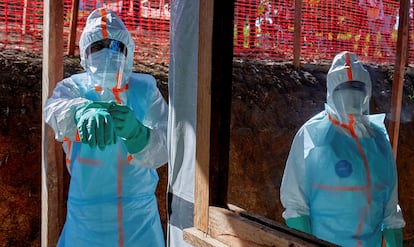

On December 10, 2024, a woman arrived at a health facility in Pariak, a town in the state of Jonglei in South Sudan, with diarrhea, vomiting and symptoms of dehydration. She had recently returned from an area affected by cholera. In one of the most vulnerable countries in the world, where millions of people lack regular access to clean water and health services, this could have been the beginning of a new emergency.
But it wasn’t. A health worker quickly came to suspect that the woman was a possible cholera case, the patient was isolated, and authorities activated surveillance and response protocols, tracing her contacts. Eleven days later, the outbreak was over. There were six cases and no deaths, despite the fact that cholera can kill in a matter of hours if not treated quickly, and despite the fact that Africa is experiencing a terrible comeback of the disease. The African Centres for Disease Control and Prevention (Africa CDC) announced in November that the continent was seeing the “worst outbreak of cholera in 25 years,” with around 300,000 cases and more than 7,000 deaths in 2025.
The story from South Sudan did not appear in the international media because everything went well. This is the kind of success that appears in Epidemics That Didn’t Happen, a biannual report whose most recent edition was presented in Geneva by the international public health organization Resolve to Save Lives, which compiles examples of outbreaks that were detected and contained before becoming health emergencies.
“When public health is most successful, it is invisible, which makes it very difficult to explain to the public and to policymakers why it is so important to continue to invest in prevention,” explains Amanda McClelland, senior vice president of the Prevent Epidemics team at the organization. “That’s why we started this report: to understand what works when an outbreak is stopped on time,” says the expert.
The idea is particularly relevant at a moment in which the world is worried about Ebola. The current outbreak in the Democratic Republic of the Congo, which has spread to Uganda, went for a month without being detected, which contributed to its spread, according to the World Health Organization. When authorities were able to confirm the presence of the Bundibugyo variant of the virus, the epidemic had already spread to hundreds of patients. According to the most recent data, WHO has documented 515 confirmed cases and three deaths (two confirmed and one probable) in Uganda.
When public health is most successful, it is invisible, which makes it very difficult to explain to the public and to policymakers why it is so important to continue to invest in preventionAmanda McClelland, Resolve to Save Lives
But Ebola is no anomaly. “The probability of outbreaks is rising,” warns Mark Lucera, director of strategy for the Coalition for Epidemic Preparedness Innovations (CEPI). Climate change, accelerated urbanization, deforestation and an increase in human displacement are creating new opportunities for pathogens to spread. “In the last year alone, CEPI has monitored more than 15 distinct outbreaks,” Lucera says.
Still, many of them “have been contained” with barely anyone finding out, says Priya Basu, executive director of the The Pandemic Fund. “In recent months, countries in Africa, Latin America, the Caribbean, and Asia” have been able to contain “outbreaks of cholera, avian flu, anthrax, mpox and the Marburg virus,” says Basu, who emphasizes the role of “ministries of health around the world and other international leaders, who are silent heroes who work to avoid the spread of outbreaks.”
Needle in a haystack
Prevention, McClelland says, rarely depends on revolutionary technology. “The successful cases are nothing more than the daily work of looking for signs of possible outbreaks and responding to them quickly. And sometimes, it’s like looking for a needle in a haystack: we receive a lot of signs, some of which end up being totally normal, but you don’t know that until they are investigated,” says the health crisis expert.
“Sometimes, it’s the unnoticed work of primary care centers — which have a strong clinical suspicion and identify potential cases of concern — that leads to these cases being reported to public health departments,” McClelland says. Early detection also depends on “laboratories capable of analyzing samples,” on epidemiologists who research unusual clusters of the sick or dead, and especially on making use of “immediate funding” to act before an alert turns into an emergency, she adds.
“Sometimes between $2,000 and $3,000 is enough to send teams to investigate these alerts before they are declared an outbreak,” she notes. That number is far below the $518 million the WHO and Africa CDC will invest to contain the current Ebola outbreak. “If we find the outbreaks early and stop them quickly, they simply spread less,” she adds.
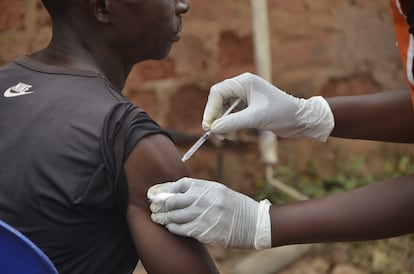
One example of this preventative monitoring took place in El Salvador. After the country eliminated malaria, officials detected a new risk: the arrival of Salvadoran workers coming from the Democratic Republic of the Congo, where the disease continues to be endemic. More than 100 imported cases were identified, but none wound up causing local transmission because they did not infect mosquitoes capable of propagating the disease by biting more people. “They weren’t waiting for an epidemic to occur; they were anticipating it,” explains McClelland. The official even recalls how some of the infected workers were transferred temporarily to mountainous areas where there were no mosquitos capable of transmitting the disease, a simple but effective measure to avoid new contagion.
But the current Ebola outbreak offers an example of what happens when detection systems fail. In the DRC, the first cases were not immediately identified because local laboratories did not have the chemical reactives necessary to detect the Bundibugyo variant of the virus, which is a much less frequent strain than the Zaire variant. While other diseases were being ruled out, and samples sent to facilities with larger diagnostic capabilities, the virus continued to circulate. “You can imagine how hard it is to find an Ebola case among hundreds of cases of malaria and pneumonia,” says McClelland.
The same logic holds when detection happens on time. In Gabon, for example, officials managed to contain an mpox outbreak amid regional expansion of the disease. Rapid identification of cases and contact tracing limited the episode to two confirmed contagions and no deaths, according to the Epidemics That Didn’t Happen report.
From the Caribbean to Rwanda
If the Ebola outbreak in the DRC illustrates what can take place when early detection doesn’t happen, the cases compiled by Resolve to Save Lives show the opposite scenario: health systems capable of identifying a threat on time and acting before it spreads.
One of the most emblematic cases is that of the Cricket T20 World Cup in 2024, which took place simultaneously on six Caribbean islands and involved thousands of trips between the countries. For the first time, officials were using a regional electronic surveillance system for mass events with support from The Pandemic Fund. The system allowed for the sharing of health information in real time, and rapid detection of possible threats. “For the first time, they were able to celebrate an outbreak-free Cricket World Cup,” says Basu.
Rwanda is another one of the report’s paradigmatic cases. Thanks to previous investments in epidemiological surveillance and digital technology, the country managed to quickly contain an outbreak of Marburg virus in 2024. Among other innovations, officials utilized drones to transport essential medical supplies and to accelerate response in remote areas.
In the last year alone, CEPI has monitored more than 15 distinct outbreaksMark Lucera, CEPI
“Preparation can make the difference between a health alert and a large-scale crisis,” Lucera says in regards to the Rwanda case. Weeks before the first cases of the Marburg virus were detected in the country, the Coalition for Epidemic Preparedness Innovations had worked with Rwandan authorities on simulation exercises to rehearse response to a health emergency. When the real outbreak appeared, a large part of the work was already done.
“They knew who to call, they knew how to mobilize an early response,” says Lucera on a video call. Thanks to that preparation, Rwanda managed to begin a clinical trial with an experimental vaccine just a few days after detecting the first cases, something that had never been seen in an emergency of this kind.
That’s why, Lucera says, the challenge is to convince governments to maintain funding, even when there is no immediate emergency. “Global investments in preparation can be in the billions, but the cost of pandemics is measured in trillions,” he says.
But even as threats multiply, McClelland warns that many countries are returning to the “cycle of panic and abandonment” that precedes every health crisis. “As we relax or take a step back, outbreaks continue to rise,” she says. The epidemics that weren’t, reminds the report, are the easiest to forget.
Sign up for our weekly newsletter to get more English-language news coverage from EL PAÍS USA Edition









































