
SpaceX, a corporate empire insulated and defended by a loyal ‘praetorian guard’
Musk relies on a legion of fiercely loyal small investors while erecting ever higher barriers against potentially critical shareholders
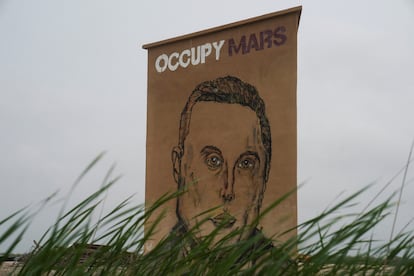
Clown, genius, edgelord, visionary, industrialist, showman... these are some of the descriptors Time magazine used to justify naming Elon Musk ‘Person of the Year’ in 2021. “This is the man who aspires to save our planet and get us a new one to inhabit,” the magazine said. Fewer than five years later, the entrepreneur—who also aims to colonize Mars—has starred in the largest initial public offering in history. SpaceX expects to raise $75 billion in its debut today, backed by a loyal legion of retail investors eager to jump on the aerospace and artificial intelligence bandwagon, often at the expense of substantial concessions to Musk. The billionaire, the world’s richest man, is the IPO’s chief backer (arguably more so than the company’s numbers) and will enjoy an unusually vast degree of power for a listed company—though apparently he does not need it.
Musk knows how to mobilize his followers. The company plans to allocate more than 20% of the offering to retail investors, a share far above the usual 5%–10%, if any. To reach individual investors, it has deployed an unprecedented array of lead banks, and Bloomberg reports that investor demand already exceeds supply by more than six times. In an unprecedented move, another 10% of the offering is aimed at European retail investors.
Musk has, for years, cultivated street-level investors, even before buying X. “I am a big fan of retail investors,” he wrote on the social network Twitter—now X—in 2020. “I will make sure they have top priority. You can take my word on that,” he added when speculation about a possible Starlink IPO was rife.
These individuals make up nearly a third of Tesla’s shareholders (he controls roughly 20% of the company) and not only pay extraordinary valuations; they also serve as the entrepreneur’s praetorian guard. Their support helped validate a $56 billion pay package for Musk at the 2024 shareholders’ meeting, despite opposition from institutional investors and proxy advisers. A year later, the same shareholders’ meeting approved a $1 trillion bonus (yes, with a t). The affection is mutual: an investor who joined Tesla’s IPO in 2010 would have seen gains of more than 2,000% since then and 180% since the company entered the S&P 500 in December 2020.
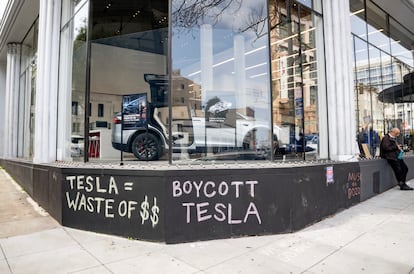
But not everything is praise. The entrepreneur’s histrionics also generate considerable public unease. The Trump administration’s creation of the Department of Government Efficiency (DOGE), under Musk’s oversight, sparked clashes, incidents at Tesla dealerships and the burning and destruction of dozens of his cars.
The South African–born entrepreneur has shown himself wary of the obligations that come with being a public company. He complains about the demands these companies face from the SEC and has lamented the pressure of quarterly results at the expense of long-term goals. He therefore prefers to share his company with many small investors, who are easier to control.
Musk has insulated himself ahead of SpaceX’s IPO. Only the company’s Class A shares—each with one vote per share—will be listed, while Class B shares carry ten votes per share. Once the bell rings, Musk will hold 84.4% of the company’s total voting rights.
Texas law does not help. SpaceX and Tesla moved their headquarters to Texas in 2024, and the state’s rules limit shareholders’ ability to bring legal action against company executives, “including minimum ownership thresholds,” the prospectus notes. Texas law also requires ownership of more than 3% of the company’s capital and the support of at least 67% of all voting shares to place any proposal on the meeting agenda, making shareholder initiatives difficult. As a result, the document acknowledges, shareholders may have fewer opportunities to submit proposals for a vote, even on matters they consider important, which may limit their influence over corporate governance and other aspects.
That power has already drawn criticism from several U.S. pension funds. The New York State Common Retirement Fund, which manages more than $100 billion in assets for teachers, firefighters, police officers and nurses, has also criticized the CEO removal clause that would effectively give Musk veto power over his own dismissal. “SpaceX’s corporate governance structure, as reported, presents material risks to long-term investors,” it says. Several asset managers with strict governance criteria have barred the company, Bloomberg reports, and the Council of Institutional Investors (a nonprofit association) has formally asked the company to reconsider its governance mechanisms.
So far those criticisms have had no effect. SpaceX’s IPO appears to be heavily oversubscribed, reportedly attracting $250 billion in demand. Retail investors are said to have placed orders exceeding $70 billion.
Analysts expect retail investor interest to be decisive for the stock’s performance after the IPO. Some companies that debuted amid great fanfare plunged within weeks after retail investors lost interest. A study cited by The Wall Street Journal finds that nearly a quarter of IPOs lose at least half their value within three years of listing.
Sign up for our weekly newsletter to get more English-language news coverage from EL PAÍS USA Edition









































