
The adult tribe that is transforming Disney: ‘Everything outside ceases to exist’
A community seduced by nostalgia defies stereotypes, attracts followers on social networks and has become a money machine for a brand that is increasingly banking on them
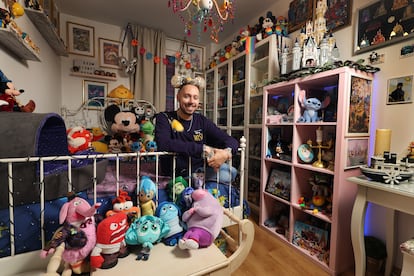

At 35, Daniel Pontón is what is known as a Disney adult. His fans crowd outside his home in Parla in Madrid where he lives with his fiancé. His passion for Disney is such that he is considering removing the bed from the guest room/museum to make way for the invasion of stuffed Disney toys. On the fluffy pillows, there are Mickey, Stitch, Jack Skellington, Olaf, Chip and Chop. The shelves and walls are also plastered with Disney images. All this memorabilia, and other collector’s items, such as park keys, are mementos from his time browsing Disney stores and enjoying theme parks.
Because Pontón, who tries to go at least every two months to the Disneyland in Paris, has just become an official influencer of European Disneyland thanks to his 110,000 followers on TikTok. With his social media handle, iDanny, he is part of a subculture that is often looked down upon, but which has been making a social and economic niche for itself for years in one of the world’s culturally iconic companies; in 2025, Disney is once again smashing the global box office.
The psychology and sociology of this niche fan club — their obsession and the stigma associated with it as well as their economic relevance — is examined in the book Disney Adults by A. J. Wolfe. The 48-year-old author writes about this social tribe from the inside after building her own Disney-inspired company. On her website The Disney Food Blog, she began by rating the food in the theme parks and is now one of the reference sites for visitors.
“I sought to explain that our subculture does not denote immaturity or escapism, but community, creativity and nostalgia,” Wolfe explains to EL PAÍS. “Stereotypes are built at the extremes, in the exaggeration of the networks, when reality is much more routine. This is our way of building identity by sharing hobbies.” She speaks from a personal perspective while also focusing on the trend in general: “We feel close to what makes us safe, protected and happy,” she points out.
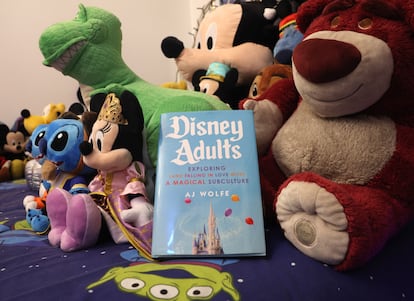
Pontón, for example, puts on music from Disneyland to relax, escape from his professional and personal routine, and return to his safe place, something that many Disney fans do. He listens to the Disney Sequoia Lodge’s birds and nature loop. “When you visit the theme parks, everything outside ceases to exist. It creates a feeling of relaxation where you only have to worry about which character to hug, where to eat or what ride to go on,” he says. “I compare it to people who only relax on the beach. It’s a safe place where you are familiar with everything.”
Wolfe points out in the book that it is a great escape from reality, because everyone is happy as they embrace an effortless existence for a few days. She also points out that it helps people to face reality better when they return to it. Everything that surrounds Disney, from musicals to the merchandise, is a world without “surprises”; a place where “everything works.” She mentions another sensory experience that brings back good memories: the smell of water at the Pirates of the Caribbean attraction.
But if there’s such an aura of happiness and optimism around Disney, why is this movement so criticized and parodied? In the book, Wolfe says that in reality the neural patterns of fans of sports, Star Wars, Star Trek and Disney are not so different; that Disney buffs are no more obsessive or consumerist. But she argues that “because this fandom has such a strong female and diverse presence, it is culturally perceived differently — more childish or embarrassing. Traditionally, femininity has been dismissed as less serious, while passion in male‑dominated spaces is celebrated.” “We have had to fight to be considered adults,” she says.
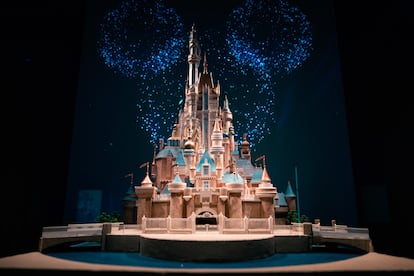
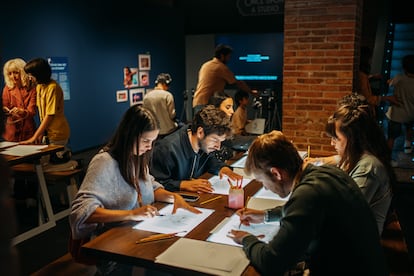
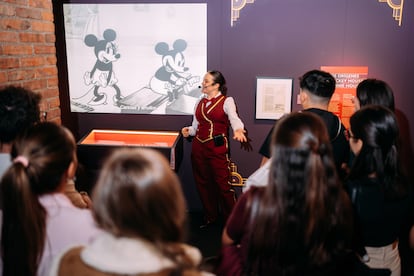
At Disney The Exhibition. 100 Years of Magic in Madrid, on earlier this year, the audience was diverse: parents with Star Wars T-shirts, people with no children, partners or retired friends who have grown up with Disney. All of them flocked to peruse an exhibition that reviews the history of the company. Among these intergenerational visitors, a mother and daughter, aged 30 and 50, danced to the sound of Disney hits through headphones. Like Pontón, it was the resurgence of animation in the 1990s with The Lion King and Aladdin that got them hooked, although they have not been able to afford to go to the theme park and feel the much-talked-about “magic that makes you feel like a child again.”
Indeed, being a Disney fan is an expensive business. Wolfe says in her book that when she became a fan, the souvenirs became “collectibles” and that created an obsession with completing the collection, immersing her in fervent competition with other Disney fans. There came a time when she felt that some objects didn’t even interest her, it was simply FOMO, exploited by a Disney capitalism that sells exclusive popcorn buckets for $30. She has paid $1,000 for nights in a hotel, while Pontón has lined up in the early hours of the morning to get exclusive Mickeys. Today he wears an expensive, gigantic Pandora bracelet comprised of Disney figures: “I don’t have children, I don’t go out to party, so the money I have I spend on my hobby, but there are times when you have to say, that will have to wait,” he says.
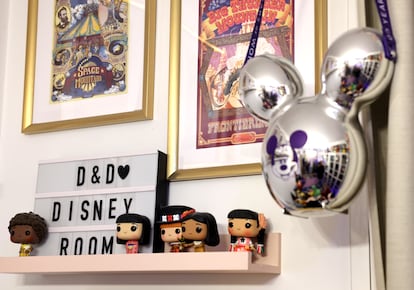
Due to their spending power, these Disney devotees are one of the brand’s biggest financial assets, not only when it comes to visits to its new theme parks such as the one in Dubai, but also in its production chain. The recent nostalgic successes of The Lion King and Lilo and Stitch, for example, appeal not only to children, but also to adults who seek to relive their childhood.
Fans of yesteryear now have enough money to travel back in time, and this is one of the few companies that can make the most of “emotional” spending, Wolfe notes in her book. There is the very expensive possibility of getting married in a Disneyland or taking a Disney cruise — an area that is booming: until 2024 there were only five such cruises, but plans are afoot for as many as 13 ships on the water by 2031. One of these ships has its own island. This niche market is expected to exceed $2 billion by 2029.
Perhaps the challenge now, in fact, is to attract Gen Z and Gen Alpha to the brand, as they have been drawn to Star Wars, The Simpsons, Avatar (one of Disney’s great billionaire successes in 2025, along with Zootopia 2 and Lilo and Stitch) and Marvel. In fact, Disney has signed deals with Fortnite video games and Sora’s artificial intelligence technology in a bid to produce future Disney adults.
Rocío and Alejandro are another 26-year-old couple who have travelled from Málaga to Madrid to see the Disney exhibition. They are drawing characters on one of the tables in this interactive exhibition. Back home, they have linked several Disney worlds, the most traditional (hers) with that of Marvel and Star Wars (his). After visiting Disneyland this year, their goal is to return annually. If they choose, they could do it through one of the specialized agents, such as Ariel Ferrero, an Argentine based in Madrid, passionate about Disney and specialized in its theme parks and cruises globally: “Disney even give us courses to update us on the details. And there are more and more adult packages, although in reality we all become children there,” says Ferrero.
@idanny21 Los personajes de Disneyland Paris reaccionan a mi bandera del Orgullo Disney 🥰🏳️🌈💖🏰✨🥳 Hoy 29 de junio se celebraba el Orgullo en el parque y ha sido ¡genial! ✨✨✨ #disney #disneylandparis #pride #orgullo @Disneyland Paris ✨ @disneyspain
♬ Ready for the Ride Cast Disneyland Paris - Bruno ✨️
Eight of the 10 most visited theme parks in the world are Disneylands. In 2023, those in Florida and California exceeded 17 million visitors; Tokyo, 15 million, and Shanghai, 14 million. Since the pandemic, and given low birth rates, millennial and Gen X visitors have grown in volume. This also means that beers and cocktails are now available on site.
Disney and Pride
Disney has also embraced events such as Pride, knowing that the LGTBQ+ community accounts for a significant number of Disney adults. Pontón acknowledges that there is still a lot of work to be done regarding diversity, especially after the company’s latest setbacks due to the Trump administration’s anti-DEI policies: “When Disney approaches LGTBQ+, there is a lot of criticism that interferes,” he says. “But it is true that six years ago there were no Pride collections, nor content like this on platforms and theme parks. Now we have the Disneyland Paris Magical Pride, and that means more visibility. It’s important to have a love story between two princes. I would like there to be more steps in that direction, but if there were possibilities before, there are fewer now.”
Wolfe acknowledges that this “frustration” exists: “It’s hard to see that decisions, values and politics don’t align with yours, and it’s a tension that exists in most of us: managing our passion with the awareness that it’s a business machine.” The Disney adult economy is not so new either; back in 1935, Disney collected $30 million in licenses, in particular for the first Mickey watch.
Both Wolfe and Pontón are fully aware of the positives and negatives of being Disney fans. “The positive side is that you express yourself freely, it can encourage joy, creativity, a sense of identity and community. And it’s also a good place to deal with stress and find happiness in routine. But it can be problematic if you turn it into escapism to run away from responsibilities and emotions. And there is a social and judicious stigma that means you’re not understood,” Wolfe says.
IDanny says that even though he doesn’t like soccer, he recognizes the passion soccer fans feel. The difference is that one obsession is socially acceptable, and the other is not. “What happens is that it is not normative, it is not socially acceptable due to a consensus established by I don’t know who,” he says. “It’s an easy joke, but I don’t hurt anyone. The videos are always positive, I post the activities in the theme park, the reaction of the characters, it’s nice... I know that inside the costume there is a person, but in that moment, you experience fantasy and magic.”
@idanny21 Acompáñame a darle a Mickey Mouse su regalito de cumpleaños 🥰🎂🎁🏰✨❤️ #disney #disneylandparis #mickeymouse @Disneyland Paris ✨ @disneyspain
♬ sonido original - iDanny ✨🏰
What is the average Disney fan’s response to those who sneer at their passion because it seems childish? “To be understood by others is to be loved,” says one fan in Wolfe’s book. “Those who hate it, will never understand us.” The fan also points out that there are valid criticisms such as the competition, the exaggeration of some influencers, the excessive nostalgia, addictions that lead to million-dollar debts — many fans break away from Disney for a while to detox.
Pontón, who has collected more than 100 different Mickey ears and got engaged in the Paris park, says that “Disney adults are happier… we live longer, thanks to having found our community and a safe place to meet like-minded people.”
Sign up for our weekly newsletter to get more English-language news coverage from EL PAÍS USA Edition









































