
The Pet Shop Boys: 40 years of hits, activism and risky decisions
Neil Tennant and Chris Lowe have been performing for four decades but show no signs of slowing down. Amid the relentless, arena‑sized touring, they still found the time to release a new album — the 15th of their career
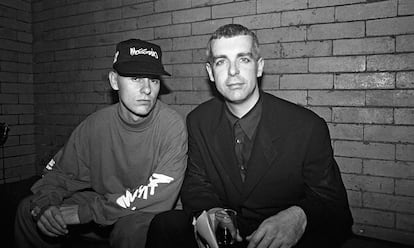
In 1986, the first album by a British duo called Pet Shop Boys was released. The title, Please, was an inside joke: the two musicians liked the idea that, in order to buy it, fans would have to say the album’s name and sound extremely polite while doing so. “Do you have the new Pet Shop Boys album, Please?” Very English. Very ironic. Forty years later, record shops have practically vanished, but the duo is still going strong — more active than ever and now the most successful duo in British history, and among the most successful in the world. And they’ve never lost that dry sense of humour.
Last Monday, April 5, the first of five concerts celebrating the Pet Shop Boys’ 40th anniversary was held at London’s Electric Ballroom in Camden Town. Two hours before doors opened, the queue to get in was already wrapped around the block. The average age of the crowd was well over 40, and almost everyone was wearing T‑shirts from decades‑old albums and tours.
As soon as the concert began, Neil Tennant, the singer, announced to an already ecstatic audience that they wouldn’t be playing any of their biggest songs that night. “No hits.” The idea was to celebrate with their fans in a very special way: with the lesser‑known songs from an already enormous catalogue. In fact, they’ve titled these shows Obscure. It’s their way of looking back on 40 years of career beyond the numbers — commercial or financial — and of giving their audience a moment of connection and recognition, especially for those who devoured their wildly varied and sometimes brilliant B‑sides. It’s also a way of crowning these last few years, during which they haven’t stopped releasing albums and touring the world.
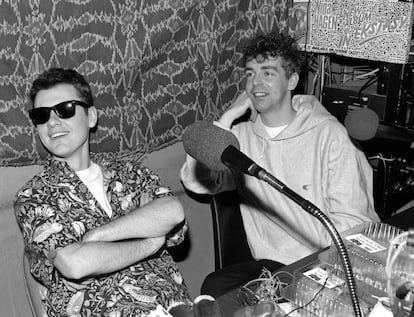
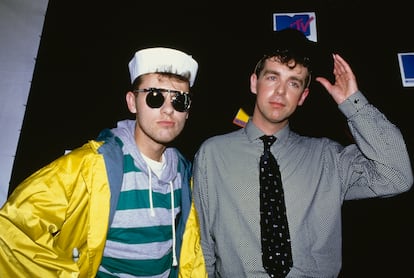
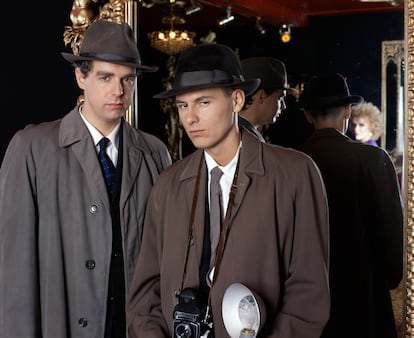
The setlist they’ve performed throughout the week (five concerts in total, all sold out the very day tickets went on sale) is a highly sophisticated selection of what Tennant himself described as some of the fans’ favourites — songs that, taken together, offer a remarkably sharp summary of the duo’s main interests and defining traits.
“I don’t know anyone with that many hits”
To begin with, it’s striking how active the Pet Shop Boys have been lately, especially considering they’re a duo edging into their seventies (Tennant is 71, Lowe 66), who have spent more than four decades together in the fiercely competitive music industry. They have earned enough millions to retire to the golf course or simply pick and choose the occasional event at their leisure. But they’ve chosen to stay in the studio, on the festival circuit, and on the road.
In 2022, they kicked off their Dreamworld tour — in Spain, no less — with shows in Madrid and Barcelona as part of Primavera Sound. The tour will return to Spain this coming summer, and tickets for Valencia and Santander are already close to selling out.
Dreamworld opens with Suburbia and closes with West End Girls, two of their earliest songs, both from Please. In between, they pack in two hours of classics: anthems like Left to My Own Devices and It’s a Sin; their great reinterpretations of others’ songs — Where the Streets Have No Name (legend has it Bono was left wide‑eyed when he saw his rock classic reborn as a dance anthem) and Always on My Mind; quintessential Pet Shop Boys tracks like So Hard, Heart, and It’s Alright; ballads such as Jealousy and Love Comes Quickly; and dance‑floor bangers like Vocal.
As Noel Gallagher from Oasis said after seeing them at Glastonbury: “I don’t know anyone with that many hits.”
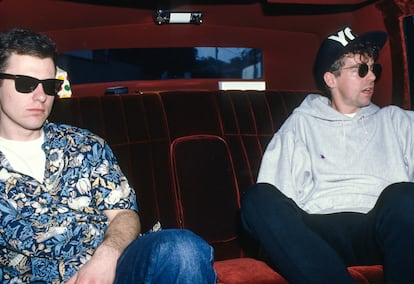
Pet Shop Boys’ numbers are staggering: 42 songs in the U.K. Top 30, 22 in the Top 10, and four number ones. West End Girls also reached number one in the United States and is, officially, the first rap track ever to hit that position.
What’s more, in these last few years of relentless, arena‑sized touring, they’ve still found the time to release a new album — the 15th of their career. Nonetheless, written during lockdown, shows how their sound and their world can adapt to what global society has lived through since the outbreak of COVID-19: loneliness, misunderstanding, and isolation, but also the conviction that love conquers all and the certainty that, in life, everything gets better when you dance.
Melancholic, ironic: English
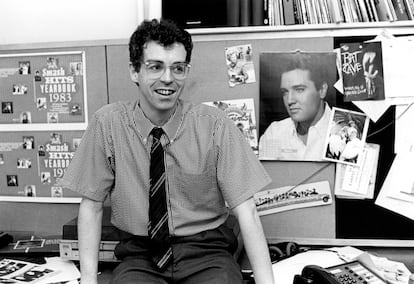
One day in 1981, Neil Tennant — originally from Newcastle, living in London for a few years and working for the music magazine Smash Hits — walked into an electronics shop in Camden Town looking for a cable he needed for his newly acquired synthesizer. There he met Chris Lowe. Lowe was an architecture student, newly arrived from Blackpool. After discovering their shared interest in music and the fact that both wrote songs, they began meeting up to compose together. There was no project in mind yet, just the desire to create.
During a work trip to New York to interview Sting, Tennant met with Bobby Orlando, a musician and producer he and Lowe were obsessed with at the time. What began as a fan visit and a tentative approach turned into an agreement to record the demos Tennant had brought on a cassette tape. Among them was West End Girls.
The first version of the song they released didn’t take off, but a few months later, they tried again with a new producer, Stephen Hague, who suggested a bass line (now practically a standard) and a more relaxed tempo. And that strange track — inspired by The Waste Land by T. S. Eliot and delivered in an exaggeratedly British rap — became one of the year’s defining songs worldwide.
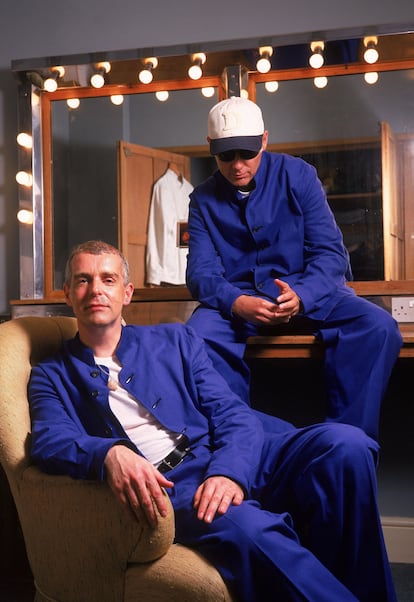
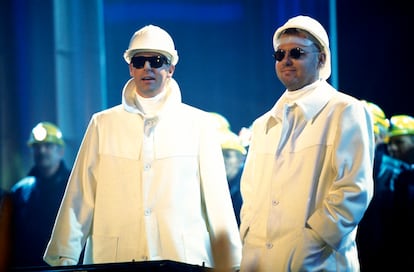
The success — so fast, so absolute — pushed them into making quick decisions that would, however, become recurring themes on which they built the rest of their career: after making a joke of the title of their first LP, Please, they decided that from then on all their albums would have one‑word titles (Actually, Introspective, Behaviour, Very, Nightlife…). And because they’re very shy and intimidated by the stage, they ended up turning that reserve into a defining part of their trademark.
Everything, everywhere, all at once
From the beginning, the Pet Shop Boys have enjoyed unquestionable critical and popular success, though always tinged with a certain disdain: they’re accused of being commercial and elitist at the same time, of mixing high‑culture references with music for the masses. They’re admired for their musical refinement, yet they make everything with machines. They’re said to be superficial, yet they consistently produce politically themed songs. As they put it in the autobiographical song Left to My Own Devices: “Che Guevara and Debussy to a disco beat.”
They’ve always refused to draw a strict line between their songwriting roles, though they admit Tennant writes most of the lyrics. A couple of years ago, they published a book collecting their songs along with commentary, One Hundred Lyrics and a Poem. A lot has been written about the Pet Shop Boys — from dense theories on pop linguistics and politics to hilarious chronicles of their first tour in 1990s China. They’ve written at least three stage musicals (apparently another is on the way), which are periodically revived, and a ballet for the Spanish choreographer Javier de Frutos. Their songs appear in films and television series. And they’ve collaborated with David Bowie, Madonna, Robbie Williams, Liza Minnelli, Rammstein, Dusty Springfield, Soft Cell, Shirley Bassey, Boy George, The Killers, and Lady Gaga.
Your Funny Uncle and subway rats
Your Funny Uncle recounts a real episode from Neil Tennant’s life: attending the funeral of a friend who had died of AIDS — the same friend who had inspired one of their best‑known (and most important) songs a few years earlier, Being Boring. In Your Funny Uncle, an older man in military dress receives condolences from his nephew’s gay friends, and the song hints that the man himself may be a closeted gay man shaped by his era and circumstances.
The duo’s commitment to visibility around the AIDS pandemic that marked the lives of gay men in the late 20th century was early and unwavering. It began on their second album, Actually (1987), with It Couldn’t Happen Here, which speaks to the disbelief they felt when the first deaths from the disease began to happen.
Although they have always maintained an almost absolute level of privacy about their personal lives, in 1994 Tennant gave an interview to the gay magazine Attitude in which he spoke publicly about his sexuality for the first time. As with most of their personal stances, it’s something they express more through their records and on stage than through interviews or statements. For example, they recently released a song dedicated to the Russian activist and politician Alexei Navalny, who was killed on the orders of Vladimir Putin, and in 2006, they put out I’m With Stupid, about the “special relationship” between Tony Blair and George W. Bush.
Among the events marking their 40th anniversary, one of the most special is the publication of Volume, a book that gathers the duo’s visual history. They were the first to work with cult film directors like Derek Jarman and photographers like Bruce Weber, who created those soft‑core gay fantasies that are the videos for Being Boring and Se a Vida É (That’s The Way Life Is). They also worked with Wolfgang Tillmans, who documented the rats living in the London Underground in the daring (and polarizing) video for Home and Dry. MTV refused to air it.
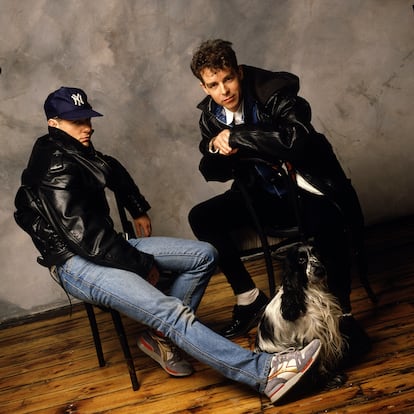
Despite Chris Lowe’s very British fondness for tracksuits, the duo has always paid close attention to what they wear. Issey Miyake and Hedi Slimane have dressed them for videos and tours, they’ve fronted Dior campaigns, and they’ve turned certain items into icons: Lowe’s famous Boy London cap, the legendary Miyake Shade sunglasses, and the JW Anderson knitted hat Neil Tennant has worn recently.
From their fascination with the Italian brands beloved by the 1980s paninari (to whom the song Paninaro is dedicated, with multiple references to Armani and Versace) to the immaculate tuxedos they wore in What Have I Done to Deserve This?, perhaps to look prim and proper next to Dusty Springfield.
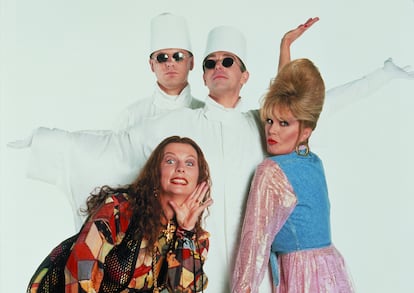
But if there’s one thing that sets them apart at first glance, it’s the graphic design of their albums, created in collaboration with the British designer Mark Farrow. The seed of their visual style is once again found on the cover of their debut, Please. Horrified by the trend of the time, which plastered singers’ faces across entire sleeves, they decided to make theirs smaller and smaller until it became a tiny square lost in a field of minimalist white. That ironic elegance captured the duo’s sensibility perfectly.
Since then, they’ve continued to revisit and reinvent that same concept without showing any sign of running out of ideas. It’s no coincidence that one of their covers — the embossed, Lego‑like design for Very — ended up hanging in New York’s MoMA. Few artists can claim to be art in the most literal sense.
Sign up for our weekly newsletter to get more English-language news coverage from EL PAÍS USA Edition









































