The Alliance has launched a study to assess potential risks from North Africa, the Sahel and Middle East, but the area was left out of regional plans approved at Vilnius summit
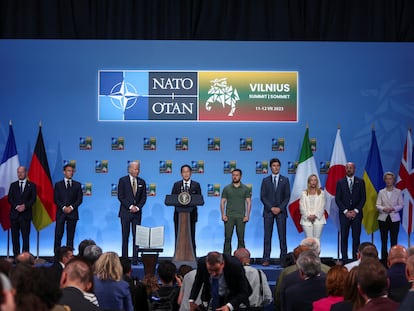
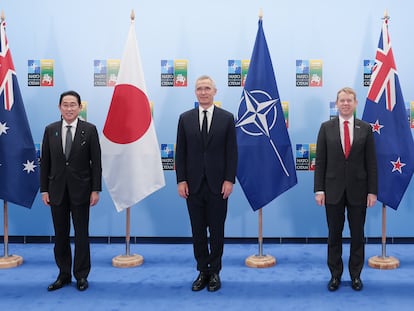
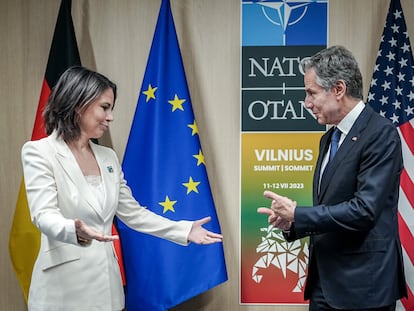
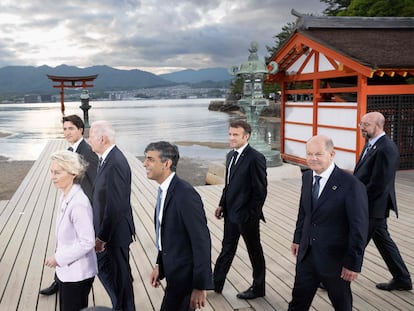
The leaders of Japan, Australia, South Korea and New Zealand took part in the Vilnius summit, but the Allies disagree on how far the organization should be involved in that region
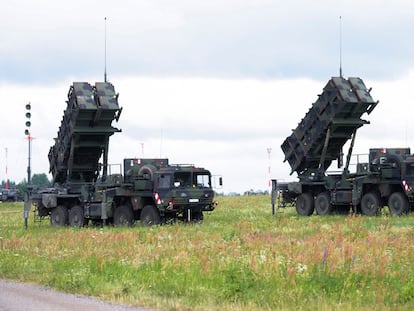
In a communiqué, the Allies say defense spending will be ‘at least’ 2% of GDP and announce further investigation into emerging threats in the southern flank
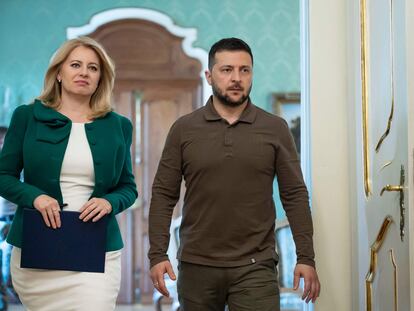
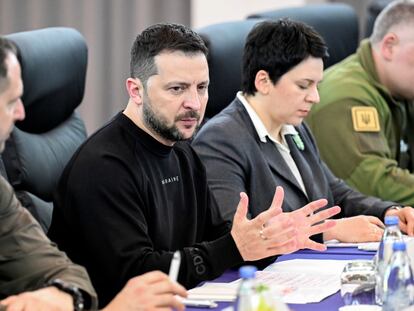
Zelenskiy charges that the allies’ agreement is undefined and warns it could benefit Russia
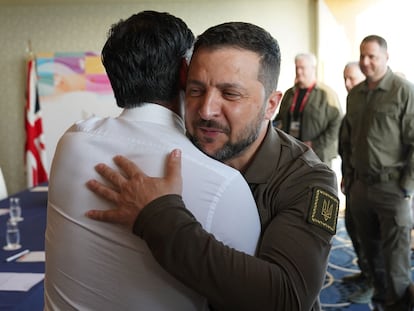
The initiative, which is supported by France, Germany and the United Kingdom, involves a commitment to continue to supply Kyiv with weapons, but does not set down a concrete timetable for the country’s accession into the Alliance, which is still a source of division
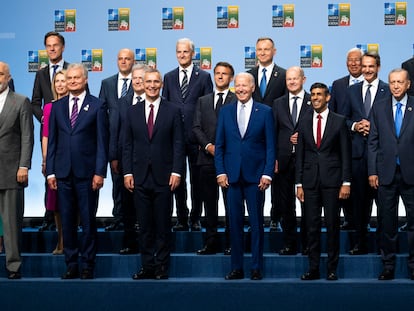
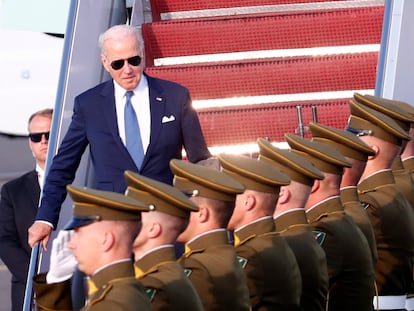
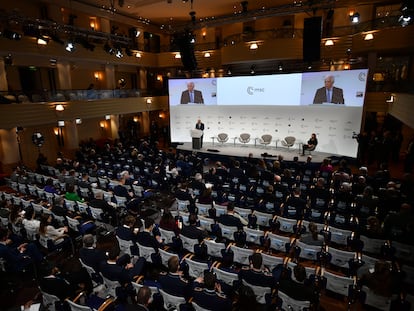
Lithuania has pulled out all the stops to offer security to around 40 state and government leaders who are meeting in extraordinary geopolitical circumstances
The Allies will meet in Lithuania in a bid to send the Kremlin a resounding messages of unity and strength
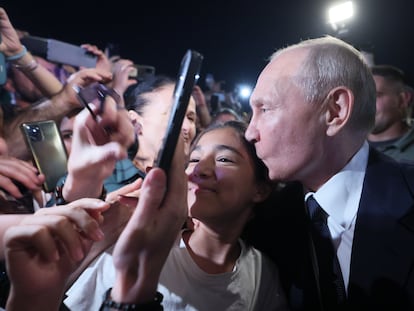
The failed rebellion of Wagner’s mercenaries has shown the cracks in the Russian leader’s power. In addition to the war in Ukraine, the president faces international pressure, faltering domestic support and a bleak economic outlook
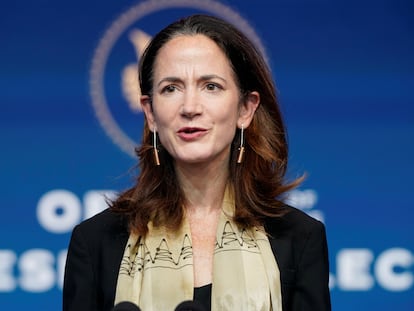
The meeting of heads of intelligence agencies held in Singapore symbolizes the attempt to keep the multilateral framework alive in an increasingly conflict-ridden world
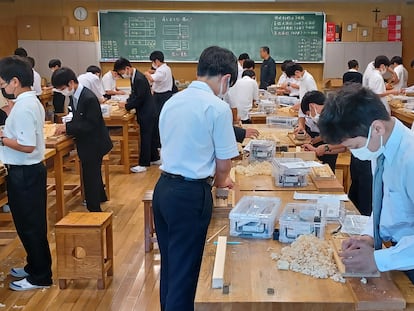
According to Prime Minister Fumio Kishida, the world’s third-largest economy is on the brink of social dysfunction, which has been brought about by a rapidly-aging population. The stories and opinions of members of the younger generations reveal the challenges that lay ahead for a very conservative society
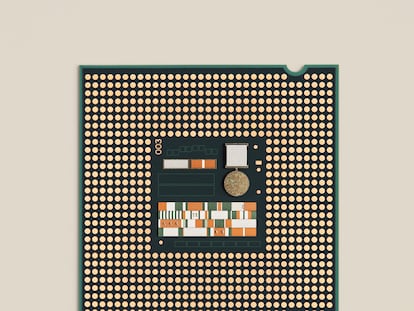
The global tug-of-war is measured in nanometers. Economic and military might increasingly depend on high-end semiconductors, 90% of which are produced in Taiwan. The U.S., China and the EU are making moves to avoid losing the battle
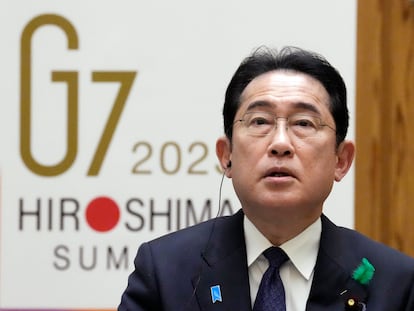
The Japanese prime minister – who hosted this year’s G-7 summit in Hiroshima – came to power as a moderate reformer. But now, after less than two years in power, he’s overseeing significant shifts in his country’s economy, foreign policy and national defense
The Ukrainian president hoped to persuade Indian Prime Minister Narendra Modi and Brazilian President Luiz Inácio Lula da Silva to change their position on the war in Ukraine
The prospect of delivering F-16 fighter jets to the embattled country – as well as President Zelensky’s activism at the international forum – will influence the future of the conflict
The world’s most industrialized democracies announced a series of cooperation mechanisms to control strategic investment flows to the Asian giant
The director of the Refugee Studies Centre at the British institution warns about the tightening of the migration policies in Europe
Rishi Sunak is a more pragmatic leader than Boris Johnson and Liz Truss, but the country is yet to rebuild – and reconcile – following the 2016 referendum
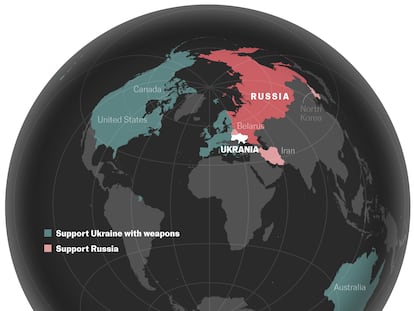
A breakdown of the strategic calculations made by the chief players surrounding the conflict
The Covid pandemic, the war in Ukraine and tension between the West and China have caused a paradigm shift in which resilience has gained ground over efficiency
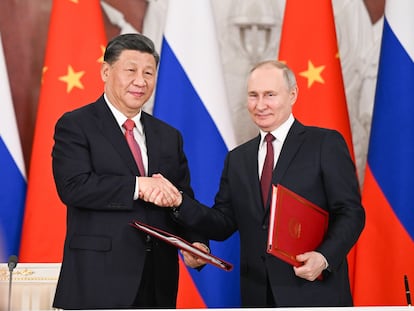
The leaders of China and Russia continue to strengthen ties as they ‘drive changes’ together. EL PAÍS offers a detailed analysis of the joint statement published after their meeting in Moscow last week
Experts warn of the danger of accidental escalations in a rivalry marked by increasing tensions and mistrust, with Taiwan as the main focus
The US struggles to retain its supremacy, China catches up and overtakes the leader in many areas while the EU is falling behind
The Russian invasion of Ukraine is a challenge to the world order that has precipitated military, geopolitical, economic and human consequences on a planetary scale
The Munich Security Conference underscored how the US, EU, China, India and Russia are competing to expand their area of influence among non-aligned nations
The competition between the two powers – each seeking global hegemony – is increasing pressures, risks and opportunities for other countries
New chatbots capable of generating text and images from a few, simple prompts provide glimpses of how AI could change the workplace, education, superpower relations and our daily lives
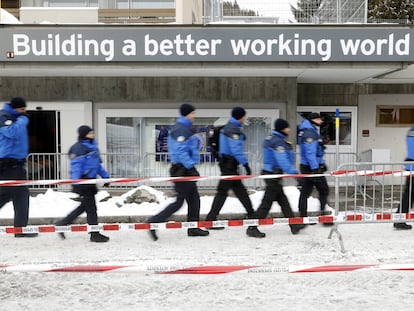
The World Economic Forum holds its annual meeting in the Swiss Alps, where it will address new trends as the West tries to reduce its reliance on Russia and China