
When the killer is also a victim: The trial of Lindsay Clancy fuels US culture war
The case against a mentally ill woman who killed her three children has deepened the divide between those who believe she suffered from postpartum psychosis and was failed by the system, and those who demand severe punishment
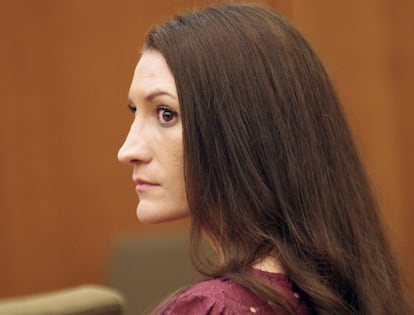

No one disputes the facts. On January 24, 2023, Lindsay Clancy, a nurse living with her family in a town outside Boston, sent her husband out to run some errands. When he returned with dinner, he came upon a scene almost too painful to imagine. His wife was lying in the street, bleeding and suffering from multiple broken bones. She had jumped from a second-floor window after slashing her wrists and neck with a knife. Before doing so, she had strangled her three children in the basement with exercise bands. Cora, 5, and Dawson, 3, died that same day. Calan, just eight months old, died three days later. Clancy, who attempted to take her own life after the killings and will spend the rest of her life in a wheelchair as a result, immediately acknowledged that she was responsible for the tragedy.
But beyond those facts lie far more complex questions. The trial now underway in Massachusetts is showing how a case this harrowing can be interpreted in radically different ways depending on one’s ideology. And how the far right is seeking to exploit it to push its agenda.
The debate dominating television programs and social media across the United States can be distilled into a few questions. How should the justice system respond? By sentencing this 36-year-old woman to life in prison because of the scale of the horror she inflicted? Or should it take into account the severe mental illness she was suffering from when she committed the crime and send her to a psychiatric institution, where she can process what happened and perhaps, one day, recover?
Clancy’s story also offers a stark illustration of the shortcomings in care for people with serious mental health conditions. It has brought renewed attention to postpartum psychosis, a little-known disorder that is not even recognized as a distinct diagnosis in the DSM-5, the diagnostic manual used by the American Psychiatric Association. Pablo del Sol, a child psychiatrist and researcher at Columbia University in New York, stresses the importance of distinguishing between the sadness many women experience after childbirth, which is relatively common, and postpartum depression, which constitutes a mental disorder. “But this case involves a much more severe condition. Postpartum psychosis includes delusional beliefs, such as a conviction that a real threat exists, or hearing voices,” he explained in a telephone interview.
Lindsay had always wanted children. People close to her have described her during the trial as a devoted and caring mother. But things began to unravel after her second pregnancy and spiraled after the birth of Calan, her third child. Over those months, she experienced episodes of panic, racing thoughts, suicidal ideation and a growing sense of dread, as though something terrible were about to happen. She sought help from several psychiatrists and other doctors, who prescribed a dozen medications for what was diagnosed as severe postpartum depression. She spent several days in a psychiatric facility. Yet no one seemed able to find the right treatment to help her recover.
Postpartum psychosis
Clancy’s lawyers argue that postpartum psychosis absolves her of criminal responsibility. There is a precedent in the U.S. justice system. Twenty years ago, Andrea Yates, a Texas woman, drowned her five children and was ultimately found not guilty by reason of insanity. Psychiatrist Pablo del Sol explains that the responsibility of someone suffering from this disorder is limited: “A person acting under postpartum psychosis remembers what they have done; it is not a dissociative episode brought on by stress. But their ability to understand reality is impaired.”
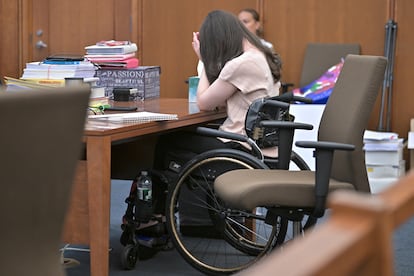
One of the most significant moments in the trial’s fourth week was the testimony of Paul Zeizel, a psychologist who treated Clancy dozens of times in recent years and appeared as a defense witness. In an emotional exchange, Zeizel said that the same woman who killed her children continues to talk about them constantly. “She really loves them and misses them and thinks of them every single day, almost every moment of the day,” he told the court.
Two defense witnesses also testified last week that Clancy told them she heard a male voice ordering her to kill her children, insisting it was the only way to keep them safe. Sheila Cavanaugh, a chaplain at the hospital where Clancy was admitted after the killings and her suicide attempt, said that as she held her hand in an effort to comfort her, Clancy told her: “I’m so glad my children are safe.”
Support from the ex-husband and father of the children
Patrick Clancy, Lindsay’s ex-husband and the father of the three children, has endured years of unimaginable grief holding on to the idea that he did not marry a monster. “The real Lindsay was generously loving and caring toward everyone,” he wrote.
In addition to defending the woman who took the lives of his three children, Patrick has lashed out at those who judge Lindsay without knowing her. Earlier this year, he also filed a lawsuit against the doctors who treated her, alleging that they failed to adequately monitor her response to medication and did not know how to care for someone whose mental health was unraveling and who was experiencing voices urging her to kill herself and her children.
But not everyone shares that view. The prosecution team argues that Lindsay Clancy “cold and efficiently” killed her children. “She knew exactly what she was doing,” prosecutor Shanan Buckingham told the court.
The prosecution is joined by a host of commentators who, through social media, podcasts and television appearances, have spent recent weeks demanding the harshest possible punishment.
“I don’t care if she had postpartum depression,” far-right commentator Matt Walsh wrote to his four million followers on X. “I don’t care how many psychiatric drugs she was taking. When you murder a child — let alone three children, your children — you must be punished to the fullest extent of the law. Justice demands nothing less. My sympathy for your depression dries up completely the moment you strangle your child to death. This should not be controversial.”
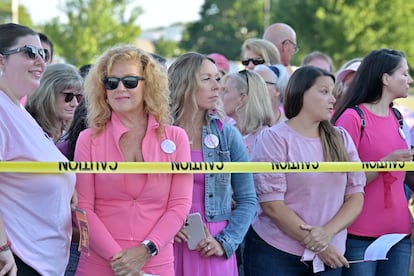
The debate has become even more bitter because of the support Clancy has received from some people, particularly women. Outside the courthouse, increasingly large groups of women dressed in pink have gathered in solidarity. Her desperate search for help, moving from one doctor to another, has resonated with people who see in this tragedy more than a murderer: a woman with severe psychiatric problems whom no one could help and whose case reveals serious shortcomings in the U.S. medical system.
A GoFundMe campaign has raised more than $1 million to help Lindsay’s parents cover the costs they have incurred over three years of traveling to support their daughter. “This case also highlights poor coordination among the different therapists treating the same patient. It’s unacceptable for a psychologist not to know that between September and December, a psychiatrist had seen your patient about 15 times,” says the Columbia University researcher.
On social media, critics accuse these supporters of reflexively absolving women of responsibility regardless of the circumstances and, in the most extreme cases, of excusing the killing of children. As often happens in cases like this, conspiracy theories have also flourished, including claims that Patrick himself killed the children, despite there being absolutely no evidence to support them.
The trial of Lindsay Clancy will continue in the coming days as the court moves toward a verdict. It is doubtful that those who have already chosen a side will change their minds. But whatever the outcome, it is almost certain that no sentence will be harsher than the pain the defendant has carried since Jan. 24, 2023.
Sign up for our weekly newsletter to get more English-language news coverage from EL PAÍS USA Edition









































