
Portraying ICE agents as victims, Trump’s new way to promote immigration terror
Wednesday’s shooting in Dallas was the third at an immigration office in Texas this year. The government reports that attacks on officers have increased by 1,000%
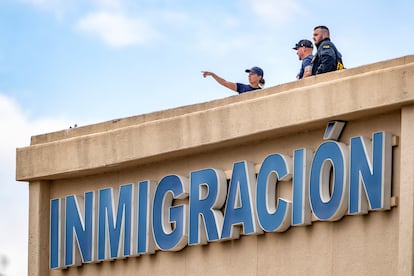

A man opened fire on Wednesday on an Immigration and Customs Enforcement (ICE) facility in Dallas, Texas, where detained migrants were being held, allegedly with the aim of attacking the agents. But in the end, it was the migrants who paid the price for the attack. One of them was killed and two others were wounded. The shooter also died from a self-inflicted gunshot wound. Initial reports from authorities suggested a motive for the attack, and the government framed it as part of the increase in attacks on immigration agents.
President Donald Trump blamed the incident on “Radical Left Democrats constantly demonizing Law Enforcement, calling for ICE to be demolished, and comparing ICE Officers to “Nazis.”
“The Brave Men and Women of ICE are just trying to do their jobs, and remove the “WORST of the WORST” Criminals out of our Country, but they are facing an unprecedented increase in threats, violence, and attacks by Deranged Radical Leftists,” he wrote on his Truth Social platform.
No officers were injured in the Dallas shooting, but the head of the FBI in Dallas, Joe Rothrock, said bullets with “anti-ICE messaging” were found at the suspected shooter’s location. FBI Director Kash Patel later posted an image on X that he said showed unspent shell casings from the shooter, including one with the word “ANTI-ICE” written on it in blue ink.

The administration has been denouncing for months the increase in attacks on ICE agents, who are in charge of the raids taking place on streets across the country in pursuit of the largest deportation effort in history, a priority objective of the president.
A “1,000%” increase
“This demonization is inspiring violence across the country. Our ICE officers are facing a more than 1000% increase in assaults against them. We have to turn down the temperature before someone else is killed. This violence must end,” said Department of Homeland Security (DHS) Assistant Secretary Tricia McLaughlin last week.
The data shows that between January 21 and June 30, there were 79 attacks on ICE agents, compared to 10 during the same period in 2024, under the administration of Joe Biden.
Federal authorities have not provided details about all of the incidents, dozens of which have resulted in criminal charges, according to a review of court records by The Washington Post. The vast majority involve verbal threats, either in person or online, or physical altercations during ICE arrests of immigrants that turned violent.
Post columnist Philip Bump investigated attacks on immigration agents in June and found that the number of assaults on Customs and Border Protection (CBP) officers was down 20 percent through June 2024. As for assaults on its agents, “ICE did not provide me with any examples of immigration officers being singled out, targeted, and assaulted outside the context of an arrest,” he wrote.
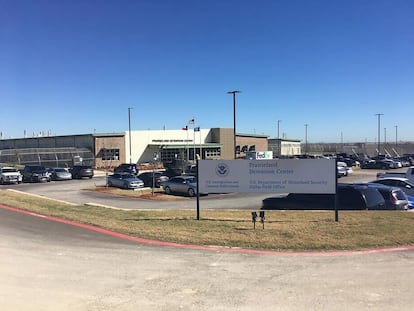
The government has publicized the most serious attacks on ICE agents in recent months. On July 4, Independence Day, a group of about 12 people attacked agents at the Prairieland Detention Center in Alvarado, Texas. The attackers set off fireworks, vandalized vehicles with anti-ICE slogans, and opened fire on agents, wounding one. Ten people were subsequently arrested and charged with attempted murder of a federal agent.
Three days later, a man with an assault rifle fired dozens of shots at Border Patrol agents in McAllen, Texas, wounding one officer. Authorities shot and killed the attacker.
On August 25, at the Dallas ICE facility that was attacked Wednesday, a 36-year-old man was arrested on suspicion of making terrorist threats after he told a security officer he had a bomb in his backpack.
But while the administration, without evidence, presents ICE agents as victims of an attack orchestrated by the left and the media, allegations of the brutality used in many of the arrests and inside the screening centers, proven by the dissemination of videos and numerous testimonies, indicate that the reality is quite the opposite.
Agents’ raids on Latino neighborhoods, workplaces, immigration courts, and even the surrounding areas of sensitive locations like schools to detain people who, in most cases, have no criminal history have spread fear among the immigrant community and, with it, a rejection of officers, who have been compared to the feared Gestapo, the Nazi police. At least 17 people have died so far this year in ICE-operated detention centers.
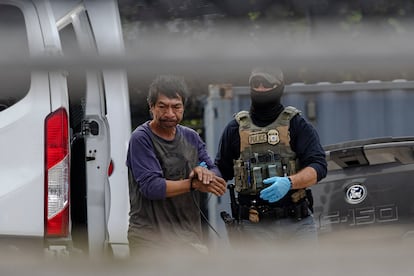
Every day, witnesses of the raids heckle officers when they try to arrest a migrant. The windows of the vehicles in which the migrants are traveling are broken, people are beaten, parents and children are separated, and excessive use of force is repeatedly used, as seen in footage shared on social media. Citizens are using mobile phone apps to notify each other of locations where officers have been spotted, and there are even websites to identify them, as the officers conceal their identities behind masks and patrol the streets in unmarked vehicles. Politicians and civil organizations have demanded that officers not wear masks, but the government maintains that this is a way to protect them from attacks.
Standoff with California
The practice of concealing officers’ identities has sparked the latest standoff between the federal government and the state of California. Democratic Governor Gavin Newsom signed an executive order Saturday requiring all law enforcement officers to show their faces and not hide. The Department of Homeland Security responded with an X-mailed message: “To be clear: We will NOT comply with Gavin Newsom’s unconstitutional mask ban.”
Newsom, a potential Democratic presidential candidate, signed the state’s first anti-mask law last Saturday. The governor said ICE agents would no longer be hidden from accountability, arguing that masks impede “transparency” for citizens and hinder oversight.
The law is likely to be challenged in court before it can take effect in January because it is unclear whether California can apply such restrictions to federal law enforcement.
The case of Silverio Villegas González
The latest attack on an ICE agent in Chicago, about which the DHS has issued a statement, has raised questions about the veracity of its statements. Thirty-eight-year-old Mexican citizen Silverio Villegas González was shot and killed by an ICE agent as he attempted to flee his pursuers. DHS stated that the agent who fired the shot was “seriously injured” because Villegas González ran over him, dragging him “a considerable distance” and leaving him “fearing for his life.”
The official version was undermined this Tuesday when a video was released that recorded the arrest moments after the officer fired the shot. The footage shows the officer describing his own injuries as “nothing serious.” “I was dragged a little,” said the injured officer, who can be seen walking.
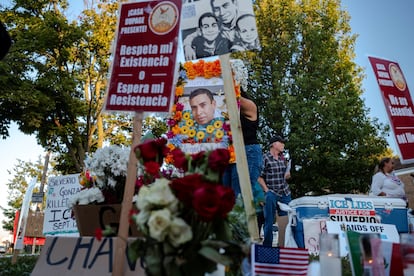
Immigrant rights advocates, Illinois Governor JB Pritzker, and Mexican President Claudia Sheinbaum have demanded a thorough investigation into what happened. “We want answers to the questions we’ve raised,” Chicago Congressman Jesús “Chuy” García said Tuesday. “The family has a right to them. The community wants to know what’s going on, and the public deserves answers too,” the Democratic representative said.
Villegas González, who worked as a cook, had just dropped off one of his children at daycare the morning of the shooting. DHS said he had a history of reckless driving and was not legally permitted to live in the United States. The daycare director described him as a good father, while many Franklin Park residents attended vigils and remembered him as a good family man. The Mexican Consulate General in Chicago said it would closely monitor the investigation.
Sign up for our weekly newsletter to get more English-language news coverage from EL PAÍS USA Edition









































