
Forever seen as criminals: Immigrants who served their time but still face deportation under Trump
Be it a grandmother with three decades in the United States, or a Cuban man imprisoned for 17 years: experts say that no matter how much a migrant pays their debt to justice, they will always be marked by their criminal record
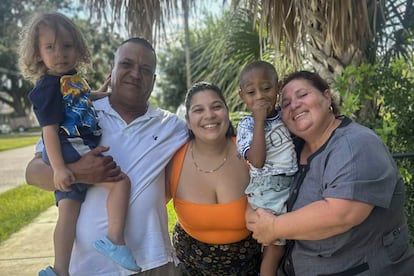

As the United States is led by the first convicted president, Yelenis Pérez has once again been reminded of the crime for which she was convicted 28 years ago. She thought she had long since paid her debt to justice, but to immigration agents, Yelenis is, forever, a criminal. Donald Trump’s government has given her until October to leave the United States as a deportee, back to the country she left three decades ago. “I thought that after so much time nothing was going to happen to me,” she says.
The 55-year-old Cuban immigrant had a deportation order since 2013, like many other immigrants who have nonetheless remained in the country, since for years, the U.S. government had prioritized expelling foreigners it considered a threat to national security. That practice, however, came to an end with Trump’s return to power. The Republican, obsessed with deporting a million people in his first year in office, claims he is removing “the worst of the worst” from the country, although figures show that a significant percentage of deportees in the last six months had no criminal record.
Some of those who did, like Yelenis, served their sentences years ago. They have since rebuilt their lives. They have children, grandchildren, and jobs, and little remains for them in the countries they left in search of opportunities and stability. After believing they had resolved all their legal problems, they have once again been criminalized and placed on the deportation list.
The order issued aims to detain 3,000 migrants daily, but it is known that Immigration and Customs Enforcement (ICE) has filled the cells of its detention centers with people without convictions, and very few with serious crimes. Although the Department of Homeland Security claims that 70% of ICE arrests so far this year have been of people with criminal records, figures obtained by the Deportation Data Project of the University of California-Berkeley School of Law show that in reality, 45% of those detained had convictions or pending criminal charges. The numbers reveal that 58% of detainees had previously received a deportation order from a judge but, like Yelenis, remained in the country because they were not considered a threat to society.
Yelenis has already bought a ticket for nearly $600 that will depart from Tampa International Airport, Florida, on October 25 and land hours later in the city of Holguín. She did so after, on July 14, during a routine immigration appointment, the officer looked her in the eyes through the booth glass and told her to return in October. Yelenis replied that yes, in October 2026 she would be back, as she had always done, year after year, for her scheduled appointments. But the officer looked at her intently and told her she wasn’t understanding: that in 90 days, she had to show up with her passport ready and a ticket bound for Cuba.
“My world fell apart. I didn’t know whether to cry, laugh, or even if I was listening correctly,” she recalls. Yelenis stammered a couple more questions to the officer: whether she had to show up with her suitcase ready because that very October 14 she had to leave, in case she wouldn’t have time to gather her things, the money she had saved after working 27 years as an assistant supervisor at the University of Tampa. The officer told her no, that from that moment on she would be given two weeks to leave the United States. “I got out of there, I couldn’t see, I held onto the wall, I thought I was going to fall,” she tells EL PAÍS by phone.
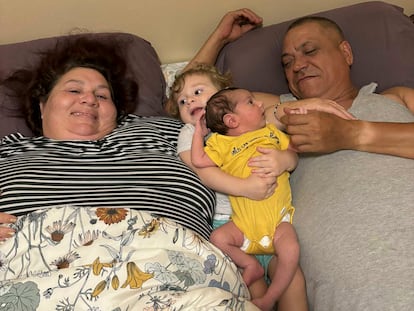
Outside the Tampa immigration offices, her family was waiting for her. They saw Yelenis approaching in tears and thought it was from happiness — that they were going back to their usual routine: her waking up at 7 a.m., returning from work around 6 p.m. taking care of the grandchildren if her son and daughter-in-law had to go out, sending a bit of money each month to her parents in Cuba. They rushed to embrace her.
“I started screaming, I told them I had to leave,” Yelenis says. “From then on, my life changed completely. I wake up and cry, I go to bed and cry. I wake up in the middle of the night and stare at the ceiling until dawn. I think to myself, ‘My God, I can’t imagine what will become of me when I get to Cuba. I’ve been here longer than I’ve lived in my own country.’”
Yelenis’s crime
It was a long time ago. Her daughter Diana, now 28, was three months old when the FBI stopped her parents on the highway. They had gone out to pick up letters and photos the family had sent from Cuba, the country they had left as rafters in 1994. But the officers made them return home. They had set up a police operation: “It looked like we had killed someone. I don’t do anything illegal in this world; the people who know me can’t believe I could be deported for something they know I didn’t do.”
The officers found drugs in the laundry room that, according to Yelenis, belonged to her husband’s brother, who lived with them. They took them all into custody. Later they were released on bail. She spent a year on probation to verify whether she used drugs, but one day the person who administered the tests told her: “It would be disrespectful if I kept testing you. I know you don’t use drugs and never have.”
For Yelenis, an endless journey through courtrooms, lawyers, and laws began, one she navigated as best she could. “I didn’t know what was happening to me,” she recalls. Although she always denied having anything to do with selling cocaine, she claims the judge told her to plead guilty, that it was the way to resolve her situation. “That’s when they ruined me,” she says. Since then, she has been charged with drug trafficking and selling.
Her first lawyer, who later ended up in prison, swindled her out of a lot of money by promising to clear her record and guide her toward obtaining permanent residency. It never happened. The case was sealed, and later she tried to find solutions with other attorneys and criminal lawyers, but they all concluded the same thing: “They told me nothing could be done because the case was sealed.”
Yelenis never lost her job at the University of Tampa, where she is one of the longest-serving employees. She had another child, got divorced, remarried. Twelve years after the incident, she once again wanted to rid herself of the past that haunted her. She hired another lawyer who recommended accepting deportation as the only way to resolve the case and get her work permit in order. “I told him, ‘Well, if in order to get my work permit I have to accept a deportation, then give it to me,’” she says. “It was a mistake I made.” She has never been able to clear her record.
The crime she was blamed for left a mark on the family. Her daughter Diana grew up translating every one of Yelenis’s immigration documents. “Before I learned to read at school, I learned to read immigration papers,” the young woman says. “That was always traumatic. I felt like I had to make myself independent, in case one day they took her away, so I could manage in life.”
That day had never come — until now. Every year, Yelenis has reported to immigration offices, where they sign a paper, hand it back to her, and she returns home. Although she has once again hired a lawyer who assures her she has “a strong case” and that he can defend it, the family fears their mother will board that flight to Cuba on October 25. “Now nothing is the same,” says her son, José Antonio. “That thought is always in our heads — the fear that it might be the last time we see her here in the United States.”
A record that never disappears
Immigration lawyer Jonathan Shaw is certain there is one United States for citizens and another for immigrants. “The criminal process in this country is a different world for an immigrant,” he says. If an American citizen commits some kind of crime, they have the possibility of clearing their criminal record. But, according to the expert, “the record will always show up for immigration officers; it’s something people always carry, like a tattoo. For the immigrant accused of a crime, no matter how much they pay the price, everything will be different.”
Perhaps the best example of this is the fact that Trump himself was found guilty in New York of 34 felony counts for falsifying business records in May 2024. Months later, he was re-elected president.
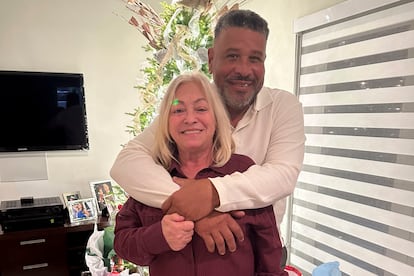
Rafael Collado is now in the feared Alligator Alcatraz prison, the greatest symbol of Florida’s immigration crackdown. The system doesn’t forgive him, no matter how much time has passed or that he has already lived nearly two decades behind bars. Sonia Bichara, his partner, says her love with Rafael has been a love in detention. It was in their youth, and it is now, when she is 64, he is 63, and they were finally at peace, enjoying time together after so many years apart. “They were 17 very sad years,” she says. That was the sentence Rafael served for the crime of aggravated assault in the year 2000.
They hadn’t been together long, less than a year. Rafael likes to dance, so they went to a nightclub in Miami one night. A man touched Sonia’s backside and Rafael stepped in. After a fight, the couple stayed a bit longer at the club, but around 3 a.m., when they decided to leave, the man was waiting outside and opened fire on their car. They got out unscathed. A month later, they ran into him again, but this time it was Rafael who pulled the trigger. Although there were no victims in the incident, he served 17 years in prison — first in Florida, then in Georgia.
Sonia moved to Georgia with her four daughters, whom Rafael loved dearly. Over those 17 years, there was a bit of everything: good times, sending letters and visiting him twice a week, and worse times, when they even grew distant. “The relationship was hard, because when you have someone in prison, it’s like you’re in prison too.”
Rafael was released in 2017 “for good behavior.” It wasn’t easy to live together again; it was as if they were meeting for the first time. “When he got out, I was nervous. So was he. But we worked on it; we loved each other. It was hard, because after all that time locked up, he would wake up at night startled, sleep with his hands crossed.” Prison had affected his nerves, but Rafael got his life back on track outside: each year he renewed his work permit and worked as a gardener. Almost three months ago, they moved back to Miami, where they found housing for low-income residents.
On July 7, Sonia, as she did every year, went with Rafael to his appointment at the immigration offices in Miramar. They were nervous. “I told him not to go, with everything that was happening, but he said no — that if he’d done the right thing until now, he would keep doing it that way.”
Rafael went into his appointment. Time passed. Sonia became worried; no one told her anything. After a few hours, she saw him come out in handcuffs, they locked eyes, and he blew her a kiss. The next thing was a phone call from Rafael at the Alligator Alcatraz detention center, where they barely give him his depression medication and where, just days ago, he decided he was tired of living.
Sonia learned that he had slit his wrists and was taken to the prison’s medical center. When she was able to speak to him, she asked: “But why would you do that? Remember I’m out here.” He replied: “Mami, I’m tired. I can’t take it anymore.” Rafael arrived in the United States from Cuba at 18, on one of the boats that left the port of El Mariel with thousands of people on board — the “scum” Fidel Castro wanted to rid the island of. Now the Trump administration intends to expel him the same way. “But he says he’s not going to Cuba — that they’d have to take him out of here dead,” Sonia says.
She also feels as if Rafael “is being made to pay all over again”: “He served his time.”
Sign up forour weekly newsletterto get more English-language news coverage from EL PAÍS USA Edition









































