
Spain could get €140 billion from EU’s Covid-19 recovery plan
If approved, the Spanish economy would be the second top beneficiary of the historic program after Italy
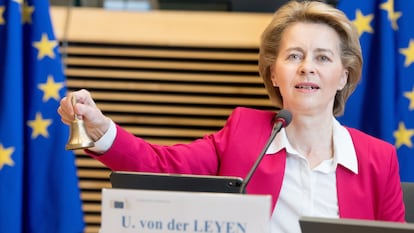
Spain could be assigned €77 billion in grants and €63 billion in loans from a €750-billion Covid-19 recovery program that was announced by the European Commission on Wednesday.
EU sources said that Spain may be getting a total of €140 billion to help shore up its economy, which is expected to contract by anywhere between 9% and 13% as a result of the coronavirus lockdown, according to the latest estimates by the Bank of Spain.
This would make Spain the second top beneficiary of the financial assistance after Italy, EU sources told the EFE news agency.
European Commission President Ursula von der Leyen will now take the historic recovery proposal to the EU Parliament, which must approve it along with the 27 individuals member states.
We either all go it alone, leaving countries, regions and people behind, and accepting a Union of haves and have-nots, or we walk that road togetherEuropean Commission President Ursula von der Leyen
Named Next Generation EU, the plan would lead Europe to borrow massively on the financial markets, and for the first time ever, part of these resources would be channelled through the European budget as grants to the countries that have been hardest hit by the coronavirus crisis.
“This is Europe’s moment,” said Von der Leyen to the EU Parliament. “We either all go it alone, leaving countries, regions and people behind, and accepting a Union of haves and have-nots, or we walk that road together.”
Commission Vice-President Josep Borrell, a Spaniard, defined it as a quantum leap in European solidarity. But northern members of the EU club have expressed fears that this could mark the beginning of “a union of debt.”
For southern members, the recovery plan represents fair compensation to maintain a market that mostly benefits the north, and which could break apart if the fallout from the coronavirus is not addressed.
Different impacts
On Wednesday, Spain’s central bank also issued a report noting that the impact of confinement measures is not the same across economies. Instead, it depends on the latter’s productive structure and supply chains.
Given the same lockdown measures, the impact is up to 20% greater on the Spanish economy than on the German or French ones, according to this analysis. In some regions, this is due to a heavy reliance on tourism; in others, because of the closure of automobile production or distribution plants.
“This differential impact between sectors forecasts significant disparities in the aggregate incidence of the perturbations produced by Covid-19, both among countries and among regions within the same country,” says the report.
English version by Susana Urra.









































